

Iceland to Greenland roundtrip cruise
CRUISE ID # SWANV2427072910
Reykjavík TO Reykjavík
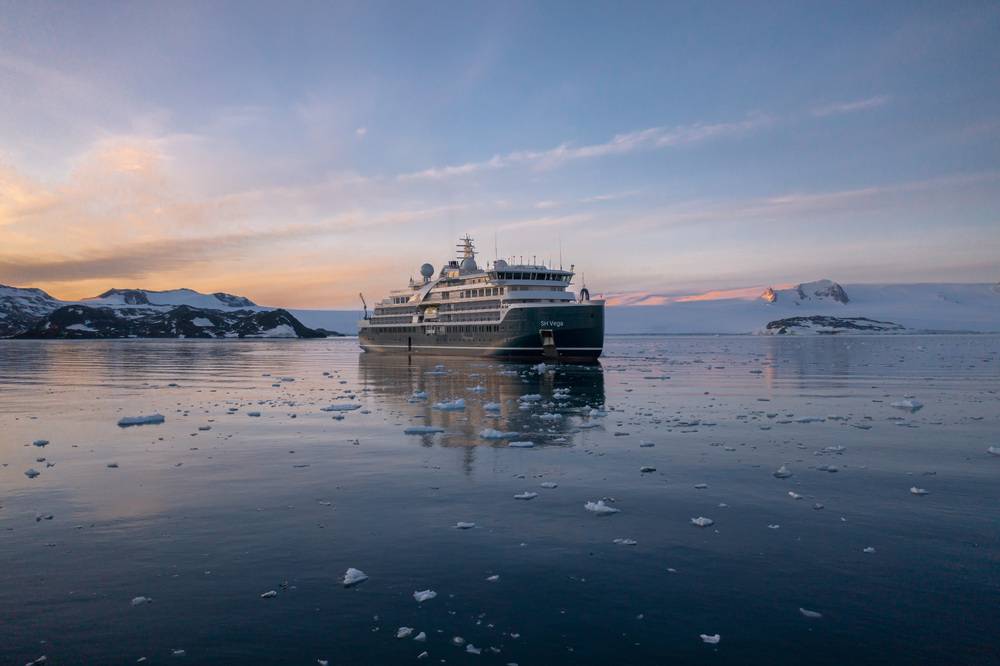
Embark on a captivating luxury cruise from Iceland to the remote wilderness of East Greenland, beginning and concluding in Reykjavík. This extraordinary voyage takes you deep into the world’s largest fjord system, Scoresby Sund, and into the untouched landscapes of Northeast Greenland National Park—the largest national park on Earth. Here, towering icebergs, vast glaciers, and dramatic basalt mountains create one of the Arctic’s most breathtaking and rarely visited regions. Along the return voyage, explore Iceland's stunning Westfjords region.
Discover an array of fascinating locations, starting in the vibrant city of Reykjavík with its Hallgrímskirkja church and Harpa Concert Hall. In Greenland, explore the intricate Scoresby Sund fjords in search of wildlife. Visit Ittoqqortoormiit, the most remote settlement in Greenland, where Inuit traditions endure in an isolated yet resilient community. As you approach Iceland, marvel at the picturesque landscapes of Ísafjörður and the serene Vigur Island, a haven for seabirds. Sail through the stunning King Oscar Fjord, surrounded by imposing peaks, before returning to Iceland’s Westfjords, where the landscapes of Ísafjörður and the serene seabird haven of Vigur Island await.
Engage in a variety of activities to enrich your cruise experience. Attend insightful onboard lectures or perfect your photography skills with guidance from professionals. Optional kayaking adventures offer a unique perspective on the polar landscapes. Make the most of time at sea by enjoying the ship's observation decks and mingling with fellow travelers, creating memories to last a lifetime.
Day-by-Day Itinerary
Discover an array of fascinating locations, starting in the vibrant city of Reykjavík with its Hallgrímskirkja church and Harpa Concert Hall. In Greenland, explore the intricate Scoresby Sund fjords in search of wildlife. Visit Ittoqqortoormiit, the most remote settlement in Greenland, where Inuit traditions endure in an isolated yet resilient community. As you approach Iceland, marvel at the picturesque landscapes of Ísafjörður and the serene Vigur Island, a haven for seabirds. Sail through the stunning King Oscar Fjord, surrounded by imposing peaks, before returning to Iceland’s Westfjords, where the landscapes of Ísafjörður and the serene seabird haven of Vigur Island await.
Engage in a variety of activities to enrich your cruise experience. Attend insightful onboard lectures or perfect your photography skills with guidance from professionals. Optional kayaking adventures offer a unique perspective on the polar landscapes. Make the most of time at sea by enjoying the ship's observation decks and mingling with fellow travelers, creating memories to last a lifetime
Suites & Fares
Itinerary
- Day 1July 28, 2027
Pre-Cruise Night
- Day 2July 29, 2027
Reykjavík, Iceland
Sprawling Reykjavík, the nation's nerve center and government seat, is home to half the island's population. On a bay overlooked by proud Mt. Esja (pronounced eh-shyuh), with its ever-changing hues, Reykjavík presents a colorful sight, its concrete houses painted in light colors and topped by vibrant red, blue, and green roofs. In contrast to the almost treeless countryside, Reykjavík has many tall, native birches, rowans, and willows, as well as imported aspen, pines, and spruces.Reykjavík's name comes from the Icelandic words for smoke, reykur, and bay, vík. In AD 874, Norseman Ingólfur Arnarson saw Iceland rising out of the misty sea and came ashore at a bay eerily shrouded with plumes of steam from nearby hot springs. Today most of the houses in Reykjavík are heated by near-boiling water from the hot springs. Natural heating avoids air pollution; there's no smoke around. You may notice, however, that the hot water brings a slight sulfur smell to the bathroom.Prices are easily on a par with other major European cities. A practical option is to purchase a Reykjavík City Card at the Tourist Information Center or at the Reykjavík Youth Hostel. This card permits unlimited bus usage and admission to any of the city's seven pools, the Family Park and Zoo, and city museums. The cards are valid for one (ISK 3,300), two (ISK 4,400), or three days (ISK 4,900), and they pay for themselves after three or four uses a day. Even lacking the City Card, paying admission (ISK 500, or ISK 250 for seniors and people with disabilities) to one of the city art museums (Hafnarhús, Kjarvalsstaðir, or Ásmundarsafn) gets you free same-day admission to the other two.
- Day 3July 30, 2027
Day at Sea
- Day 4July 31, 2027
Scoresby Sund, Greenland
- Day 5August 01, 2027
Scoresby Sund, Greenland
- Day 6August 02, 2027
Scoresby Sund, Greenland
1. - Day 6August 02, 2027
Ittoqqortoormiit, Greenland
On the northern side of the entrance to the Scoresbysund fjord system stands Ittoqqortoormiit, the only permanent settlement in the region. The population here is approximately 430 people, largely dependent on a subsistence lifestyle. The inhabitants make their living hunting seals, narwhals, muskoxen and polar bears. Ittoqqortoormiit is the northernmost settlement on Greenland’s east coast, apart from a few meteorological and military stations. Brightly colored, quaint little houses and dogsled enclosures dot the rocky slopes of the settlement. It must be incredible to live here every day enjoying the magnificent views of Kap Brewster and the Volquart Boon Coast to the south.
- Day 7August 03, 2027
King Oscar Fjord, Greenland
- Day 8August 04, 2027
King Oscar Fjord, Greenland
- Day 9August 05, 2027
Day at Sea
- Day 10August 06, 2027
Isafjørdur, Iceland
Two colossal terraces of sheer rock stand either side of this extraordinarily located town - which rides a jutting spit onto an immensity of black fjord water. Surprisingly, considering the remoteness of its location and its compact size, Isafjordur is a modern and lively place to visit, offering a great choice of cafes and delicious restaurants – which are well stocked to impress visitors. The town is a perfectly located base for adventures amongst Iceland's fantastic wilderness - with skiing, hiking and water-sports popular pursuits among visitors.
- Day 10August 06, 2027
Vigur Island, Iceland
Vigur Island is a little more than a mile (1.6 km) in length and about 450 yards (412 m) wide. This green oasis punctuates the waters of the Ísafjarðardjúp fjord east of the town of Isafjordur. The island is home to a single farming family and has some meticulously preserved historical landmarks including Iceland’s only windmill, built in 1840 and used until 1917 for grinding imported wheat from Denmark; and a 200-year-old rowing boat, which is still in use to ferry sheep to the mainland. Summer is the best time to see large numbers of Atlantic Puffins, Arctic Terns and Black Guillemots. One of the export articles from this small island was eider down and one can see where the eider ducks nest and how the down is collected and cleaned.
- Day 11August 07, 2027
Dynjandi Waterfalls, Iceland
Iceland is well-known for its spectacular waterfalls. The iconic Dynjandi waterfall, located in the Westfjords region, is regarded as one of Iceland’s most impressive and majestic waterfalls. At the top, the cascading water is roughly 100 feet wide and tumbles down about 330 feet into the fjord. Its name Dynjandi means, “the thundering one” and its vast size, enormous sound, and sheer force is overwhelming. It has also been nicknamed, ‘The Bridal Veil’ because of the way the water sprays and spreads over the rocks.
- Day 12August 08, 2027
Reykjavík, Iceland
Sprawling Reykjavík, the nation's nerve center and government seat, is home to half the island's population. On a bay overlooked by proud Mt. Esja (pronounced eh-shyuh), with its ever-changing hues, Reykjavík presents a colorful sight, its concrete houses painted in light colors and topped by vibrant red, blue, and green roofs. In contrast to the almost treeless countryside, Reykjavík has many tall, native birches, rowans, and willows, as well as imported aspen, pines, and spruces.Reykjavík's name comes from the Icelandic words for smoke, reykur, and bay, vík. In AD 874, Norseman Ingólfur Arnarson saw Iceland rising out of the misty sea and came ashore at a bay eerily shrouded with plumes of steam from nearby hot springs. Today most of the houses in Reykjavík are heated by near-boiling water from the hot springs. Natural heating avoids air pollution; there's no smoke around. You may notice, however, that the hot water brings a slight sulfur smell to the bathroom.Prices are easily on a par with other major European cities. A practical option is to purchase a Reykjavík City Card at the Tourist Information Center or at the Reykjavík Youth Hostel. This card permits unlimited bus usage and admission to any of the city's seven pools, the Family Park and Zoo, and city museums. The cards are valid for one (ISK 3,300), two (ISK 4,400), or three days (ISK 4,900), and they pay for themselves after three or four uses a day. Even lacking the City Card, paying admission (ISK 500, or ISK 250 for seniors and people with disabilities) to one of the city art museums (Hafnarhús, Kjarvalsstaðir, or Ásmundarsafn) gets you free same-day admission to the other two.
About the Ship
SH Vega

- 158Guests
- 76Cabins
- 2022Launched
- 115 mLength
All ship facts
- Crew
- 122
- Decks
- 9
- Gross tonnage
- 10500
- Speed
- 12 kts
- Width
- 23 m
- Wheelchair cabins
- 1
- Currency on board
- USD
- Language
- en