

Ultimate Antarctica & the Fjords of Southern Chile
CRUISE ID # SCENIC702L170227-2
Buenos Aires TO Buenos Aires
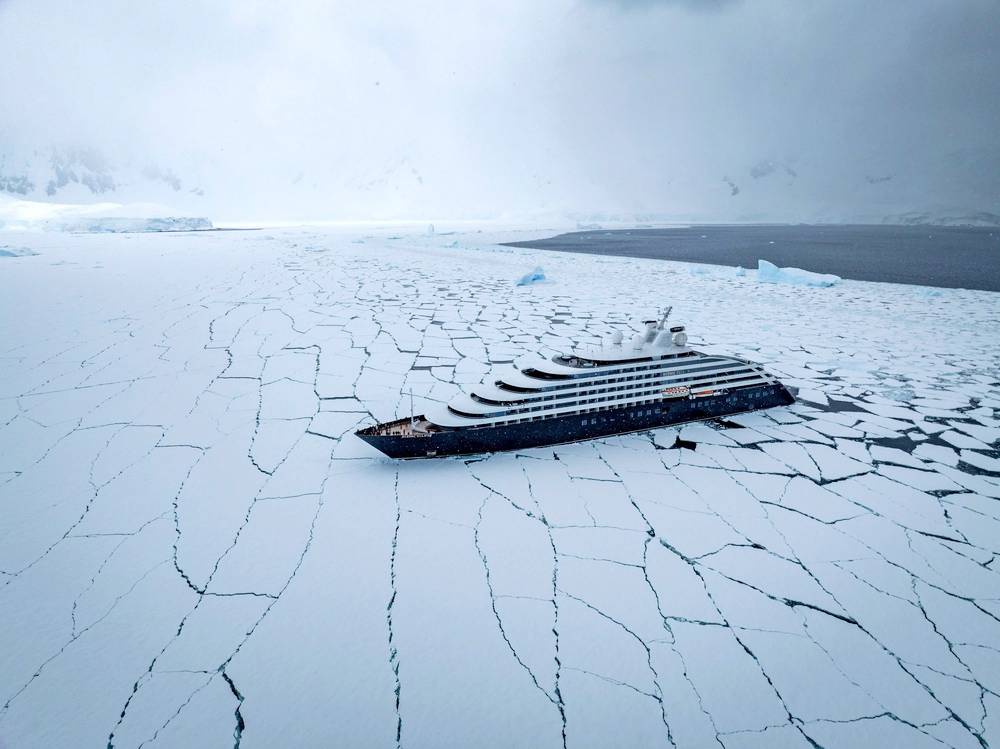
Suites & Fares
Itinerary
- Day 1February 16, 2027
Pre-Cruise Night
- Day 2February 17, 2027
Buenos Aires, Argentina
Glamorous and gritty, Buenos Aires is two cities in one. What makes Argentina's capital so fascinating is its dual heritage—part European, part Latin American. Plaza de Mayo resembles a grand square in Madrid, and the ornate Teatro Colón would not be out of place in Vienna. But you’ll know you’re in South America by the leather shoes for sale on cobbled streets and impromptu parades of triumphant soccer fans. Limited-production wines, juicy steaks, and ice cream in countless flavors are among the old-world imports the city has perfected.
- Day 3February 18, 2027
Ushuaia, Argentina
At 55 degrees latitude south, Ushuaia (pronounced oo-swy-ah) is closer to the South Pole than to Argentina's northern border with Bolivia. It is the capital and tourism base for Tierra del Fuego, the island at the southernmost tip of Argentina.Although its stark physical beauty is striking, Tierra del Fuego's historical allure is based more on its mythical past than on rugged reality. The island was inhabited for 6,000 years by Yámana, Haush, Selk'nam, and Alakaluf Indians. But in 1902 Argentina, eager to populate Patagonia to bolster its territorial claims, moved to initiate an Ushuaian penal colony, establishing the permanent settlement of its most southern territories and, by implication, everything in between.When the prison closed in 1947, Ushuaia had a population of about 3,000, made up mainly of former inmates and prison staff. Today the Indians of Darwin's "missing link" theory are long gone—wiped out by diseases brought by settlers and by indifference to their plight—and the 60,000 residents of Ushuaia are hitching their star to tourism.The city rightly (if perhaps too loudly) promotes itself as the southernmost city in the world (Puerto Williams, a few miles south on the Chilean side of the Beagle Channel, is a small town). You can make your way to the tourism office to get your clichéd, but oh-so-necessary, "Southernmost City in the World" passport stamp. Ushuaia feels like a frontier boomtown, at heart still a rugged, weather-beaten fishing village, but exhibiting the frayed edges of a city that quadrupled in size in the '70s and '80s and just keeps growing. Unpaved portions of Ruta 3, the last stretch of the Pan-American Highway, which connects Alaska to Tierra del Fuego, are finally being paved. The summer months (December through March) draw more than 120,000 visitors, and dozens of cruise ships. The city is trying to extend those visits with events like March's Marathon at the End of the World and by increasing the gamut of winter activities buoyed by the excellent snow conditions.A terrific trail winds through the town up to the Martial Glacier, where a ski lift can help cut down a steep kilometer of your journey. The chaotic and contradictory urban landscape includes a handful of luxury hotels amid the concrete of public housing projects. Scores of "sled houses" (wooden shacks) sit precariously on upright piers, ready for speedy displacement to a different site. But there are also many small, picturesque homes with tiny, carefully tended gardens. Many of the newer homes are built in a Swiss-chalet style, reinforcing the idea that this is a town into which tourism has breathed new life. At the same time, the weather-worn pastel colors that dominate the town's landscape remind you that Ushuaia was once just a tiny fishing village, snuggled at the end of the Earth.As you stand on the banks of the Canal Beagle (Beagle Channel) near Ushuaia, the spirit of the farthest corner of the world takes hold. What stands out is the light: at sundown the landscape is cast in a subdued, sensual tone; everything feels closer, softer, and more human in dimension despite the vastness of the setting. The snowcapped mountains reflect the setting sun back onto a stream rolling into the channel, as nearby peaks echo their image—on a windless day—in the still waters.Above the city rise the last mountains of the Andean Cordillera, and just south and west of Ushuaia they finally vanish into the often-stormy sea. Snow whitens the peaks well into summer. Nature is the principal attraction here, with trekking, fishing, horseback riding, wildlife spotting, and sailing among the most rewarding activities, especially in the Parque Nacional Tierra del Fuego (Tierra del Fuego National Park).
- Day 4February 19, 2027
Day at Sea
- Day 5February 20, 2027
Day at Sea
- Day 6February 21, 2027
Antarctic Peninsula, Antarctica
Remote and otherworldly, Antarctic is irresistible for its spectacular iceberg sculptures and calving glaciers, and for the possibility of up-close encounters with marine mammals and the iconic penguins. The Antarctic Peninsula – the main peninsula closest to South America – has a human history of almost 200 years, with explorers, sealers, whalers, and scientists who have come to work, and eventually intrepid visitors coming to enjoy this pristine and remote wilderness. It is a region of protected bays, unscaled snow-capped mountains, vast glaciers and a few places where whalers or scientists have worked. Just as irresistible are the many Gentoo and Chinstrap Penguin colonies, the seals basking on ice floes, the whales and orcas.
- Day 7February 22, 2027
Antarctic Peninsula, Antarctica
Remote and otherworldly, Antarctic is irresistible for its spectacular iceberg sculptures and calving glaciers, and for the possibility of up-close encounters with marine mammals and the iconic penguins. The Antarctic Peninsula – the main peninsula closest to South America – has a human history of almost 200 years, with explorers, sealers, whalers, and scientists who have come to work, and eventually intrepid visitors coming to enjoy this pristine and remote wilderness. It is a region of protected bays, unscaled snow-capped mountains, vast glaciers and a few places where whalers or scientists have worked. Just as irresistible are the many Gentoo and Chinstrap Penguin colonies, the seals basking on ice floes, the whales and orcas.
- Day 8February 23, 2027
Antarctic Peninsula, Antarctica
Remote and otherworldly, Antarctic is irresistible for its spectacular iceberg sculptures and calving glaciers, and for the possibility of up-close encounters with marine mammals and the iconic penguins. The Antarctic Peninsula – the main peninsula closest to South America – has a human history of almost 200 years, with explorers, sealers, whalers, and scientists who have come to work, and eventually intrepid visitors coming to enjoy this pristine and remote wilderness. It is a region of protected bays, unscaled snow-capped mountains, vast glaciers and a few places where whalers or scientists have worked. Just as irresistible are the many Gentoo and Chinstrap Penguin colonies, the seals basking on ice floes, the whales and orcas.
- Day 9February 24, 2027
Antarctic Peninsula, Antarctica
Remote and otherworldly, Antarctic is irresistible for its spectacular iceberg sculptures and calving glaciers, and for the possibility of up-close encounters with marine mammals and the iconic penguins. The Antarctic Peninsula – the main peninsula closest to South America – has a human history of almost 200 years, with explorers, sealers, whalers, and scientists who have come to work, and eventually intrepid visitors coming to enjoy this pristine and remote wilderness. It is a region of protected bays, unscaled snow-capped mountains, vast glaciers and a few places where whalers or scientists have worked. Just as irresistible are the many Gentoo and Chinstrap Penguin colonies, the seals basking on ice floes, the whales and orcas.
- Day 10February 25, 2027
Antarctic Peninsula, Antarctica
Remote and otherworldly, Antarctic is irresistible for its spectacular iceberg sculptures and calving glaciers, and for the possibility of up-close encounters with marine mammals and the iconic penguins. The Antarctic Peninsula – the main peninsula closest to South America – has a human history of almost 200 years, with explorers, sealers, whalers, and scientists who have come to work, and eventually intrepid visitors coming to enjoy this pristine and remote wilderness. It is a region of protected bays, unscaled snow-capped mountains, vast glaciers and a few places where whalers or scientists have worked. Just as irresistible are the many Gentoo and Chinstrap Penguin colonies, the seals basking on ice floes, the whales and orcas.
- Day 11February 26, 2027
Antarctic Peninsula, Antarctica
Remote and otherworldly, Antarctic is irresistible for its spectacular iceberg sculptures and calving glaciers, and for the possibility of up-close encounters with marine mammals and the iconic penguins. The Antarctic Peninsula – the main peninsula closest to South America – has a human history of almost 200 years, with explorers, sealers, whalers, and scientists who have come to work, and eventually intrepid visitors coming to enjoy this pristine and remote wilderness. It is a region of protected bays, unscaled snow-capped mountains, vast glaciers and a few places where whalers or scientists have worked. Just as irresistible are the many Gentoo and Chinstrap Penguin colonies, the seals basking on ice floes, the whales and orcas.
- Day 12February 27, 2027
Day at Sea
- Day 13February 28, 2027
Ushuaia, Argentina
At 55 degrees latitude south, Ushuaia (pronounced oo-swy-ah) is closer to the South Pole than to Argentina's northern border with Bolivia. It is the capital and tourism base for Tierra del Fuego, the island at the southernmost tip of Argentina.Although its stark physical beauty is striking, Tierra del Fuego's historical allure is based more on its mythical past than on rugged reality. The island was inhabited for 6,000 years by Yámana, Haush, Selk'nam, and Alakaluf Indians. But in 1902 Argentina, eager to populate Patagonia to bolster its territorial claims, moved to initiate an Ushuaian penal colony, establishing the permanent settlement of its most southern territories and, by implication, everything in between.When the prison closed in 1947, Ushuaia had a population of about 3,000, made up mainly of former inmates and prison staff. Today the Indians of Darwin's "missing link" theory are long gone—wiped out by diseases brought by settlers and by indifference to their plight—and the 60,000 residents of Ushuaia are hitching their star to tourism.The city rightly (if perhaps too loudly) promotes itself as the southernmost city in the world (Puerto Williams, a few miles south on the Chilean side of the Beagle Channel, is a small town). You can make your way to the tourism office to get your clichéd, but oh-so-necessary, "Southernmost City in the World" passport stamp. Ushuaia feels like a frontier boomtown, at heart still a rugged, weather-beaten fishing village, but exhibiting the frayed edges of a city that quadrupled in size in the '70s and '80s and just keeps growing. Unpaved portions of Ruta 3, the last stretch of the Pan-American Highway, which connects Alaska to Tierra del Fuego, are finally being paved. The summer months (December through March) draw more than 120,000 visitors, and dozens of cruise ships. The city is trying to extend those visits with events like March's Marathon at the End of the World and by increasing the gamut of winter activities buoyed by the excellent snow conditions.A terrific trail winds through the town up to the Martial Glacier, where a ski lift can help cut down a steep kilometer of your journey. The chaotic and contradictory urban landscape includes a handful of luxury hotels amid the concrete of public housing projects. Scores of "sled houses" (wooden shacks) sit precariously on upright piers, ready for speedy displacement to a different site. But there are also many small, picturesque homes with tiny, carefully tended gardens. Many of the newer homes are built in a Swiss-chalet style, reinforcing the idea that this is a town into which tourism has breathed new life. At the same time, the weather-worn pastel colors that dominate the town's landscape remind you that Ushuaia was once just a tiny fishing village, snuggled at the end of the Earth.As you stand on the banks of the Canal Beagle (Beagle Channel) near Ushuaia, the spirit of the farthest corner of the world takes hold. What stands out is the light: at sundown the landscape is cast in a subdued, sensual tone; everything feels closer, softer, and more human in dimension despite the vastness of the setting. The snowcapped mountains reflect the setting sun back onto a stream rolling into the channel, as nearby peaks echo their image—on a windless day—in the still waters.Above the city rise the last mountains of the Andean Cordillera, and just south and west of Ushuaia they finally vanish into the often-stormy sea. Snow whitens the peaks well into summer. Nature is the principal attraction here, with trekking, fishing, horseback riding, wildlife spotting, and sailing among the most rewarding activities, especially in the Parque Nacional Tierra del Fuego (Tierra del Fuego National Park).
- Day 14March 01, 2027
Ushuaia, Argentina
At 55 degrees latitude south, Ushuaia (pronounced oo-swy-ah) is closer to the South Pole than to Argentina's northern border with Bolivia. It is the capital and tourism base for Tierra del Fuego, the island at the southernmost tip of Argentina.Although its stark physical beauty is striking, Tierra del Fuego's historical allure is based more on its mythical past than on rugged reality. The island was inhabited for 6,000 years by Yámana, Haush, Selk'nam, and Alakaluf Indians. But in 1902 Argentina, eager to populate Patagonia to bolster its territorial claims, moved to initiate an Ushuaian penal colony, establishing the permanent settlement of its most southern territories and, by implication, everything in between.When the prison closed in 1947, Ushuaia had a population of about 3,000, made up mainly of former inmates and prison staff. Today the Indians of Darwin's "missing link" theory are long gone—wiped out by diseases brought by settlers and by indifference to their plight—and the 60,000 residents of Ushuaia are hitching their star to tourism.The city rightly (if perhaps too loudly) promotes itself as the southernmost city in the world (Puerto Williams, a few miles south on the Chilean side of the Beagle Channel, is a small town). You can make your way to the tourism office to get your clichéd, but oh-so-necessary, "Southernmost City in the World" passport stamp. Ushuaia feels like a frontier boomtown, at heart still a rugged, weather-beaten fishing village, but exhibiting the frayed edges of a city that quadrupled in size in the '70s and '80s and just keeps growing. Unpaved portions of Ruta 3, the last stretch of the Pan-American Highway, which connects Alaska to Tierra del Fuego, are finally being paved. The summer months (December through March) draw more than 120,000 visitors, and dozens of cruise ships. The city is trying to extend those visits with events like March's Marathon at the End of the World and by increasing the gamut of winter activities buoyed by the excellent snow conditions.A terrific trail winds through the town up to the Martial Glacier, where a ski lift can help cut down a steep kilometer of your journey. The chaotic and contradictory urban landscape includes a handful of luxury hotels amid the concrete of public housing projects. Scores of "sled houses" (wooden shacks) sit precariously on upright piers, ready for speedy displacement to a different site. But there are also many small, picturesque homes with tiny, carefully tended gardens. Many of the newer homes are built in a Swiss-chalet style, reinforcing the idea that this is a town into which tourism has breathed new life. At the same time, the weather-worn pastel colors that dominate the town's landscape remind you that Ushuaia was once just a tiny fishing village, snuggled at the end of the Earth.As you stand on the banks of the Canal Beagle (Beagle Channel) near Ushuaia, the spirit of the farthest corner of the world takes hold. What stands out is the light: at sundown the landscape is cast in a subdued, sensual tone; everything feels closer, softer, and more human in dimension despite the vastness of the setting. The snowcapped mountains reflect the setting sun back onto a stream rolling into the channel, as nearby peaks echo their image—on a windless day—in the still waters.Above the city rise the last mountains of the Andean Cordillera, and just south and west of Ushuaia they finally vanish into the often-stormy sea. Snow whitens the peaks well into summer. Nature is the principal attraction here, with trekking, fishing, horseback riding, wildlife spotting, and sailing among the most rewarding activities, especially in the Parque Nacional Tierra del Fuego (Tierra del Fuego National Park).
- Day 15March 02, 2027
Cape Horn, Chile
Sail through the iconic waters of Cape Horn, where the Atlantic and Pacific Oceans meet at the southernmost point of South America. It’s a great place to spot sea lions, penguins and whales. You’ll also cruise through the Murray Channel, named after British naval officer Captain John Murray. Be on the lookout for albatrosses and other seabirds that inhabit these remote waters.
Join an introductory presentation about your expedition by the Discovery Team in the state-of-the-art theatre. Feel the excitement building as they explain how your Zodiac and other Discovery Excursions will work in the coming days. The theatre is where you can watch talks, lectures, movies and documentaries during the day. At night, enjoy world-class productions from musical theatre and cabaret to pop music, dance and fun interactive game shows.Scenic Discovery:
Weather and sea conditions permitting, you may get the opportunity to explore this remote archipelago, celebrated for its breathtaking beauty and dramatic landscapes. Join activities organized by the Discovery Team, such as a hike to the lighthouse and a visit to the Cape Horn Monument. - Day 16March 03, 2027
Chilean Fjords, Chile
Strewn through the coast of Chile, these beautiful fjords are world renowned for being one of the most awe-inspiring places on earth. Snow-capped volcanoes nestle majestically alongside rolling valleys of ice and frosty glaciers. Rugged beauty, breathtaking scenery not to mention diverse and profuse wildlife abounds – expect to watch whales from the deck, see playful Magellan Penguins and perhaps even spot the rare Andean Condor. Affectionately named “The End of the World” by the Spaniards who discovered the region in eighteenth century in a quest to Christianise South America, these extraordinary waterways not only encompass a medley of jagged mountains and iceberg strewn bays, but feature a kaleidoscopic spectrum of unexpected colour that offers photographic opportunities like no other destination.
- Day 17March 04, 2027
Crossing the Beagle Channel
Cruise through the calm and scenic Beagle Channel, named so for the ship that carried Charles Darwin on his five-year discovery journey. Admire the dramatic views of the Andean mountains from the comfort of the ultra-luxury Scenic Eclipse. You will also cruise through the 64-kilometre Cockburn Channel, known for its stunning glacier views. Keep an eye out for seals, dolphins, and whales which frequent these waters.
Watch this spectacular scenery slip by as you relax in a cabana on Deck 10. Alternatively, ask your butler to bring afternoon tea to your suite and relax on your private verandah.Scenic Discovery:
Seize the opportunity to explore your destination through a variety of exciting activities organised by the expert Discovery Team. During the evening recap, the Discovery Leader will share insights from the day's experiences and provide a preview of what's to come. - Day 18March 05, 2027
Aguila Glacier, Chile
Today, you will witness the awe-inspiring Aguila Glacier and Condor Glacier, which form part of the Darwin Mountain Range – named after Charles Darwin – in Alberto de Agostini National Park. This is the third largest park in Chile, comprising fjords, glaciers and ice fields among subpolar forests and snow-capped peaks. Marvel at the immense size of these ancient ice formations cascading down the mountainside into the sea. Aguila Glacier is particularly beautiful feeding into a mineral-rich lagoon that attracts wildlife.
Scenic Discovery:
Join your Discovery Team for a Zodiac adventure, spotting wildlife up close while learning about the landscape from your expert, eagle-eyed guide. - Day 19March 06, 2027
Magdalena Island, Chile
Stand on the Observation Terrace as Scenic Eclipse cruises through the narrow passages of Magdalena Channel and Gabriel Canal, surrounded by towering cliffs and pristine wilderness. The Tucker Islets is a group of small islands and rocky outcrops in the Strait of Magellan, which is home to colonies of Magellanic penguins and other seabirds, such as skuas and petrels.
Tonight could be the night you meet your new friends at Sushi @ Koko's for dinner. Enjoy entertainment in the state-of-the-art theatre and unwind with a nightcap at the Scenic Lounge Bar.
Scenic Discovery:
Get ready for another day of adventure as your Discovery Team takes you close to wildlife in a Zodiac, while your expert guide explains the sights and secrets of the surrounding landscape. - Day 19March 06, 2027
Tuckers Islets, Chile
- Day 20March 07, 2027
Admiralty Bay, Bequia, Saint Vincent and the Grenadines
Cruise majestic Admiralty Sound, which is home to leopard and elephant seals and hugged by snow topped mountain ranges, wide bays and majestic fjords of Alberto de Agostini National Park. Go ashore to secluded Ainsworth Bay in a Zodiac, where you can get up close to towering glaciers and perhaps spot seals basking on the ice floes.
You may also wish to enjoy your time on board with a visit to the gym for an invigorating workout or the studio for a Pilates class, some guided stretching or aerial yoga.
Scenic Discovery:
Get ready for an unforgettable Discovery Day! Board your Zodiac and explore the wonders of southern Chile, while your knowledgeable guide brings the scenery to life with fascinating stories and insights. - Day 21March 08, 2027
Sailing through the Strait of Magellan
Cruise through picturesque Whiteside Canal today and the historic Strait of Magellan, which links the Atlantic and Pacific Oceans. Named after Portuguese explorer Ferdinand Magellan in 1520, this was the primary passage for seafaring transport before the Panama Canal. You'll follow the journeys of early explorers such as Ferdinand Magellan and Sir Francis Drake. Learn about the rich maritime history of these legendary waterways from your expert Discovery Team.
You may wish to spend time in the theatre tonight, which has advanced cinemascope technology and multiple viewing screens that create an immersive 270-degree experience, complete with a sparkly night-sky ceiling.
- Day 22March 09, 2027
Punta Arenas, Chile
Impenetrable forests, impassable mountains, and endless fields of ice define Chilean Patagonia, and meant that the region went largely unexplored until the beginning of the 20th century. Located in the southernmost part of the country, this area is still sparsely inhabited, though you will find a few populated places—like the colorful provincial city of Punta Arenas, which looks like it's about to be swept into the Strait of Magellan. Some unique wildlife, particularly colonies of elephant seals and penguins, call this breathtaking topography home. To the north is Parque Nacional Torres del Paine, the country's most magnificent natural wonder, and whose snow-covered peaks seem to rise vertically from the plains below. The vistas, such as the fantastic Avenue of the Glaciers, are breathtaking; along this stretch of the Beagle Channel, you can pass six tremendous glaciers all within a stone's throw of each other.Cruise SightsPunta Arenas. Founded a little more than 150 years ago, Punta Arenas (Sandy Point) was Chile's first permanent settlement in Patagonia. Plaza Muñoz Gamero, the central square, is surrounded by evidence of that early prosperity: buildings whose then-opulent brick exteriors recall a time when this was one of Chile's wealthiest cities. The newer houses here have colorful tin roofs, best appreciated when seen from a high vantage point such as the Mirador Cerro la Cruz. Although the city as a whole may not be particularly attractive, look for details: the pink-and-white house on a corner, the bay window full of potted plants, parking attendants wearing the regional blue and yellow colors, and schoolchildren in identical naval pea coats that remind you that the city's fate is tied to the sea.The Museo Naval y Marítimo extols Chile's high-seas prowess, particularly concerning Antarctica. Its exhibits are worth a visit for anyone with an interest in ships and sailing, merchant and military alike. Part of the second floor is designed like the interior of a ship, including a map and radio room. Pedro Montt 989. Admission charged.Housed in what was once the mansion of the powerful Braun-Menéndez family, the Museo Regional de Magallanes is an intriguing glimpse into the daily life of a wealthy provincial family at the beginning of the 20th century. Lavish Carrara marble hearths, English bath fixtures, and cordovan leather walls are among the original accoutrements. The museum also has an excellent group of displays depicting Punta Arenas's past, from the first European contact to the town's decline after the opening of the Panama Canal. The museum is half a block north of the main square. Magallanes 949. Admission charged.The resplendent 1895 Palacio Sara Braun is a national landmark and an architectural showpiece of southern Patagonia. Designed by a French architect, the house was built from materials and by craftsmen imported from Europe during the four years of construction. The city's central plaza and surrounding buildings soon followed, ushering in the region's golden era. Noteworthy are the lavish bedrooms, magnificent parquet floors, marble fireplaces, and hand-painted ceilings. Don't miss the portraits of Braun and her husband José Nogueira in the music room. Afterwards, head to the cellar for a drink or snack in the warm public tavern (a good portion of the mansion is leased to a hotel). Plaza Muñoz Gamero 716. Admission charged.Commonly referred to simply as "El Salesiano," the Museo Salesiano de Maggiorino Borgatello is operated by Italian missionaries whose order arrived in Punta Arenas in the 19th century. The Salesians, most of whom spoke no Spanish, proved to be daring explorers. Traveling throughout the region, they collected the artifacts made by indigenous tribes that are currently on display. Av. Bulnes 398. Admission charged.Isla Magdalena. Punta Arenas is the launching point for a boat trip to the Isla Magdalena to see the more than 100,000 Magellanic penguins at the Monumento Natural Los Pingúinos. A single trail, marked off by rope, is accessible to humans. The boat trip to the island, in the middle of the Estrecho de Magallanes, takes about two hours. Make sure to bring along warm clothing, even in summer; the island can be chilly, particularly if a breeze is blowing across the water.Parque Nacional Torres del Paine. Some 12 million years ago, lava flows pushed up through the thick sedimentary crust that covered the southwestern coast of South America, cooling to form a granite mass. Glaciers then swept through the region, grinding away all but the ash-gray spires that rise over the landscape of one of the world's most beautiful natural phenomena, now the Parque Nacional Torres del Paine (established in 1959). Snow formations dazzle along every turn of road, and the sunset views are spectacular.Among the 2,420-square-km (934-square-mi) park's most beautiful attractions are its lakes of turquoise, aquamarine, and emerald green waters. Another draw is its unusual wildlife. Creatures like the guanaco (a woollier version of the llama) and the ñandú (resembling a small ostrich) abound. They are used to visitors and don't seem to be bothered by the proximity of automobile traffic and the snapping of cameras. Predators, like the gray fox, make less frequent appearances. You may also spot the dramatic aerobatics of a falcon and the graceful soaring of the endangered condor. The beautiful puma is especially elusive, but sightings have become more common. Admission charged.Pingúinera de Seno Otway. The road to this penguin sanctuary begins 30 km (18 mi) north of Punta Arenas. Magellanic penguins, which live up to 20 years in the wild, return to their birthplace here every year to mate with the same partner. For about 2,000 penguin couples—no single penguins make the trip—home is this desolate and windswept land off the Otway Sound. In late September, the penguins begin to arrive from the southern coast of Brazil and the Falkland Islands. They mate and lay their eggs in early October, and brood their eggs in November. Offspring hatch between mid-November and early December. If you're lucky, you may catch sight of one of the downy gray chicks that stick their heads out of the burrows when their parents return to feed them. Otherwise you might see scores of the ungainly adult penguins waddling to the ocean from their nesting burrows. They swim for food every eight hours and dive up to 100 feet deep. The penguins depart from the sound in late March. Note that the sanctuary is a 1-km (1/2-mi) walk from the parking lot. It gets chilly, so bring a windbreaker. Admission charged.Reserva Nacional Laguna Parillar. This 47,000-acre reserve lies west of Puerto Hambre, a tranquil fishing village, and is centered around a shimmering lake in a valley flanked by hills. It's a great place for a picnic, and there are a number of well-marked paths that offer sweeping vistas over the Estrecho de Magallanes. About 2 km (1 mi) west of Puerto Hambre is a small white monolith that marks the geographical center of Chile, the midway point between Chile's northern port Arica and the South Pole.Cruise ShoppingWool may no longer be king of the economy, but vast flocks of sheep still yield a high-quality product that is woven into the clothing here. Leather products are also common, but the prices are not necessarily low. About 3 km (2 mi) north of Punta Arenas is the Zona Franca (Av. Bulnes). This duty-free zone is where people from all around the region come for low-priced electronics and other consumer items.
- Day 23March 10, 2027
Sailing through the Strait of Magellan
Sail through the legendary Strait of Magellan and enjoy panoramic views of the rugged coastline out the open sea. Enjoy a specialty tea or coffee in the Observation Lounge and watch the world float by through Swarovski telescopes.
Spend time with friends at one of 10 dining venues – enjoy a casual lunch at Azure Bar & Café or elegant affair at Elements. At night, enjoy a performance in the state-of-the-art theatre before you retreat to your ultra-luxury suite with a nightcap.
- Day 24March 11, 2027
Isla Pinguino, Argentina
Isla Pinguino (Penguin Island) is a tiny island less than a mile across located off the coastline of Santa Cruz province in Argentina. The island was previously known as an “island of the Kings” for ships traveling on their way to the Magellan Strait; from the 16th to the mid-19th century, sailors and travelers knew this location was a supply point of food. While several bird species live on this island, none are so numerous and distinctive as the southern rockhopper penguins, with their yellow-plumed eyes and squat stature. The island used to house an Argentinian naval station, and a lighthouse from this installment is still in service on the island, powered by solar energy.
- Day 25March 12, 2027
Day at Sea
- Day 26March 13, 2027
Punta Piramides, Argentina
Explore Punta Piramides, a World Heritage-listed nature reserve and an important breeding location for the endangered southern right whale, elephant seals and a large rookery of sea lions. Orcas also frequent the area and shorebirds also stop here on their annual migrations.
When enjoying daily Discovery excursions, ask for your expert Discovery Leader for photography tips and guidance on how to spot the wildlife around you. They will help you immortalise these incredible moments while cruising on the Zodiacs, kayaking and stand-up paddleboarding.
Scenic Freechoice:
San Lorenzo Ranch & Punta Norte Penguin Reserve
Visit the spectacular Península Valdés to experience Patagonia’s remarkable wildlife and traditions. At San Lorenzo Ranch, stroll among one of the world’s largest Magellanic penguin colonies while your guide shares fascinating insights into the region’s unique ecosystem. Savor a traditional Patagonian lamb barbecue before continuing to Punta Norte Nature Reserve, where sea lions and elephant seals can often be observed from a scenic coastal viewpoint
Activity Level: Moderate, Duration: 4 hours
Trekking Dunes, Caves and Fossil Canyon
Discover Patagonia’s spectacular coastline on a guided trek through cliffs, towering sand dunes, ancient fossil beds, secluded beaches, and natural caves. Hike to panoramic viewpoints overlooking the gulf, where southern right whales may be spotted during the June to November season. Follow scenic trails through dramatic landscapes shaped over millions of years while learning about the region’s geology, wildlife, and indigenous history.
Activity Level: Active, Duration: 3 hours
Kayak with Sea Lions in Peninsula Valdes
Experience Patagonia from the water on a guided kayaking adventure along the scenic Golfo Nuevo. After a safety briefing, paddle past rugged cliffs, caves, and fossil-rich shores while watching for curious South American sea lions, cormorants, terns, and other coastal wildlife. No previous kayaking experience is required, making this an unforgettable opportunity to enjoy the region’s spectacular natural beauty before relaxing with a light snack on the beach.
Activity Level: Active, Duration: 3 hours
Horseback Riding Adventure
Explore the breathtaking landscapes of Península Valdés on horseback. After a short transfer and safety briefing, ride gentle, well-trained horses along scenic trails to Cerro Olazabal and the Whale Viewpoint, where sweeping views of Golfo Nuevo and Puerto Pirámides Bay await. Pause to relax, take memorable photos, and enjoy the peaceful surroundings before returning to the ranch for a delicious brunch.
Activity Level: Active, Duration: 2.5 hours
Las Cuevas Bike Tour
Discover the rugged beauty of Patagonia on a guided cycling adventure through coastal trails and the scenic steppe. Ride past beaches, sand dunes, fossil-rich cliffs, and natural caves while learning about the region’s fascinating geology, wildlife, and history. Pause to enjoy a light snack before continuing your ride through the picturesque shoreline and back to town.
Activity Level: Moderate,Duration: 2 hours 15minsAnchored: 07:00 - 19:00
- Day 27March 14, 2027
Day at Sea
- Day 28March 15, 2027
Day at Sea
- Day 29March 16, 2027
Montevideo, Uruguay
Uruguay’s capital city hugs the eastern bank of the Río de la Plata. A massive coastal promenade (malecón) that passes fine beaches, restaurants, and numerous parks recalls the sunny sophistications of the Mediterranean and is always dotted with Montevideans strolling, exercising, and lounging along the water. Montevideo has its share of glitzy shopping avenues and modern office buildings, balanced with its historic old city and sumptuous colonial architecture, as well as numerous leafy plazas and parks. It is hard not to draw comparisons to its sister city Buenos Aires across the river, and indeed Montevideo strikes many as a calmer, more manageable incarnation of Argentina's capital.When the weather's good, La Rambla, a 22-km (14-mile) waterfront avenue that links the Old City with the eastern suburbs and changes names about a dozen times, gets packed with fishermen, ice-cream vendors, and joggers. Around sunset, volleyball and soccer games wind down as couples begin to appear for evening strolls. Polls consistently rate Montevideo as having the highest quality of life of any city in Latin America. After one visit here, especially on a lovely summer evening, you probably will agree.
- Day 30March 17, 2027
Buenos Aires, Argentina
Glamorous and gritty, Buenos Aires is two cities in one. What makes Argentina's capital so fascinating is its dual heritage—part European, part Latin American. Plaza de Mayo resembles a grand square in Madrid, and the ornate Teatro Colón would not be out of place in Vienna. But you’ll know you’re in South America by the leather shoes for sale on cobbled streets and impromptu parades of triumphant soccer fans. Limited-production wines, juicy steaks, and ice cream in countless flavors are among the old-world imports the city has perfected.
About the Ship
Scenic Eclipse

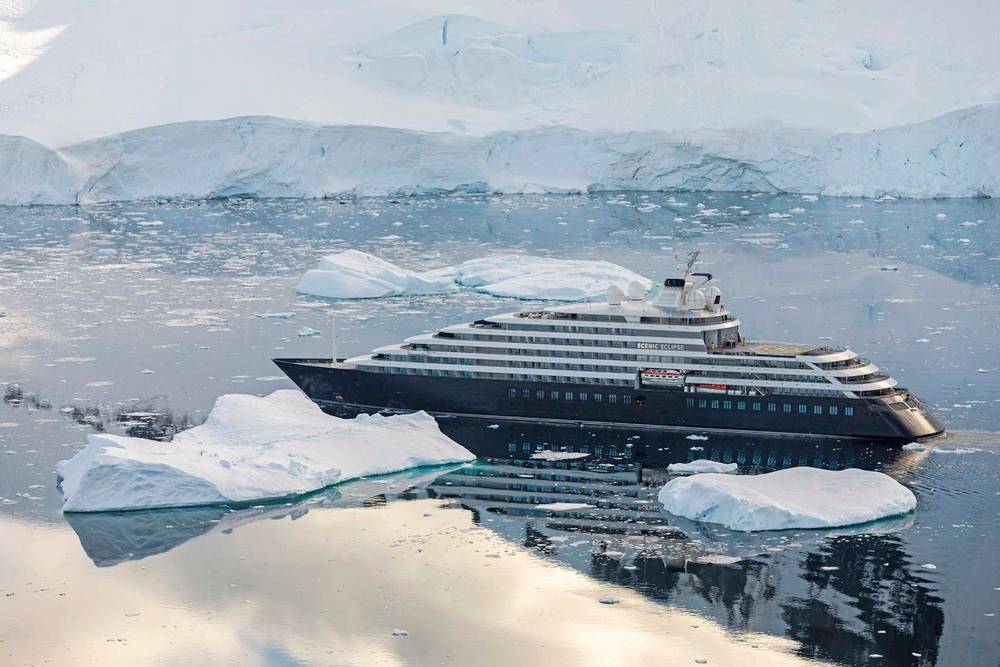
- 228Guests
- 114Cabins
- 2019Launched
- 168 mLength
All ship facts
- Crew
- 176
- Decks
- 8
- Gross tonnage
- 17545
- Speed
- 17 kts
- Width
- 22 m
- Wheelchair cabins
- 0
- Currency on board
- USD
- Language
- en-US