

Spitsbergen Circumnavigation: A Rite of Passage
CRUISE ID # QUARKULT20270630
Helsinki TO Helsinki
Suites & Fares
Itinerary

- Day 1June 30, 2027
Arrive in Helsinki, Finland
Arrive in the Finnish capital and make your way to the group hotel located right at Helsinki airport. You will have the rest of the day to explore explore the many museums, galleries and restaurants, relax at a Finnish sauna or wander the vibrant Design District. If you do plan to see Helsinki city center there is convenient rail service. Allow 40 minutes for the transfer.
- Day 2July 01, 2027
Fly to Longyearbyen, Svalbard, and embark
This morning, the group will transfer to the airport and board our private charter flight to Longyearbyen, Spitsbergen’s largest settlement. As your ship sets sail, enjoy your first view of the island’s rugged, glaciertopped mountains rising majestically from frigid waters.
- Day 3July 02, 2027
Exploring Svalbard
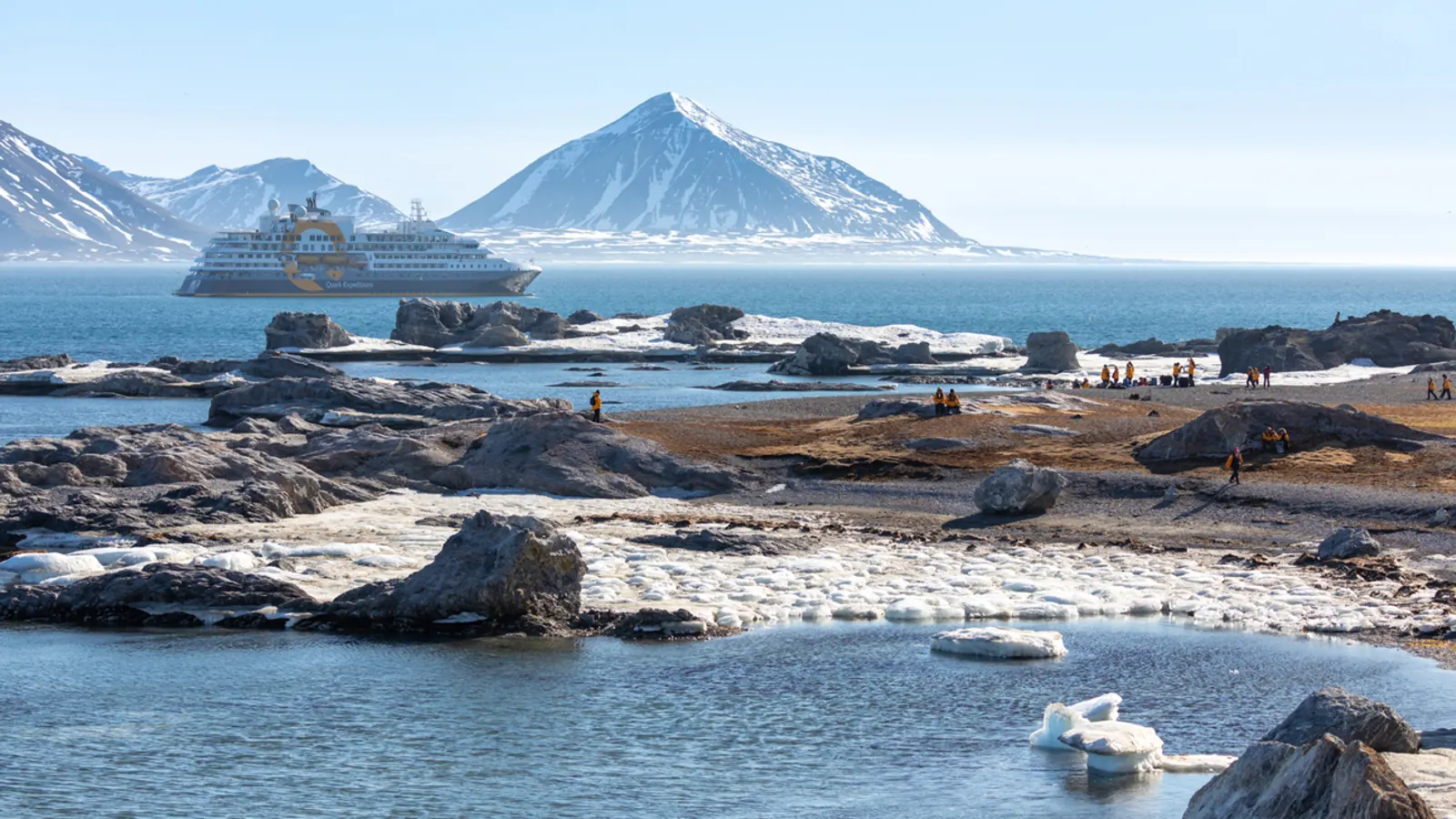
Expect a new adventure every day as we begin our journey by heading north and around the island of Spitsbergen, exploring smaller, outlying islands. We plan to circumnavigate Spitsbergen, but if conditions are favorable, we will also attempt a larger circumnavigation of the archipelago, including many of the outer islands in Svalbard. Every expedition will be different, depending on the weather and ice, but some of the places we may visit include the 14th of July Glacier, NyLondon, Phippsøya, Alkefjellet and the seldom-visited Kvitøya. These names may seem strange to you, but each site has its own unique appeal. There is no shortage of natural beauty in Svalbard, where colorful tundra meadows are complemented by immense glaciers. For birders, 14th of July Bay is home to puffins, purple sandpipers, black-legged kittiwakes, pink-footed geese, and barnacle geese, while Alkefjellet’s cliffs are teeming with nesting Brünnich’s guillemots (thickbilled murres). Always on the lookout for wildlife, be sure to have your camera ready to capture reindeer when we visit sites like Ny-London, Sundneset and Alkhornet. Phippsøya and Isbukta are often home to sea ice, the polar bear’s preferred habitat for hunting, which translates into great potential for you to view and capture them in action. A big part of appreciating Svalbard comes from understanding the history—not just how people live today, but also how this land was first explored. Whaling was a key industry, and you will see remains of outposts from the 16th century, plus other evidence of whaling at landing sites such as Smeerenburg.
- Day 4July 03, 2027
Exploring Svalbard
Expect a new adventure every day as we begin our journey by heading north and around the island of Spitsbergen, exploring smaller, outlying islands. We plan to circumnavigate Spitsbergen, but if conditions are favorable, we will also attempt a larger circumnavigation of the archipelago, including many of the outer islands in Svalbard. Every expedition will be different, depending on the weather and ice, but some of the places we may visit include the 14th of July Glacier, NyLondon, Phippsøya, Alkefjellet and the seldom-visited Kvitøya. These names may seem strange to you, but each site has its own unique appeal. There is no shortage of natural beauty in Svalbard, where colorful tundra meadows are complemented by immense glaciers. For birders, 14th of July Bay is home to puffins, purple sandpipers, black-legged kittiwakes, pink-footed geese, and barnacle geese, while Alkefjellet’s cliffs are teeming with nesting Brünnich’s guillemots (thickbilled murres). Always on the lookout for wildlife, be sure to have your camera ready to capture reindeer when we visit sites like Ny-London, Sundneset and Alkhornet. Phippsøya and Isbukta are often home to sea ice, the polar bear’s preferred habitat for hunting, which translates into great potential for you to view and capture them in action. A big part of appreciating Svalbard comes from understanding the history—not just how people live today, but also how this land was first explored. Whaling was a key industry, and you will see remains of outposts from the 16th century, plus other evidence of whaling at landing sites such as Smeerenburg.
- Day 5July 04, 2027
Exploring Svalbard
Expect a new adventure every day as we begin our journey by heading north and around the island of Spitsbergen, exploring smaller, outlying islands. We plan to circumnavigate Spitsbergen, but if conditions are favorable, we will also attempt a larger circumnavigation of the archipelago, including many of the outer islands in Svalbard. Every expedition will be different, depending on the weather and ice, but some of the places we may visit include the 14th of July Glacier, NyLondon, Phippsøya, Alkefjellet and the seldom-visited Kvitøya. These names may seem strange to you, but each site has its own unique appeal. There is no shortage of natural beauty in Svalbard, where colorful tundra meadows are complemented by immense glaciers. For birders, 14th of July Bay is home to puffins, purple sandpipers, black-legged kittiwakes, pink-footed geese, and barnacle geese, while Alkefjellet’s cliffs are teeming with nesting Brünnich’s guillemots (thickbilled murres). Always on the lookout for wildlife, be sure to have your camera ready to capture reindeer when we visit sites like Ny-London, Sundneset and Alkhornet. Phippsøya and Isbukta are often home to sea ice, the polar bear’s preferred habitat for hunting, which translates into great potential for you to view and capture them in action. A big part of appreciating Svalbard comes from understanding the history—not just how people live today, but also how this land was first explored. Whaling was a key industry, and you will see remains of outposts from the 16th century, plus other evidence of whaling at landing sites such as Smeerenburg.
- Day 6July 05, 2027
Exploring Svalbard
Expect a new adventure every day as we begin our journey by heading north and around the island of Spitsbergen, exploring smaller, outlying islands. We plan to circumnavigate Spitsbergen, but if conditions are favorable, we will also attempt a larger circumnavigation of the archipelago, including many of the outer islands in Svalbard. Every expedition will be different, depending on the weather and ice, but some of the places we may visit include the 14th of July Glacier, NyLondon, Phippsøya, Alkefjellet and the seldom-visited Kvitøya. These names may seem strange to you, but each site has its own unique appeal. There is no shortage of natural beauty in Svalbard, where colorful tundra meadows are complemented by immense glaciers. For birders, 14th of July Bay is home to puffins, purple sandpipers, black-legged kittiwakes, pink-footed geese, and barnacle geese, while Alkefjellet’s cliffs are teeming with nesting Brünnich’s guillemots (thickbilled murres). Always on the lookout for wildlife, be sure to have your camera ready to capture reindeer when we visit sites like Ny-London, Sundneset and Alkhornet. Phippsøya and Isbukta are often home to sea ice, the polar bear’s preferred habitat for hunting, which translates into great potential for you to view and capture them in action. A big part of appreciating Svalbard comes from understanding the history—not just how people live today, but also how this land was first explored. Whaling was a key industry, and you will see remains of outposts from the 16th century, plus other evidence of whaling at landing sites such as Smeerenburg.
- Day 7July 06, 2027
Exploring Svalbard
Expect a new adventure every day as we begin our journey by heading north and around the island of Spitsbergen, exploring smaller, outlying islands. We plan to circumnavigate Spitsbergen, but if conditions are favorable, we will also attempt a larger circumnavigation of the archipelago, including many of the outer islands in Svalbard. Every expedition will be different, depending on the weather and ice, but some of the places we may visit include the 14th of July Glacier, NyLondon, Phippsøya, Alkefjellet and the seldom-visited Kvitøya. These names may seem strange to you, but each site has its own unique appeal. There is no shortage of natural beauty in Svalbard, where colorful tundra meadows are complemented by immense glaciers. For birders, 14th of July Bay is home to puffins, purple sandpipers, black-legged kittiwakes, pink-footed geese, and barnacle geese, while Alkefjellet’s cliffs are teeming with nesting Brünnich’s guillemots (thickbilled murres). Always on the lookout for wildlife, be sure to have your camera ready to capture reindeer when we visit sites like Ny-London, Sundneset and Alkhornet. Phippsøya and Isbukta are often home to sea ice, the polar bear’s preferred habitat for hunting, which translates into great potential for you to view and capture them in action. A big part of appreciating Svalbard comes from understanding the history—not just how people live today, but also how this land was first explored. Whaling was a key industry, and you will see remains of outposts from the 16th century, plus other evidence of whaling at landing sites such as Smeerenburg.
- Day 8July 07, 2027
Exploring Svalbard
Expect a new adventure every day as we begin our journey by heading north and around the island of Spitsbergen, exploring smaller, outlying islands. We plan to circumnavigate Spitsbergen, but if conditions are favorable, we will also attempt a larger circumnavigation of the archipelago, including many of the outer islands in Svalbard. Every expedition will be different, depending on the weather and ice, but some of the places we may visit include the 14th of July Glacier, NyLondon, Phippsøya, Alkefjellet and the seldom-visited Kvitøya. These names may seem strange to you, but each site has its own unique appeal. There is no shortage of natural beauty in Svalbard, where colorful tundra meadows are complemented by immense glaciers. For birders, 14th of July Bay is home to puffins, purple sandpipers, black-legged kittiwakes, pink-footed geese, and barnacle geese, while Alkefjellet’s cliffs are teeming with nesting Brünnich’s guillemots (thickbilled murres). Always on the lookout for wildlife, be sure to have your camera ready to capture reindeer when we visit sites like Ny-London, Sundneset and Alkhornet. Phippsøya and Isbukta are often home to sea ice, the polar bear’s preferred habitat for hunting, which translates into great potential for you to view and capture them in action. A big part of appreciating Svalbard comes from understanding the history—not just how people live today, but also how this land was first explored. Whaling was a key industry, and you will see remains of outposts from the 16th century, plus other evidence of whaling at landing sites such as Smeerenburg.
- Day 9July 08, 2027
Exploring Svalbard
Expect a new adventure every day as we begin our journey by heading north and around the island of Spitsbergen, exploring smaller, outlying islands. We plan to circumnavigate Spitsbergen, but if conditions are favorable, we will also attempt a larger circumnavigation of the archipelago, including many of the outer islands in Svalbard. Every expedition will be different, depending on the weather and ice, but some of the places we may visit include the 14th of July Glacier, NyLondon, Phippsøya, Alkefjellet and the seldom-visited Kvitøya. These names may seem strange to you, but each site has its own unique appeal. There is no shortage of natural beauty in Svalbard, where colorful tundra meadows are complemented by immense glaciers. For birders, 14th of July Bay is home to puffins, purple sandpipers, black-legged kittiwakes, pink-footed geese, and barnacle geese, while Alkefjellet’s cliffs are teeming with nesting Brünnich’s guillemots (thickbilled murres). Always on the lookout for wildlife, be sure to have your camera ready to capture reindeer when we visit sites like Ny-London, Sundneset and Alkhornet. Phippsøya and Isbukta are often home to sea ice, the polar bear’s preferred habitat for hunting, which translates into great potential for you to view and capture them in action. A big part of appreciating Svalbard comes from understanding the history—not just how people live today, but also how this land was first explored. Whaling was a key industry, and you will see remains of outposts from the 16th century, plus other evidence of whaling at landing sites such as Smeerenburg.
- Day 10July 09, 2027
Exploring Svalbard
Expect a new adventure every day as we begin our journey by heading north and around the island of Spitsbergen, exploring smaller, outlying islands. We plan to circumnavigate Spitsbergen, but if conditions are favorable, we will also attempt a larger circumnavigation of the archipelago, including many of the outer islands in Svalbard. Every expedition will be different, depending on the weather and ice, but some of the places we may visit include the 14th of July Glacier, NyLondon, Phippsøya, Alkefjellet and the seldom-visited Kvitøya. These names may seem strange to you, but each site has its own unique appeal. There is no shortage of natural beauty in Svalbard, where colorful tundra meadows are complemented by immense glaciers. For birders, 14th of July Bay is home to puffins, purple sandpipers, black-legged kittiwakes, pink-footed geese, and barnacle geese, while Alkefjellet’s cliffs are teeming with nesting Brünnich’s guillemots (thickbilled murres). Always on the lookout for wildlife, be sure to have your camera ready to capture reindeer when we visit sites like Ny-London, Sundneset and Alkhornet. Phippsøya and Isbukta are often home to sea ice, the polar bear’s preferred habitat for hunting, which translates into great potential for you to view and capture them in action. A big part of appreciating Svalbard comes from understanding the history—not just how people live today, but also how this land was first explored. Whaling was a key industry, and you will see remains of outposts from the 16th century, plus other evidence of whaling at landing sites such as Smeerenburg.
- Day 11July 10, 2027
Exploring Svalbard
Expect a new adventure every day as we begin our journey by heading north and around the island of Spitsbergen, exploring smaller, outlying islands. We plan to circumnavigate Spitsbergen, but if conditions are favorable, we will also attempt a larger circumnavigation of the archipelago, including many of the outer islands in Svalbard. Every expedition will be different, depending on the weather and ice, but some of the places we may visit include the 14th of July Glacier, NyLondon, Phippsøya, Alkefjellet and the seldom-visited Kvitøya. These names may seem strange to you, but each site has its own unique appeal. There is no shortage of natural beauty in Svalbard, where colorful tundra meadows are complemented by immense glaciers. For birders, 14th of July Bay is home to puffins, purple sandpipers, black-legged kittiwakes, pink-footed geese, and barnacle geese, while Alkefjellet’s cliffs are teeming with nesting Brünnich’s guillemots (thickbilled murres). Always on the lookout for wildlife, be sure to have your camera ready to capture reindeer when we visit sites like Ny-London, Sundneset and Alkhornet. Phippsøya and Isbukta are often home to sea ice, the polar bear’s preferred habitat for hunting, which translates into great potential for you to view and capture them in action. A big part of appreciating Svalbard comes from understanding the history—not just how people live today, but also how this land was first explored. Whaling was a key industry, and you will see remains of outposts from the 16th century, plus other evidence of whaling at landing sites such as Smeerenburg.
- Day 12July 11, 2027
Exploring Svalbard
Expect a new adventure every day as we begin our journey by heading north and around the island of Spitsbergen, exploring smaller, outlying islands. We plan to circumnavigate Spitsbergen, but if conditions are favorable, we will also attempt a larger circumnavigation of the archipelago, including many of the outer islands in Svalbard. Every expedition will be different, depending on the weather and ice, but some of the places we may visit include the 14th of July Glacier, NyLondon, Phippsøya, Alkefjellet and the seldom-visited Kvitøya. These names may seem strange to you, but each site has its own unique appeal. There is no shortage of natural beauty in Svalbard, where colorful tundra meadows are complemented by immense glaciers. For birders, 14th of July Bay is home to puffins, purple sandpipers, black-legged kittiwakes, pink-footed geese, and barnacle geese, while Alkefjellet’s cliffs are teeming with nesting Brünnich’s guillemots (thickbilled murres). Always on the lookout for wildlife, be sure to have your camera ready to capture reindeer when we visit sites like Ny-London, Sundneset and Alkhornet. Phippsøya and Isbukta are often home to sea ice, the polar bear’s preferred habitat for hunting, which translates into great potential for you to view and capture them in action. A big part of appreciating Svalbard comes from understanding the history—not just how people live today, but also how this land was first explored. Whaling was a key industry, and you will see remains of outposts from the 16th century, plus other evidence of whaling at landing sites such as Smeerenburg.
- Day 13July 12, 2027
Exploring Svalbard
Expect a new adventure every day as we begin our journey by heading north and around the island of Spitsbergen, exploring smaller, outlying islands. We plan to circumnavigate Spitsbergen, but if conditions are favorable, we will also attempt a larger circumnavigation of the archipelago, including many of the outer islands in Svalbard. Every expedition will be different, depending on the weather and ice, but some of the places we may visit include the 14th of July Glacier, NyLondon, Phippsøya, Alkefjellet and the seldom-visited Kvitøya. These names may seem strange to you, but each site has its own unique appeal. There is no shortage of natural beauty in Svalbard, where colorful tundra meadows are complemented by immense glaciers. For birders, 14th of July Bay is home to puffins, purple sandpipers, black-legged kittiwakes, pink-footed geese, and barnacle geese, while Alkefjellet’s cliffs are teeming with nesting Brünnich’s guillemots (thickbilled murres). Always on the lookout for wildlife, be sure to have your camera ready to capture reindeer when we visit sites like Ny-London, Sundneset and Alkhornet. Phippsøya and Isbukta are often home to sea ice, the polar bear’s preferred habitat for hunting, which translates into great potential for you to view and capture them in action. A big part of appreciating Svalbard comes from understanding the history—not just how people live today, but also how this land was first explored. Whaling was a key industry, and you will see remains of outposts from the 16th century, plus other evidence of whaling at landing sites such as Smeerenburg.
- Day 14July 13, 2027
Disembark in Longyearbyen and fly to Helsinki
Your adventure ends in the frontier-style settlement of Longyearbyen. From here, we’ll transfer you to the airport for your return group charter flight to Helsinki, included in the Charter Flight & Hotel Package. Upon arrival in Helsinki, you’ll transfer to your included hotel for the night.
- Day 15July 14, 2027
Onward flight home
After breakfast, you can make your way to the airport for your onward f light home, or stay to explore Finland’s culturally-rich capital on your own if you’ve made prior arrangements.
About the Ship
Ultramarine

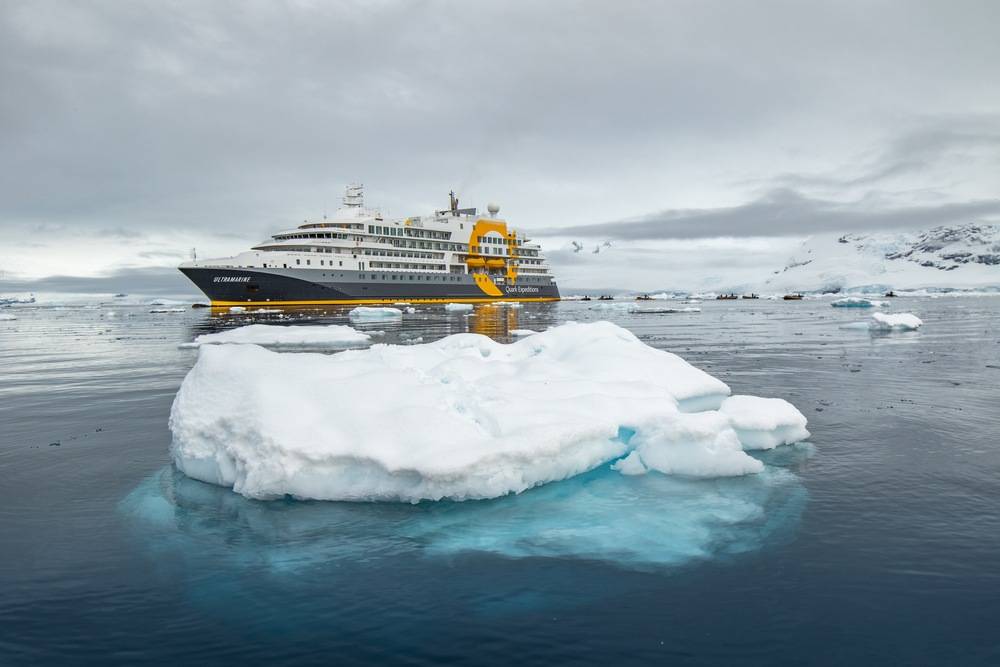
- 199Guests
- 103Cabins
- 2021Launched
- 128 mLength
All ship facts
- Crew
- 140
- Decks
- 7
- Gross tonnage
- 13500
- Speed
- 12 kts
- Width
- 22 m
- Currency on board
- USD
- Language
- en