

Greenland to Newfoundland: Mountains, Wildlife and Viking History
CRUISE ID # QUARKULT20270913
Reykjavík TO Saint-John's, Newfoundland and Labrador
Suites & Fares
Itinerary
- Day 1September 13, 2027
Arrive in Iceland
Upon arrival at Keflavik International Airport (outside Reykjavik), make your way to the nearby group hotel, included in the Charter Flight & Hotel Package. You will have the rest of the day to explore fascinating Reykjavik, known for its Norse history and stunning architecture. Make sure you allow for a one-hour transfer (by taxi or public transit) from the Keflavik hotel and airport area to Reykjavik city centre.
- Day 2September 14, 2027
Fly to Kangerlussuaq, Greenland and embark on Ocean Explorer
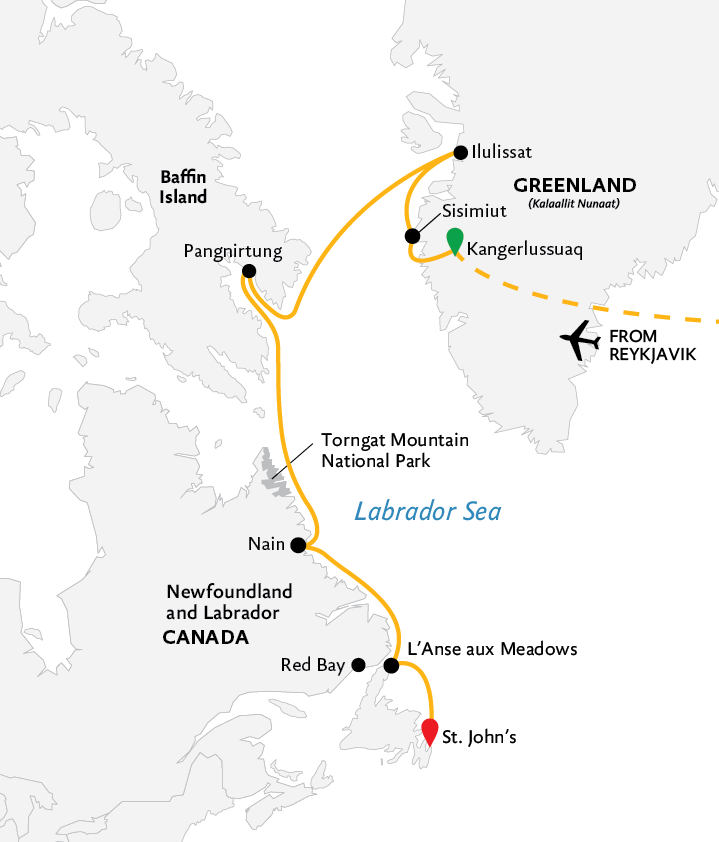
This morning you’ll catch your charter f light to Kangerlussuaq, Greenland, where you’ll board your vessel and begin your expedition. Get ready for great adventures ahead. Expect a welcome and safety briefing from your Expedition Leader.
- Day 3September 15, 2027
Explore Sisimut
Today we’ll explore in the Qeqqata Municipality on the west coast of Greenland along the Davis Strait. You will have time to wander through the historic town of Sisimiut, where several 18th-century colonial buildings still stand, one of which is Bethel Church. Just look for the striking blue-and-red wooden place of worship. Today’s activities also include a demonstration of the traditional art of kayak making. Experiencing a cultural resurgence, the kayak is a symbol of Greenland and can be traced back over 4,000 years to the Inuit, who used the vessels for hunting and transportation. We also aim to team up with our local mountain-biking partners in Sisimiut, exploring trails that lead outside the town limits.
- Day 4September 16, 2027
Ilulissat: Iceberg viewing at the UNESCO World Heritage site
Ilulissat, Greenlandic for icebergs, is one of the highlights of any journey along west Greenland. Declared a UNESCO World Heritage Site in 2004, Ilulissat Icefjord gives birth to countless icebergs. In fact, it’s home to one of the most productive glaciers in the northern hemisphere, Sermeq Kujalleq (also known as Jakobshavn Glacier). A Zodiac excursion is a unique way to enjoy the spectacle of enormous bergs floating out to Disko Bay. We plan to Zodiac cruise ashore to visit the nearby town of Ilulissat, and from there we’ll hike to the icefjord, where you can view this incredible parade of icebergs from the rocky shore. Expect to see a lot of dogs while you’re in town. There was a time when sled dogs actually outnumbered citizens in Ilulissat, which, unsurprisingly, is the birthplace of the first European to traverse the Northwest Passage by dogsled, explorer Knud Rasmussen. If time allows, you can visit a local museum dedicated to his memory.
- Day 5September 17, 2027
At Sea: Crossing the Davis Strait
As your ship navigates across the Davis Strait, onboard polar experts will present on a variety of topics such as glaciology, history and wildlife. You may even get a taste of the traditional music of Newfoundland and Labrador and learn about the origins of the famous kitchen party tradition.
- Day 6September 18, 2027
Pangnirtung: Stronghold of Inuit culture
Today is our first day exploring the Canadian Arctic as we arrive in Nunavut, Canada’s youngest territory. Nunavut, which means “our land” in the Inuktitut language, stretches north of the Arctic Circle and covers over 1.8 million square kilometers (695,000 square miles), and is considered the homeland of the Inuit in Canada. Guests will get to spend time in Pangnirtung, located at the mouth of Pangnirtung Fjord, which merges with Cumberland Sound. It’s a stronghold of the Inuit community, and an ideal place to learn about Inuit culture while admiring finely crafted traditional art, especially the textiles. You may want to purchase a famous Pang toque, a musthave knit cap for anyone visiting the community.
- Day 7September 19, 2027
Monumental Island: Ice, Wildlife, and History
Located just off the southeast shore of Baffin Island, Monumental Island— Oomienwa in Inuktitut—was named by Arctic explorer Charles Francis Hall in tribute to Sir John Franklin, who vanished searching for the Northwest Passage. Like the adjacent lands, the island is barren, rocky, and windblown. Yet, positioned at a confluence of currents, it hosts prolific numbers of black guillemots in peak summer, nesting, incubating, and fledging. Monumental is also known for massive walruses with impressive tusks, often seen in groups at haul-outs. If the wind is right, you’ll smell them before you see them. Shoals here capture massive icebergs drifting south, and Zodiac cruising on the edge of Davis Strait— linking Baffin Bay to the Labrador Sea— is unforgettable.
- Day 8September 20, 2027
Torngat Mountain National Park: Exploring the boreal wilderness
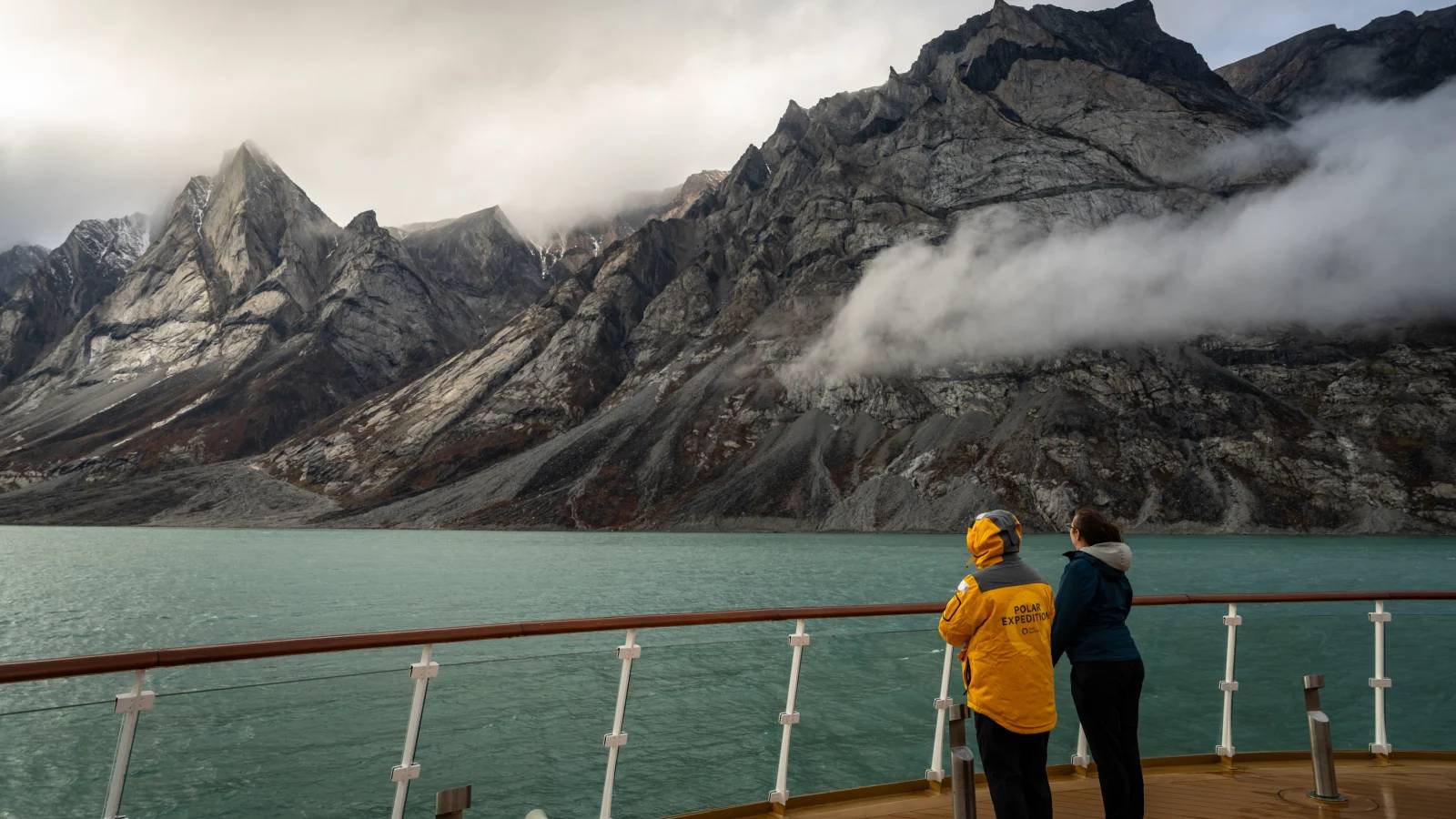
Torngat Mountains National Park will leave you awestruck. Within the 10,000 square-kilometer (3,861 square mile) national park, established in 2008, are Canada’s highest mountains east of the venerable Rockies. The park is a wilderness landscape painting brought to life: breathtaking fjords, dramatic glacial formations, stunning landscapes, boreal woodlands and wildlife. For students of Indigenous history, Torngat Mountain National Park is especially meaningful: the park is located at the northern edge of semiautonomous Nunatsiavut territory, which was recognized as the homeland of the Labrador Inuit in 2005, operating under its own constitution and administration. In fact, these lands have been home to the Nunatsiavut and their predecessors for over 7,500 years. We are honored to explore this majestic wilderness territory with you. Torngat, in Inuktitut, means “place of the spirits,” which reflects the spiritual significance of the region to the Inuit communities. As a national park, this wilderness domain offers protection to boreal woodland caribou, black bears, Labrador wolves, red and Arctic foxes, polar bears, and peregrine falcons, among other species. You will have opportunities to explore this national wilderness area during Zodiac and kayaking excursions, as well as guided hikes.
- Day 9September 21, 2027
Torngat Mountain National Park: Exploring the boreal wilderness
Torngat Mountains National Park will leave you awestruck. Within the 10,000 square-kilometer (3,861 square mile) national park, established in 2008, are Canada’s highest mountains east of the venerable Rockies. The park is a wilderness landscape painting brought to life: breathtaking fjords, dramatic glacial formations, stunning landscapes, boreal woodlands and wildlife. For students of Indigenous history, Torngat Mountain National Park is especially meaningful: the park is located at the northern edge of semiautonomous Nunatsiavut territory, which was recognized as the homeland of the Labrador Inuit in 2005, operating under its own constitution and administration. In fact, these lands have been home to the Nunatsiavut and their predecessors for over 7,500 years. We are honored to explore this majestic wilderness territory with you. Torngat, in Inuktitut, means “place of the spirits,” which reflects the spiritual significance of the region to the Inuit communities. As a national park, this wilderness domain offers protection to boreal woodland caribou, black bears, Labrador wolves, red and Arctic foxes, polar bears, and peregrine falcons, among other species. You will have opportunities to explore this national wilderness area during Zodiac and kayaking excursions, as well as guided hikes.
- Day 10September 22, 2027
Nain, Nunatsiavut: Home of the Labrador Inuit
Nain, which has a population of approximately 1,200, is the administrative capital of Nunatsiavut, the semi-autonomous region in northern Labrador claimed by the Inuit. Visitors can learn about Labrador Inuit heritage through interactive exhibits, artwork, and cultural programs at the very modern-looking Illusuak Cultural Centre. Then, to learn about the other cultural group that influenced the region, stroll through town to discover the historic Moravian Mission complex, established in 1771. The white-painted church and mission house bear witness to centuries of cultural exchanges between the Inuit and European missionaries. You’ll have time to engage with friendly locals to hear stories passed down through the generations, and sample traditional foods like arctic char and cloudberries. There will be a guided hike to take in breathtaking vistas of the surrounding mountains and sea.
- Day 11September 23, 2027
At Sea
As our ship heads south, enjoy the views of the Labrador coast. While at sea for the day, join expedition staff out on deck as they look for whales and birdlife. This is also your chance to relax with a glass of wine or hot tea and simply take in the wondrous beauty around you.
- Day 12September 24, 2027
L'Anse aux Meadows: Vikings in North America
Consider the wooden longboats that transported the Vikings an incredible 2,180 kilometers (842 square miles) from Greenland to Newfoundland in 1000 AD. Today, you’re going to visit the archeological remains at the place they landed in their hand-hewn vessels. L’Anse aux Meadows National Historic Site (also a recognized UNESCO World Heritage Site) is the only confirmed Norse or Viking settlement in North America. Join a guided tour to see where Norseman Leif Erikson, son of Erik the Red, is believed to have founded “Vinland” (the East Coast area including what would later be known as Newfoundland) around 1000 AD. Explore the reconstructed sod huts and Norse ruins throughout the historic site—proof that Vikings discovered North America 500 years before Christopher Columbus’ much-chronicled arrival.
- Day 13September 25, 2027
At Sea
Your final at-sea day is a great opportunity for you to ask any lingering questions you have for our team of onboard experts, attend one last presentation, or relax in one of the outdoor Jacuzzis.
- Day 14September 26, 2027
Disembark in St. John's, Newfoundland
Your ship arrives at the pier in St. John’s for a morning disembarkation. After breakfast, you may make your way to St. John’s International Airport to connect with your onward flight, or stay longer if you have booked additional accommodation.
About the Ship
Ultramarine

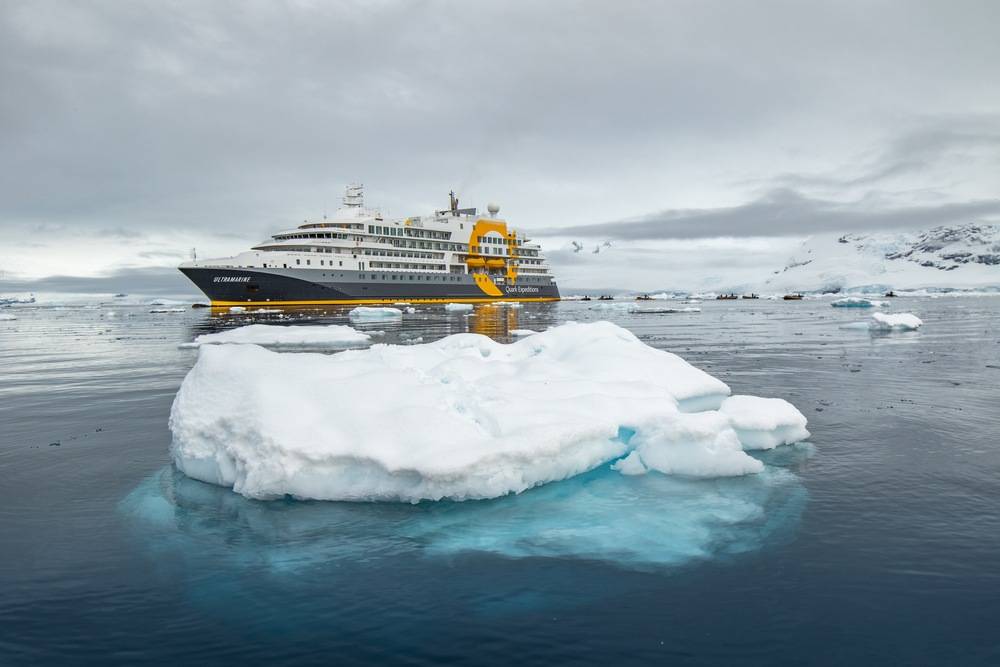
- 199Guests
- 103Cabins
- 2021Launched
- 128 mLength
All ship facts
- Crew
- 140
- Decks
- 7
- Gross tonnage
- 13500
- Speed
- 12 kts
- Width
- 22 m
- Currency on board
- USD
- Language
- en