

Ultimate Arctic Odyssey: Northbound
CRUISE ID # POLARLATDIS0608202818
Longyearbyen TO Reykjavík
Suites & Fares
Itinerary
- Day 1August 06, 2028
Longyearbyen, Svalbard and Jan Mayen
Longyearbyen is the biggest settlement in Svalbard. Seat of the Norwegian administration, it also has the best services and infrastructure in the archipelago. Located deep in the Adventfjord, a sidearm of the Isfjorden (Icefjord), Longyearbyen’s airport can be used all-year round, but its harbor is blocked by ice in winter. Most shops, hotels, restaurants and a hospital are within easy walking distance of the port. One of the most prominent buildings in town is the UNIS center, where several Norwegian universities have joined forces to operate and offer the northernmost higher education to both Norwegian and international students. Adjacent to UNIS, and well worth a visit, is the Svalbard Museum, covering the natural history and exploitation of Svalbard. Remnants of the former mining activity can be seen all around Longyearbyen and even in town.
- Day 2August 07, 2028
Kongsfjorden (King Bay), Spitsbergen, Svalbard and Jan Mayen
As the weak Arctic sun rises, we sail into breathtaking Kongsfjorden, a vast fjord system framed by the dramatic Three Crowns mountains, mantled with creaking glaciers. Here we will visit Ny-Ålesund, Earth’s northernmost ‘settlement’. This quirky community is known for its historic role as a base for legendary polar explorers such as Amundsen and Nansen, and more recently for its plethora of international research stations – so whether Ny-Ålesund is a true ‘town’ is up for debate! This remote outpost continues to support vital research amid its breathtaking surroundings, blending the frontiers of science and exploration. - Day 3August 08, 2028
Northwest Spitsbergen National Park, Svalbard and Jan Mayen
Northwest Svalbard has been preserved as a national park since 1973, and hosts a rich history of early Arctic exploration and whaling. First visited by William Barents in 1596, the area was quickly pounced upon by whalers from Holland and England, whose haunting remnants, such as Smeerenburg’s crumbling blubber ovens and whalers’ graves, remain visible. The region has been reclaimed by nature and is once again a pristine wilderness haven, now heavily protected in law, and holds a rich ecosystem of Arctic flowers, seabirds, walrus, and polar bears, amongst many other species. - Day 4August 09, 2028
Svalbard Archipelago, Svalbard and Jan Mayen
A flexible itinerary allows us to take advantage of favorable ice and weather conditions to travel through the northern stretches of Svalbard to points visited by famous polar explorers such as Andrée, Amundsen and Nobile. Destinations might include the narrow waterways and striking mountains of Krossfjord and Raudfjord. The ship may visit the historic settings of Ny Alesund, Ny London or Amsterdamoya. And of course, we hope to see distinctly Arctic wildlife from walrus hauled out in noisy groups on remote shorelines, to reindeer grazing alpine slopes, and from ptarmigan in their camouflaged hiding places, to mighty polar bears striding the shores in search of their next meal.
- Day 5August 10, 2028
Bear Island, Norway
Almost half way between Tromsø and Svalbard is isolated Bear Island – considered the southernmost island of the Svalbard Archipelago. The unglaciated island is an impressive Nature Reserve of steep, high cliffs that are frequented by seabirds, specifically at the southern tip. Brünnich’s Guillemots, Common Guillemots, Black Guillemots, Razorbills, Little Auks, Northern Fulmars, Glaucous Gulls, Black-legged Kittiwakes, and even Atlantic Puffins and Northern Gannets nest along the cliffs south of Sørhamna. Because of the large numbers of birds and the isolated location, Bear Island has been recognized as an Important Bird Area. It was once a hotspot for whaling and walrus hunting, and at one stage even mining. Bear Island received its name because of a polar bear encountered by early explorer Willem Barentsz. Today polar bears rarely visit the island and its only settlement is a meteorological station manned all-year round on the north side.
- Day 6August 11, 2028
Day at Sea
- Day 7August 12, 2028
Svolvær, Norway
Strung across bridges between a plethora of tiny islands, Svolvær is a tiny Arctic Venice, thriving where land meets water. This delightful little town is the largest in Lofoten and offers the quintessential Lofoten experience. Brightly coloured wooden shacks at the water’s edge are draped in fishing equipment, cod hang to dry on wooden racks, and fishing and tour boats bob gently in the harbor. While the town is packed with gorgeous galleries, boutique shops, cozy cafes, and slick eateries, undoubtedly the best thing to do in Svolvær is lace up your hiking boots and get out and explore! The town holds a vast network of hiking trails accessible from right in town, and the views simply have to be seen to be believed. - Day 8August 13, 2028
Reine, Lofoten Archipelago, Norway
Lofoten Islands are considered to be in “another world” and for good reason. The archipelago with its jagged coastline is a majestic setting of high alpine summits, sandy beaches, green prairies and spectacular fjords. Many of the fjords are UNESCO listed, so whichever you manage to see will be a treat. Reine is a picture-perfect village surrounded by blue waters, lush greenery and speckled colour from the fishermen’s cottages. Enjoy hiking, whale-watching and birdwatching from this idyllic setting.
- Day 9August 14, 2028
Day at Sea
- Day 10August 15, 2028
Jan Mayen Island, Norway
Described as one of the most remote islands in the world, Jan Mayen liesbetween Norway to the east and Greenland to the west. It is a rugged volcanicisland 34 miles long and is made up of two parts – the larger section to thenorth (Beerenbeg Volcano) and the longer but narrower section to the south. Amile-wide isthmus links these two parts. Geologically, the island was formed bya ‘hotspot’ where molten magma pushes up through the earth’s crust to createvolcanoes in the middle of nowhere. Politically, Jan Mayen is an integral partof Norway. The eighteen people living on the island work for either the NorwegianArmed Forces or the Norwegian Meteorological Institute. Their main purpose isto operate the Loran-C radio navigation system. From 1615 to 1638, the Dutchran a whaling station here. Today, the island is a nature reserve underNorwegian jurisdiction aimed at preserving the pristine Arctic island and themarine life, including the ocean floor.
- Day 11August 16, 2028
Day at Sea
- Day 12August 17, 2028
Ittoqqortoormiit, Greenland
On the northern side of the entrance to the Scoresbysund fjord system stands Ittoqqortoormiit, the only permanent settlement in the region. The population here is approximately 430 people, largely dependent on a subsistence lifestyle. The inhabitants make their living hunting seals, narwhals, muskoxen and polar bears. Ittoqqortoormiit is the northernmost settlement on Greenland’s east coast, apart from a few meteorological and military stations. Brightly colored, quaint little houses and dogsled enclosures dot the rocky slopes of the settlement. It must be incredible to live here every day enjoying the magnificent views of Kap Brewster and the Volquart Boon Coast to the south.
- Day 13August 18, 2028
Northeast Greenland, Greenland
From Ittoqqortoormiit, we enter the Northeast Greenland National Park — the world’s largest protected land area, spanning nearly a million square kilometers and encompassing the northernmost land on Earth. The region was once home to nomadic Inuit hunters, but today it is uninhabited save for a few small Danish military bases. - Day 14August 19, 2028
Northeast Greenland, Greenland
- Day 15August 20, 2028
Northeast Greenland, Greenland
- Day 16August 21, 2028
Northeast Greenland, Greenland
- Day 17August 22, 2028
Day at Sea
- Day 18August 23, 2028
Reykjavík, Iceland
Sprawling Reykjavík, the nation's nerve center and government seat, is home to half the island's population. On a bay overlooked by proud Mt. Esja (pronounced eh-shyuh), with its ever-changing hues, Reykjavík presents a colorful sight, its concrete houses painted in light colors and topped by vibrant red, blue, and green roofs. In contrast to the almost treeless countryside, Reykjavík has many tall, native birches, rowans, and willows, as well as imported aspen, pines, and spruces.Reykjavík's name comes from the Icelandic words for smoke, reykur, and bay, vík. In AD 874, Norseman Ingólfur Arnarson saw Iceland rising out of the misty sea and came ashore at a bay eerily shrouded with plumes of steam from nearby hot springs. Today most of the houses in Reykjavík are heated by near-boiling water from the hot springs. Natural heating avoids air pollution; there's no smoke around. You may notice, however, that the hot water brings a slight sulfur smell to the bathroom.Prices are easily on a par with other major European cities. A practical option is to purchase a Reykjavík City Card at the Tourist Information Center or at the Reykjavík Youth Hostel. This card permits unlimited bus usage and admission to any of the city's seven pools, the Family Park and Zoo, and city museums. The cards are valid for one (ISK 3,300), two (ISK 4,400), or three days (ISK 4,900), and they pay for themselves after three or four uses a day. Even lacking the City Card, paying admission (ISK 500, or ISK 250 for seniors and people with disabilities) to one of the city art museums (Hafnarhús, Kjarvalsstaðir, or Ásmundarsafn) gets you free same-day admission to the other two.
About the Ship
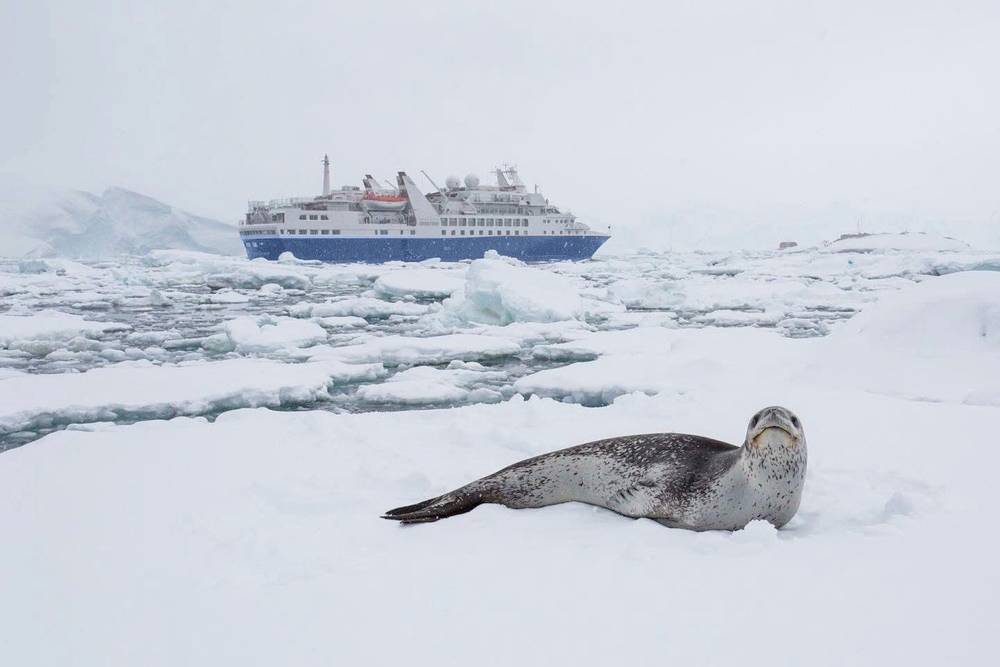
MV Discoverer

- 140Guests
- 1989Launched
- 108 mLength
All ship facts
- Crew
- 107
- Gross tonnage
- 6158
- Speed
- 14 kts
- Width
- 15 m
- Currency on board
- USD
- Language
- en