

Complete East Greenland
CRUISE ID # POLARLATOCE1709202712
Reykjavík TO Reykjavík
Suites & Fares
Itinerary
- Day 1September 17, 2027
Reykjavík, Iceland
Sprawling Reykjavík, the nation's nerve center and government seat, is home to half the island's population. On a bay overlooked by proud Mt. Esja (pronounced eh-shyuh), with its ever-changing hues, Reykjavík presents a colorful sight, its concrete houses painted in light colors and topped by vibrant red, blue, and green roofs. In contrast to the almost treeless countryside, Reykjavík has many tall, native birches, rowans, and willows, as well as imported aspen, pines, and spruces.Reykjavík's name comes from the Icelandic words for smoke, reykur, and bay, vík. In AD 874, Norseman Ingólfur Arnarson saw Iceland rising out of the misty sea and came ashore at a bay eerily shrouded with plumes of steam from nearby hot springs. Today most of the houses in Reykjavík are heated by near-boiling water from the hot springs. Natural heating avoids air pollution; there's no smoke around. You may notice, however, that the hot water brings a slight sulfur smell to the bathroom.Prices are easily on a par with other major European cities. A practical option is to purchase a Reykjavík City Card at the Tourist Information Center or at the Reykjavík Youth Hostel. This card permits unlimited bus usage and admission to any of the city's seven pools, the Family Park and Zoo, and city museums. The cards are valid for one (ISK 3,300), two (ISK 4,400), or three days (ISK 4,900), and they pay for themselves after three or four uses a day. Even lacking the City Card, paying admission (ISK 500, or ISK 250 for seniors and people with disabilities) to one of the city art museums (Hafnarhús, Kjarvalsstaðir, or Ásmundarsafn) gets you free same-day admission to the other two.
- Day 2September 18, 2027
Day at Sea
- Day 3September 19, 2027
Kuummiut, Greenland
The day begins in Kuummiut, a picturesque and prosperous village nestled in the serene Ammassalik Fjord. Roughly meaning “People who Live by the River,” Kuummiut thrives on its rich fishing grounds and is home to East Greenland’s only fish factory, drawing fishermen from across the local area. With no road access, the sea serves as its highway, and the village offers a glimpse into traditional East Greenlandic life, marked by sled dogs, motorboats, and the quiet rhythm of Inuit life. It’s a peaceful setting to watch drifting icebergs and meet the locals to learn about their beautiful culture. - Day 4September 20, 2027
Tasiilaq, Greenland
Discover the east coast of Greenland, where the alpine mountains merge closely with the sea, and the fjords are adorned with high snow-capped peaks and drifting icebergs. Follow in the wake of Captain Jean-Baptiste Charcot’s famous ship, the Pourquoi Pas?, which set off with its crew to discover Ammassalik. The name of this island is a reference to the capelin, a small silver coloured fish, whose presence announces to inhabitants the return of spring. This small island offers a spectacular and wild setting where the Inuit people chose to live. Set off to meet the inhabitants of this remote region, with deep-rooted traditions, and discover the Inuit culture.
- Day 5September 21, 2027
Day at Sea
- Day 6September 22, 2027
Ittoqqortoormiit, Greenland
On the northern side of the entrance to the Scoresbysund fjord system stands Ittoqqortoormiit, the only permanent settlement in the region. The population here is approximately 430 people, largely dependent on a subsistence lifestyle. The inhabitants make their living hunting seals, narwhals, muskoxen and polar bears. Ittoqqortoormiit is the northernmost settlement on Greenland’s east coast, apart from a few meteorological and military stations. Brightly colored, quaint little houses and dogsled enclosures dot the rocky slopes of the settlement. It must be incredible to live here every day enjoying the magnificent views of Kap Brewster and the Volquart Boon Coast to the south.
- Day 7September 23, 2027
Northeast Greenland, Greenland
As the ship sails past the rugged Liverpool Land peninsula, we enter the vast Northeast Greenland National Park — the world’s largest protected land area, spanning nearly a million square kilometers and encompassing the northernmost land on Earth. Uninhabited today, the region was once home to nomadic Inuit hunters who thrived off its natural abundance until the mid-19th century. - Day 8September 24, 2027
Day at Sea
- Day 9September 25, 2027
Day at Sea
- Day 10September 26, 2027
Blosseville Coast, Greenland
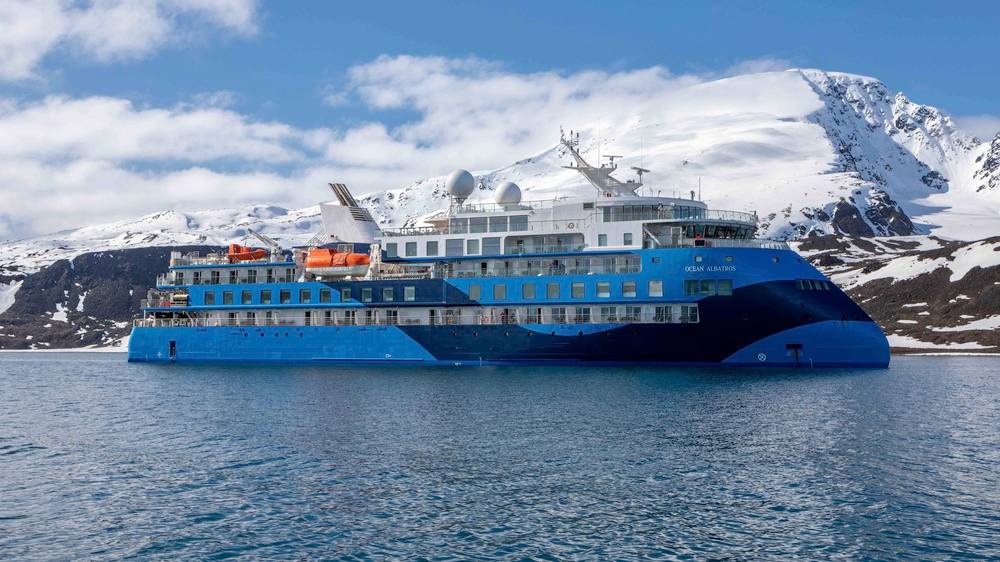
The Ocean Albatros will sail south along Greenland’s Blosseville Coast, a rugged landscape shaped by volcanic activity around 50 million years ago. First surveyed by explorer Ejnar Mikkelsen, this area has long been navigated by the Inuit. If conditions allow, we may land in this now-uninhabited region of breathtaking beauty. - Day 11September 27, 2027
Day at Sea
- Day 12September 28, 2027
Reykjavík, Iceland
Sprawling Reykjavík, the nation's nerve center and government seat, is home to half the island's population. On a bay overlooked by proud Mt. Esja (pronounced eh-shyuh), with its ever-changing hues, Reykjavík presents a colorful sight, its concrete houses painted in light colors and topped by vibrant red, blue, and green roofs. In contrast to the almost treeless countryside, Reykjavík has many tall, native birches, rowans, and willows, as well as imported aspen, pines, and spruces.Reykjavík's name comes from the Icelandic words for smoke, reykur, and bay, vík. In AD 874, Norseman Ingólfur Arnarson saw Iceland rising out of the misty sea and came ashore at a bay eerily shrouded with plumes of steam from nearby hot springs. Today most of the houses in Reykjavík are heated by near-boiling water from the hot springs. Natural heating avoids air pollution; there's no smoke around. You may notice, however, that the hot water brings a slight sulfur smell to the bathroom.Prices are easily on a par with other major European cities. A practical option is to purchase a Reykjavík City Card at the Tourist Information Center or at the Reykjavík Youth Hostel. This card permits unlimited bus usage and admission to any of the city's seven pools, the Family Park and Zoo, and city museums. The cards are valid for one (ISK 3,300), two (ISK 4,400), or three days (ISK 4,900), and they pay for themselves after three or four uses a day. Even lacking the City Card, paying admission (ISK 500, or ISK 250 for seniors and people with disabilities) to one of the city art museums (Hafnarhús, Kjarvalsstaðir, or Ásmundarsafn) gets you free same-day admission to the other two.
About the Ship
Ocean Albatros

- 93Cabins
- 2022Launched
- 104 mLength
All ship facts
- Decks
- 7
- Gross tonnage
- 7400
- Speed
- 16 kts
- Width
- 18 m
- Currency on board
- USD
- Language
- en