

Treasures of the Inside Passage
CRUISE ID # LINDBLADQTTOIP-270502
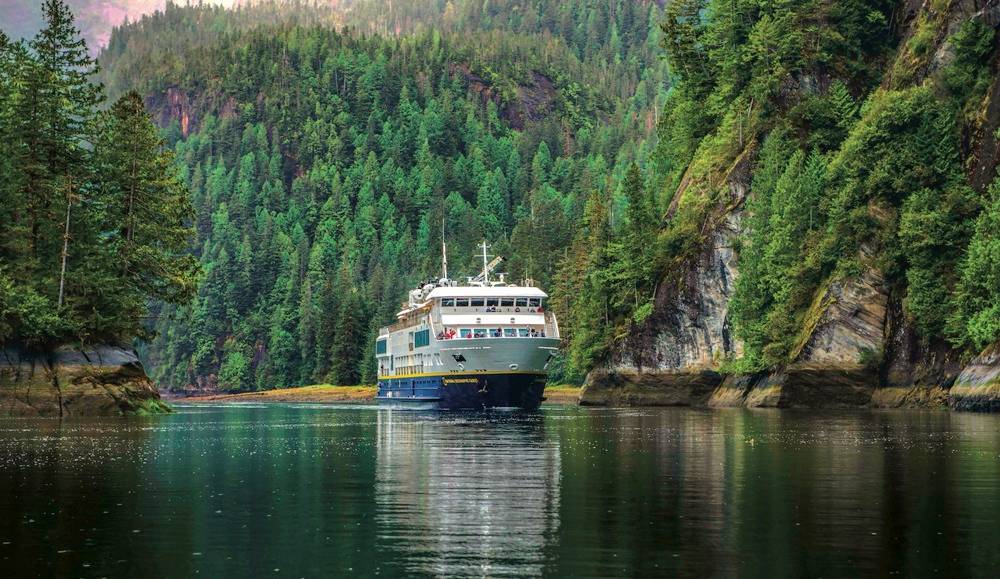
Seattle, Washington TO Juneau, Alaska
Suites & Fares
Itinerary
- Day 1May 02, 2027
Seattle, Washington, United States
Seattle is a scenic seaport city in western Washington, situated on an isthmus between Puget Sound to the west and Lake Washington to the east. It is the largest city in Washington. Five pioneer families from Illinois first settled the area in 1851, and named the town after a friendly Suquamish Indian chief. It was incorporated as a city in 1869, and grew quickly after the Great Northern Railway arrived in 1893, especially during the Alaska Gold Rush of 1897. When the Panama Canal opened in 1914, Seattle became a major Pacific port of entry, and today it is the region's commercial and transportation hub and the centre of manufacturing, trade, and finance, with an estimated 684,451 residents as of 2015.
- Day 2May 03, 2027
San Juan Islands, Washington, United States
Visit the more remote of the San Juan Islands, an archipelago in northern Washington State perfect for kayaking, exploring by Zodiac and hiking. Walks with your expert staff will familiarize you with the natural and cultural history of the rugged northwest coast region.
- Day 3May 04, 2027
Victoria, British Columbia, Canada
Victoria, the capital of a province whose license plates brazenly label it "The Best Place on Earth," is a walkable, livable seaside city of fragrant gardens, waterfront paths, engaging museums, and beautifully restored 19th-century architecture. In summer, the Inner Harbour—Victoria's social and cultural center—buzzes with visiting yachts, horse-and-carriage rides, street entertainers, and excursion boats heading out to visit pods of friendly local whales. Yes, it might be a bit touristy, but Victoria's good looks, gracious pace, and manageable size are instantly beguiling, especially if you stand back to admire the mountains and ocean beyond. At the southern tip of Vancouver Island, Victoria dips slightly below the 49th parallel. That puts it farther south than most of Canada, giving it the mildest climate in the country, with virtually no snow and less than half the rain of Vancouver. The city's geography, or at least its place names, can cause confusion. Just to clarify: the city of Victoria is on Vancouver Island (not Victoria Island). The city of Vancouver is on the British Columbia mainland, not on Vancouver Island. At any rate, that upstart city of Vancouver didn't even exist in 1843 when Victoria, then called Fort Victoria, was founded as the westernmost trading post of the British-owned Hudson's Bay Company. Victoria was the first European settlement on Vancouver Island, and in 1868 it became the capital of British Columbia. The British weren't here alone, of course. The local First Nations people—the Songhees, the Saanich, and the Sooke—had already lived in the areas for thousands of years before anyone else arrived. Their art and culture are visible throughout southern Vancouver Island. You can see this in private and public galleries, in the totems at Thunderbird Park, in the striking collections at the Royal British Columbia Museum, and at the Quw'utsun'Cultural and Conference Centre in nearby Duncan. Spanish explorers were the first foreigners to explore the area, although they left little more than place names (Galiano Island and Cordova Bay, for example). The thousands of Chinese immigrants drawn by the gold rushes of the late 19th century had a much greater impact, founding Canada's oldest Chinatown and adding an Asian influence that's still quite pronounced in Victoria's multicultural mix. Despite its role as the provincial capital, Victoria was largely eclipsed, economically, by Vancouver throughout the 20th century. This, as it turns out, was all to the good, helping to preserve Victoria's historic downtown and keeping the city largely free of skyscrapers and highways. For much of the 20th century, Victoria was marketed to tourists as "The Most British City in Canada," and it still has more than its share of Anglo-themed pubs, tea shops, and double-decker buses. These days, however, Victorians prefer to celebrate their combined indigenous, Asian, and European heritage, and the city's stunning wilderness backdrop. Locals do often venture out for afternoon tea, but they're just as likely to nosh on dim sum or tapas. Decades-old shops sell imported linens and tweeds, but newer upstarts offer local designs in hemp and organic cotton. And let's not forget that fabric prevalent among locals: Gore-Tex. The outdoors is ever present here. You can hike, bike, kayak, sail, or whale-watch straight from the city center, and forests, beaches, offshore islands, and wilderness parklands lie just minutes away. A little farther afield, there's surfing near Sooke, wine touring in the Cowichan Valley, and kayaking among the Gulf Islands.
- Day 4May 05, 2027
Gulf Islands, Canada
Located in the Strait of Georgia, between the mainland of British Columbia and Vancouver Island, the Gulf Islands are a nature lover's paradise. Explore the myriad islets and rocky coasts, and keep an eye out for harbor seals and an array of seabirds, shorebirds and birds of prey.
- Day 5May 06, 2027
Alert Bay, British Columbia, Canada
Alert Bay is a small village on Cormorant Island, with approximately 1,300 residents. More than half are First Nations people. The settlement was named in 1860 in honour of the Royal Navy ship HMS Alert, which conducted survey operations in the area. The traditional Kwakwaka’wakw people of Alert Bay have endured a difficult history of devastating foreign diseases and failed government policies of assimilation. Today there is a revival of their traditions. One of the most well-known features in Alert Bay is the 173 foot wooden carved totem pole, claimed by some to be the tallest totem pole in the world.
- Day 6May 07, 2027
Cruising Inside Passage, U.S.A
Cruise northward along the pristine coastline in search of whales, dolphins, bears, deer and other wildlife. Go ashore to explore or kayak among the many bays and inlets.
- Day 7May 08, 2027
Cruising Inside Passage, U.S.A
- Day 8May 09, 2027
Misty Fjords National Monument, Alaska, United States
Rudyerd Bay is one of the highlights of the Misty Fiords, 40 miles east of Ketchikan, along the Inside Passage. This fjord cuts through steep-sided mountainous terrain and extends far into the mainland. The scenery is stunning, with dramatic thousand-foot waterfalls plunging down rainforest covered cliffs to the water below.
- Day 9May 10, 2027
Petersburg, Alaska, United States
Petersburg lies on the northern end of Mitkof Island, in the Inside Passage, on the banks of Frederick Sound where it joins the Wrangell Narrows. It is halfway between Juneau, 120 mi to the north, and Ketchikan 110 mi to the south. Remnants of fish traps and ancient petroglyphs indicate that this area was used by the Tlingit people as a summer fish camp. For more than 1,000 years In 1897 Peter Buschmann, a Norwegian immigrant, settled here. The place was named Petersburg after him, and was incorporated as a town in 1910. It flourished as a fishing port, and even today, it remains an island community that makes its living from the sea. It is the largest home-based halibut fleet in Alaska, and is ranked the 15th-most lucrative fisheries port in the United States by volume.
- Day 10May 11, 2027
Chichagof Island, Alaska, United States
Spend a full day kayaking, hiking, and searching for bubble-net feeding or breaching humpback whales.
- Day 11May 12, 2027
Glacier Bay National Park, Alaska, United States
Located in Southeast Alaska, west of the capital city of Juneau, Glacier Bay is a beautiful National Park full of snow capped mountains, tidewater glaciers and wildlife. Experience wildlife in all its beauty from boat trips for whale watching and hiking through the trails of the Park. It is a protected area full of wonder to be explored.
- Day 12May 13, 2027
Inian Islands, Alaska, United States
The Inian Islands are a collection of half a dozen small, rocky islands located at the Pacific Ocean at the end of the Icy Strait. The islands possess a particularly rich ecosystem, on land as in the sea with Steller sea lions, Tridactyl gulls, cormorants and sea otters calling the Inian Island home which you can explore further with a Zodiac® outing.
- Day 12May 13, 2027
Icy Strait Point, United States
Since Icy Strait Point opened in 2004, Hoonah has attracted more visitors, particularly those who arrive by cruise ship. The port is centered around the restored salmon cannery, which now houses a museum, local arts and crafts shops, restaurants, and a mid-1930s cannery line display. Outside is the world’s largest and highest zip line at 5,330 feet long, featuring a 1,300-foot vertical drop—a thrilling ride with fantastic views of the surrounding mountains and ocean. If you're looking for more relaxing mountaintop views, book a gondola ride that will whisk you up into the mountains for some leisurely hiking and stellar sightseeing. Icy Strait Point houses several restaurants where visitors can dine on freshly caught seafood while taking in the waterfront views. A range of excursions are available at Icy Strait Point catering primarily to cruise ship passengers, from Alaska Native dance performances to bear viewing and whale watching.
- Day 13May 14, 2027
Endicott Arm, Alaska, United States
Endicott Arm is a long fjord branching off Stephen’s Passage, the major inner passage heading southeast from Juneau. The easternmost tip of Endicott Arm nearly reaches the Canadian border. Like all the fords in this region, it was carved by glaciers during the last Ice Age which ended about 11,000 years ago. One either side of the fjord the steep, nearly vertical walls, rise to a height of about 370 meters or 1,200 feet. Sitka spruce and western hemlock trees manage to cling onto the rock faces, adding to the breath-taking beauty of the landscape.
- Day 14May 15, 2027
Juneau, Alaska, United States
Juneau, Alaska's capital and third-largest city, is on the North American mainland but can't be reached by road. Bounded by steep mountains and water, the city’s geographic isolation and compact size make it much more akin to an island community such as Sitka than to other Alaskan urban centers, such as Fairbanks or Anchorage. Juneau is full of contrasts. Its dramatic hillside location and historic downtown buildings provide a frontier feeling, but the city's cosmopolitan nature comes through in fine museums, noteworthy restaurants, and a literate and outdoorsy populace. The finest of the museums, the Alaska State Museum, is scheduled to reopen in May 2016 on its old site as the expanded Alaska State Library, Archives, and Museum (SLAM) following several years of planning and exhibit research. Another new facility, the Walter Soboleff Center, offers visitors a chance to learn about the indigenous cultures of Southeast Alaska–-Tlingit, Haida, and Tsimshian. Other highlights include the Mt. Roberts Tramway, plenty of densely forested wilderness areas, quiet bays for sea kayaking, and even a famous drive-up glacier, Mendenhall Glacier. For goings-on, pick up the Juneau Empire (www.juneauempire.com), which keeps tabs on state politics, business, sports, and local news.
About the Ship
National Geographic Quest

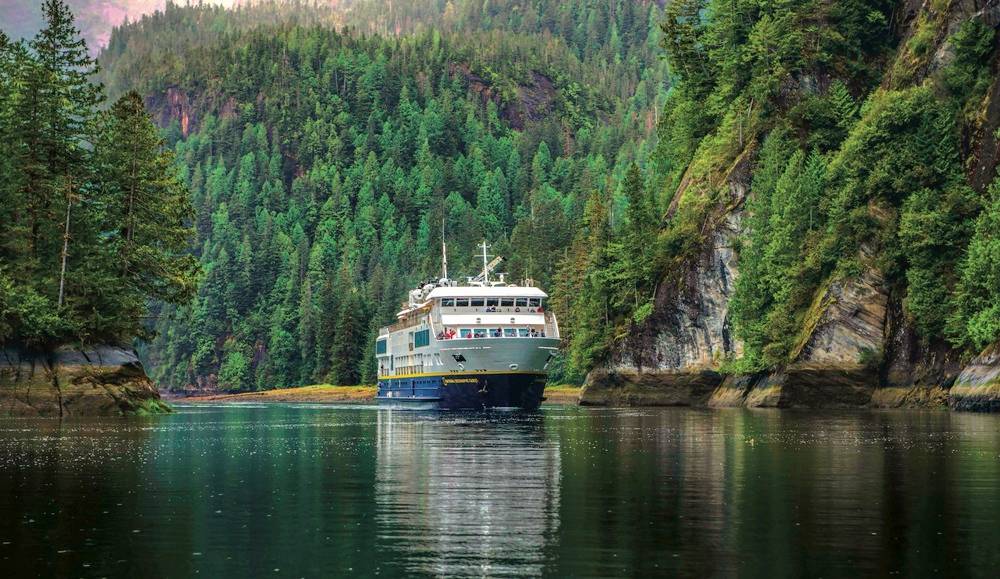
- 100Guests
- 50Cabins
- 2017Launched
- 73 mLength
All ship facts
- Crew
- 52
- Decks
- 4
- Gross tonnage
- 2920
- Speed
- 12 kts
- Width
- 14 m
- Currency on board
- USD
- Language
- en