

Fabled Lands of the North: Greenland to Newfoundland
CRUISE ID # LINDBLADEXGRNF-270815
Reykjavík TO Saint-John's, Newfoundland and Labrador
Suites & Fares
Itinerary
- Day 1August 15, 2027
Reykjavík, Iceland
Sprawling Reykjavík, the nation's nerve center and government seat, is home to half the island's population. On a bay overlooked by proud Mt. Esja (pronounced eh-shyuh), with its ever-changing hues, Reykjavík presents a colorful sight, its concrete houses painted in light colors and topped by vibrant red, blue, and green roofs. In contrast to the almost treeless countryside, Reykjavík has many tall, native birches, rowans, and willows, as well as imported aspen, pines, and spruces.Reykjavík's name comes from the Icelandic words for smoke, reykur, and bay, vík. In AD 874, Norseman Ingólfur Arnarson saw Iceland rising out of the misty sea and came ashore at a bay eerily shrouded with plumes of steam from nearby hot springs. Today most of the houses in Reykjavík are heated by near-boiling water from the hot springs. Natural heating avoids air pollution; there's no smoke around. You may notice, however, that the hot water brings a slight sulfur smell to the bathroom.Prices are easily on a par with other major European cities. A practical option is to purchase a Reykjavík City Card at the Tourist Information Center or at the Reykjavík Youth Hostel. This card permits unlimited bus usage and admission to any of the city's seven pools, the Family Park and Zoo, and city museums. The cards are valid for one (ISK 3,300), two (ISK 4,400), or three days (ISK 4,900), and they pay for themselves after three or four uses a day. Even lacking the City Card, paying admission (ISK 500, or ISK 250 for seniors and people with disabilities) to one of the city art museums (Hafnarhús, Kjarvalsstaðir, or Ásmundarsafn) gets you free same-day admission to the other two.
- Day 2August 16, 2027
Nuuk (Godthaab), Greenland
Nuuk, meaning “the cape”, was Greenland’s first town (1728). Started as a fort and later mission and trading post some 240 kilometers south of the Arctic Circle, it is the current capital. Almost 30% of Greenland’s population lives in the town. Not only does Nuuk have great natural beauty in its vicinity, but there are Inuit ruins, Hans Egede’s home, the parliament, and the Church of our Saviour as well. The Greenlandic National Museum has an outstanding collection of Greenlandic traditional dresses, as well as the famous Qilakitsoq mummies. The Katuaq Cultural Center’s building was inspired by the undulating Northern Lights and can house 10% of Nuuk’s inhabitants.
- Day 3August 17, 2027
West Greenland
Over these next three days, sail into deep fjords and witness the powerful glaciers that reach back to the famed Greenlandic Ice Cap. Zodiac cruise along glacier faces or hike along moraines recently left by retreating glaciers. Along the way, arrive to Sisimiut, a former whaling port, and enjoy your choice of guided walks through the sights and sounds of the village, including Dog Town or Sallinnguit, a portion of the Arctic Circle Trail that leads into the Greenlandic backcountry, or visit local entrepreneurs and artists. Finally, explore Disko Bay, filled with icebergs calved off of the most active glacier in the world, Sermeq Kujalleq, and take advantage of expedition activities as you explore Disko Island and the surrounding fjords, weather permitting.
- Day 4August 18, 2027
West Greenland
- Day 5August 19, 2027
West Greenland
- Day 6August 20, 2027
Baffin Bay, Nunavut, Canada
Baffin Island is the largest island in Canada, spanning over 195,000 square miles. Its eastern coast sits on the edge of the high Arctic archipelago and is filled with steep fjords, glaciers, coves, tundra and wildlife that includes walruses, seals and a variety of whales. This awe-inspiring landscape, which has drawn curious explorers for centuries, continues to beckon, and your days spent here will be truly expeditionary as your captain and expedition leader respond to the elements and wildlife sightings encountered along the way.
- Day 7August 21, 2027
Baffin Bay, Nunavut, Canada
- Day 8August 22, 2027
Baffin Bay, Nunavut, Canada
- Day 9August 23, 2027
Baffin Bay, Nunavut, Canada
- Day 10August 24, 2027
Baffin Bay, Nunavut, Canada
- Day 11August 25, 2027
Labrador Coast, Newfoundland and Labrador, Canada
Spend four days tracing the rugged, wild coast of Labrador, with expedition activities such as Zodiac cruising and kayaking along the islands, fjords and inlets that create this dynamic landscape. Keep a watchful eye on the Bridge as the ship navigates along the coast, which is dotted with icebergs flowing down from Greenland and the North Pole. Visit the fjords of Torngat National Park, and delve into the region’s Inuit history with your onboard archeologist. Stop at deserted outposts, watch for peregrine falcons and other birds soaring over the rocky shorelines of the spectacularly narrow Mugford Tickle, and take in the impressive Kaumajet Mountains. Head into the tiny fishing settlement of Indian Harbour to observe vast colonies of common murres along the sea cliffs before continuing on to scenic Battle Harbour to discover the legacy of this historic fishing village.
- Day 12August 26, 2027
Labrador Coast, Newfoundland and Labrador, Canada
- Day 13August 27, 2027
Labrador Coast, Newfoundland and Labrador, Canada
- Day 14August 28, 2027
Labrador Coast, Newfoundland and Labrador, Canada
- Day 15August 29, 2027
Eastern Newfoundland, Newfoundland and Labrador, Canada
Cliffs, fjords and beaches grace the northeastern tip of Newfoundland. Hike, kayak and Zodiac cruise along this stunning coastline while keeping a watchful eye for migrating birds and whales as the ship sails south.
- Day 16August 30, 2027
Eastern Newfoundland, Newfoundland and Labrador, Canada
- Day 17August 31, 2027
Saint-John's, Newfoundland and Labrador, Canada
Old meets new in the province's capital (metro-area population a little more than 200,000), with modern office buildings surrounded by heritage shops and colorful row houses. St. John's mixes English and Irish influences, Victorian architecture and modern convenience, and traditional music and rock and roll into a heady brew. The arts scene is lively, but overall the city moves at a relaxed pace.For centuries, Newfoundland was the largest supplier of salt cod in the world, and St. John's Harbour was the center of the trade. As early as 1627, the merchants of Water Street—then known as the Lower Path—were doing a thriving business buying fish, selling goods, and supplying alcohol to soldiers and sailors.
About the Ship
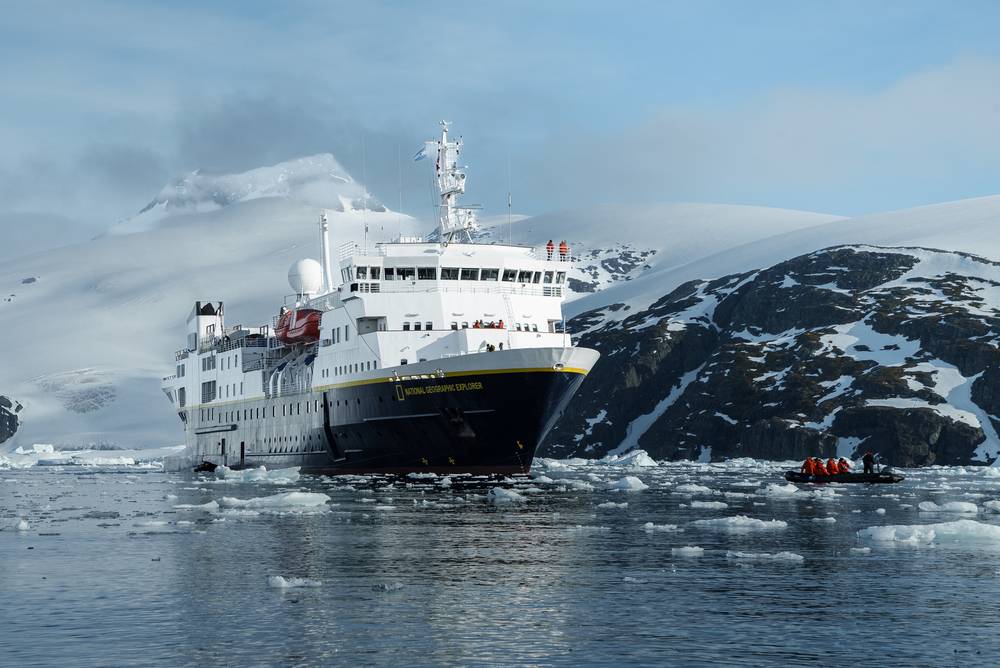
National Geographic Explorer

- 148Guests
- 81Cabins
- 1982Launched
- 112 mLength
All ship facts
- Crew
- 99
- Decks
- 6
- Gross tonnage
- 6471
- Speed
- 15 kts
- Width
- 16.5 m
- Wheelchair cabins
- 0
- Currency on board
- USD
- Language
- en