

Grand Greenland – Mythical Lands of the North (2027) (GLOBAL, UK, & FR ONLY)
CRUISE ID # HXFNGRE02-270714
Nuuk (Godthaab) TO Nuuk (Godthaab)
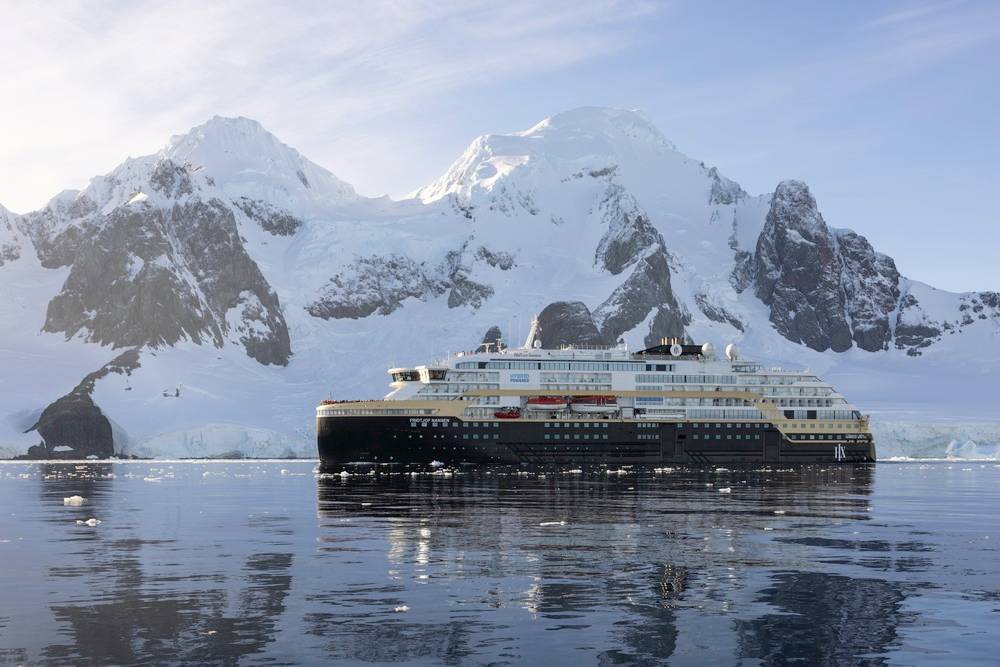
16-day all-inclusive Arctic Canada expedition cruise with round-trip flights from New York.
Join an expedition cruise to northwest Greenland and explore the High Arctic environment of the legendary Thule region.
Visit some of the most northerly communities on Earth and learn about their history and culture.
Witness amazing scenery and Arctic wildlife, attend fascinating lectures and talks, and take part in our onboard science program.
This voyage begins and ends in Nuuk with flights from New York (planned airport). An option to fly via Copenhagen or Reykjavik is also available.
Icy waters of Disko Bay
We set out north from Nuuk along the rugged and breathtaking coast of west Greenland. See immense icebergs from tidewater glaciers in Disko Bay, including Sermeq Kujalleq, the gigantic glacier at the head of UNESCO-listed Ilulissat Icefjord. As we sail, we’ll be on the lookout for whales.
Thule High Arctic region
Isolated even by Arctic standards, the inhabitants of the far north – known in legend by the name Thule – have for centuries been the northernmost communities on the planet. Expect High Arctic conditions, cold adapted wildlife, ice choked waters, and the coolest summer on Earth.
Suites & Fares
Itinerary
- Day 1July 14, 2027
Nuuk (Godthaab), Greenland
Nuuk, meaning “the cape”, was Greenland’s first town (1728). Started as a fort and later mission and trading post some 240 kilometers south of the Arctic Circle, it is the current capital. Almost 30% of Greenland’s population lives in the town. Not only does Nuuk have great natural beauty in its vicinity, but there are Inuit ruins, Hans Egede’s home, the parliament, and the Church of our Saviour as well. The Greenlandic National Museum has an outstanding collection of Greenlandic traditional dresses, as well as the famous Qilakitsoq mummies. The Katuaq Cultural Center’s building was inspired by the undulating Northern Lights and can house 10% of Nuuk’s inhabitants.
- Day 2July 15, 2027
Cruising
Sailing to Disko Bay Getting ready for adventure
Sailing towards the Arctic Circle you’ll have time to get acquainted with the AECO rules and recommendations regarding operations and landings in the fragile Arctic environment. Make sure you attend these mandatory presentations if you want to join planned landings as we head north.
You will also have time to settle on board, enjoy the state-of-the-art ship facilities and join the first lectures on Greenland related topics, including the Citizen Science projects run on board the ship.
At some point during the sailing, we will cross the Arctic Circle, entering the lands of the Midnight Sun at the height of summer.
- Day 3July 16, 2027
Ilulissat (Jakobshavn), Greenland
Known as the birthplace of icebergs, the Ilulissat Icefjord produces nearly 20 million tons of ice each day. In fact, the word Ilulissat means “icebergs” in the Kalaallisut language. The town of Ilulissat is known for its long periods of calm and settled weather, but the climate tends to be cold due to its proximity to the fjord. Approximately 4,500 people live in Ilulissat, the third-largest town in Greenland after Nuuk and Sisimiut. Some people here estimate that there are nearly as many sled dogs as human beings living in the town that also boasts a local history museum located in the former home of Greenlandic folk hero and famed polar explorer Knud Rasmussen.
- Day 4July 17, 2027
Uummannaq, Greenland
In the iceberg-laden waters surrounding the remote community of Uummannaq it is common to see whales. This area of Greenland is also known for its huge basalt mountains, and the small hunting and fishing village of Uummannaq rests at the foot of the heart-shaped Uummannaq Mountain, a name that translates to mean “in the shape of a seal’s heart”. The town of over 1200 people has a granite church and the country’s most northerly ferry terminal. The economy of Uummannaq revolves largely around the halibut/fish-processing factory.
- Day 5July 18, 2027
Cruising
Relax and learn at sea
We’ll spend the day on the open seas crossing Melville Bay. This is a huge bay bordering the icy coast of Lauge Koch, where the ice caps meet the sea. Known by the locals as Qimusseriarsuaq, meaning ’The Great Dog Sledding Place‘, the bay was renamed by British explorers after Robert Dundas, 2nd Viscount of Melville in the mid-19th century.
As we sail well beyond 70 degrees north, relax on board and join wildlife-watches out on deck with the Expedition Team. You could also learn more about the Arctic with the ongoing series of lectures covering its nature, geology and mythology.
- Day 6July 19, 2027
Savissivik, Greenland
Explore life at the edge of the world
’Ultima Thule‘ was the term used in the 4th century BC by the Greek explorer Pytheas to describe a mythical land in the far north. Nobody knows for sure which land Pytheas had in mind when he coined this name, but for some it has come to refer to the far north in Greenland.
As we explore here, expect wild beauty at the edge of the inhabitable world. Extreme climatic conditions year-round guarantee isolation and tough living conditions for the inhabitants, and even by Arctic standards the Thule region is harsh and remote. And yet, this was the first region in Greenland ever to be populated by the forerunners of the Inuit, somewhere around 4,500 years ago. How they managed to survive and thrive in that environment still puzzles Arctic archaeologists.
The abundant bird and animal life provides sustenance, and the traditional hunting culture has survived better here than elsewhere in Greenland. The polar travel know-how of the locals has been highly sought after on European and American expeditions, either as guides or saviours. In fact, thanks to its position, the region has been the natural starting point for many travellers heading towards the North Pole.
Always adapting our programme to the changeable weather and ice conditions, we will spend the next days exploring the region. We aim to visit some of the local communities, land with expedition boats and marvel at the power of nature, sail through icy channels and – with a bit of luck – spot some of the giants of the Arctic, including walruses, orcas and perhaps even polar bears.
- Day 7July 20, 2027
Dundas, Greenland
- Day 8July 21, 2027
Siorapaluk, Greenland
- Day 9July 22, 2027
Hans Island, Greenland
- Day 10July 23, 2027
Qaanaaq, Greenland
In AD 850, the Vikings established their parliament in Tórshavn, a name which translates as "Thor's harbor." It was named after Thor, the god of thunder and lightning in Norse mythology. The town became a center of trade for the island, and in fact was designated as the only legal place for the islanders to sell and buy products. This trade monopoly was abolished in 1856. Today it is the capital and largest city of the Faroe Islands, with fish-processing plants, a shipyard, and woolen products making up. It is considered to be one of the oldest capitals in Northern Europe.
- Day 11July 24, 2027
Cruising
Crossing Baffin Bay
We are now sailing south again, our adventures in the north completed. Days at sea are the perfect time to relax on board, perhaps chatting with new friends in the Expedition Lounge & Bar, catching up on any lectures you may have missed and enjoying leisurely lunches. If you haven’t tried the hot tubs yet, now’s your chance. There’s something magical about bathing in warm water as icebergs drift past!
Out on deck, the Expedition Team will keep a look out for wildlife. Or they’ll be in the Science Centre, revealing new and interesting information to you about Greenland, the Arctic and other topics related to our voyage. Feel free to join in with any of the Citizen Science projects that are running – they’re engaging and fun, and you’ll be contributing something useful to global research.
- Day 12July 25, 2027
Cruising
- Day 13July 26, 2027
Qeqertarsuaq (Godhavn), Greenland
Visit modern towns on the edge of the wilderness
The central west coast of Greenland is a land of contrasts, home to some of the longest fjords in the country and a sprinkling of settlements, including the second-largest town on the island. However, the vastness of the land makes this stretch of the coast a sparsely-populated region, where huge distances are the norm, and the sense of remoteness and isolation is just a part of daily life.
As we sail south, we’ll visit communities where Greenlandic traditions remain strong. Possible calls include Qeqertarsuaq, the main settlement on Disko Island, and Itilleq – a small fishing and hunting village perched just north of the Arctic Circle.
Further along the coast lies Sisimiut, Greenland’s second-largest town. Though modern in appearance, its roots run deep, with archaeological remains dating back over 4,000 years. Visit the local museum to learn more about the ancient Saqqaq culture, or browse for qiviut scarves, hats, and mittens – crafted from the soft inner wool of musk ox, said to be 10 times warmer than sheep wool.
Whether hiking ashore, meeting Greenlanders, or scanning the horizon for wildlife, these final days offer a fitting epilogue to your Arctic expedition.
- Day 14July 27, 2027
Itilleq, Greenland
Itilleq is an idyllic little village located on a small island about ahalf a mile off the west coast of Greenland, and only about a mile north of theArctic Circle. It is one of the most picturesque villages in Greenland with itsquaint colorful houses surrounded by stunning rugged mountains and glaciers.Originally, the village of Itilleq was founded on another island in 1847, butwas later moved to its present location. The 100 people living here todaysurvive mainly on hunting and fishing, with a fish factory being the mainemployer.
- Day 15July 28, 2027
Nuuk (Godthaab), Greenland
Nuuk, meaning “the cape”, was Greenland’s first town (1728). Started as a fort and later mission and trading post some 240 kilometers south of the Arctic Circle, it is the current capital. Almost 30% of Greenland’s population lives in the town. Not only does Nuuk have great natural beauty in its vicinity, but there are Inuit ruins, Hans Egede’s home, the parliament, and the Church of our Saviour as well. The Greenlandic National Museum has an outstanding collection of Greenlandic traditional dresses, as well as the famous Qilakitsoq mummies. The Katuaq Cultural Center’s building was inspired by the undulating Northern Lights and can house 10% of Nuuk’s inhabitants.
About the Ship
MS Fridtjof Nansen

- 490Guests
- 265Cabins
- 2020Launched
- 140 mLength
All ship facts
- Crew
- 98
- Decks
- 9
- Gross tonnage
- 20889
- Speed
- 15 kts
- Width
- 24 m
- Currency on board
- NOK
- Language
- en