

Wild Scotland
CRUISE ID # AURORASCO021S
Edinburgh TO Aberdeen
Suites & Fares
Itinerary
- Day 1May 31, 2027
Edinburgh, Scotland
Edinburgh is to London as poetry is to prose, as Charlotte Brontë once wrote. One of the world's stateliest cities and proudest capitals, it's built—like Rome—on seven hills, making it a striking backdrop for the ancient pageant of history. In a skyline of sheer drama, Edinburgh Castle watches over the capital city, frowning down on Princes Street’s glamour and glitz. But despite its rich past, the city’s famous festivals, excellent museums and galleries, as well as the modern Scottish Parliament, are reminders that Edinburgh has its feet firmly in the 21st century.Nearly everywhere in Edinburgh (the burgh is always pronounced burra in Scotland) there are spectacular buildings, whose Doric, Ionic, and Corinthian pillars add touches of neoclassical grandeur to the largely Presbyterian backdrop. Large gardens are a strong feature of central Edinburgh, where the city council is one of the most stridently conservationist in Europe. Arthur's Seat, a mountain of bright green and yellow furze, rears up behind the spires of the Old Town. This child-size mountain jutting 822 feet above its surroundings has steep slopes and little crags, like a miniature Highlands set down in the middle of the busy city. Appropriately, these theatrical elements match Edinburgh's character—after all, the city has been a stage that has seen its fair share of romance, violence, tragedy, and triumph.Modern Edinburgh has become a cultural capital, staging the Edinburgh International Festival and the Fringe Festival in every possible venue each August. The stunning Museum of Scotland complements the city’s wealth of galleries and artsy hangouts. Add Edinburgh’s growing reputation for food and nightlife and you have one of the world’s most beguiling cities.Today the city is the second most important financial center in the United Kingdom, and the fifth most important in Europe. The city regularly is ranked near the top in quality-of-life surveys. Accordingly, New Town apartments on fashionable streets sell for considerable sums. In some senses the city is showy and materialistic, but Edinburgh still supports learned societies, some of which have their roots in the Scottish Enlightenment. The Royal Society of Edinburgh, for example, established in 1783 "for the advancement of learning and useful knowledge," remains an important forum for interdisciplinary activities.Even as Edinburgh moves through the 21st century, its tall guardian castle remains the focal point of the city and its venerable history. Take time to explore the streets—peopled by the spirits of Mary, Queen of Scots; Sir Walter Scott; and Robert Louis Stevenson—and pay your respects to the world's best-loved terrier, Greyfriars Bobby. In the evenings you can enjoy candlelit restaurants or a folk ceilidh (pronounced kay-lee, a traditional Scottish dance with music), though you should remember that you haven't earned your porridge until you've climbed Arthur's Seat. Should you wander around a corner, say, on George Street, you might see not an endless cityscape, but blue sea and a patchwork of fields. This is the county of Fife, beyond the inlet of the North Sea called the Firth of Forth—a reminder, like the mountains to the northwest that can be glimpsed from Edinburgh's highest points, that the rest of Scotland lies within easy reach.
- Day 2June 01, 2027
Troon, Scotland
Troon is a town and sea port in South Ayrshire, situated on the west coast of Ayrshire in Scotland, about eight miles north of Ayr and three miles northwest of Glasgow Prestwick Airport. Troon has a port with ferry and freight services, and a yacht marina - Day 3June 02, 2027
Cruising through the Hebrides
From golden beaches to jagged peaks, bleak moors and heather clad hills; from abandoned settlements to picturesque villages, our days in the Hebrides archipelago will be packed with variety. We may explore remote lochs beneath some of Britain’s most untamed mountains and wander between unusual rock formations. We may watch for whales, dolphins, otters, seals, and the increasingly rare basking sharks. Possibly we will land at an island reserve that is home to red deer and white-tailed sea eagles. Kayakers will be introduced to their craft and will be briefed for their adventures, before picking up paddles to circumnavigate tiny islets or glide into narrow waterways that intertwine the islands. Hikers may opt for panoramic views from summits and ridges. Early the next morning we will aim for the tiny island of Iona. Barely 5 kilometres (3 miles) long, Iona is renowned as the birthplace of Christianity in Britain. It is also a burial ground of early Scottish Kings. The Irish monk, St Columba and twelve disciples, landed here and founded a monastery in 563 CE. From this base, St Columba set about converting Scotland and much of Northern England to Christianity. On Staffa, we hope to have the chance to explore Fingals Cave, where the melodious sound of waves crashing against towering basalt pillars inspired Mendelssohnns Hebridean Overture. We may enter the cave in Zodiacs, or clamber ashore to walk into the mouth of the cave. On shore we will also find Puffins in abundance. We plan to land on remote Isle of Eigg just south of the rugged Isle of Skye for wonderful hikes among stunning wildflowers. The wildlife, history, geology and beautiful scenery make it one of our favourite islands to explore. We hope to make the following landings: The Cuillin Hills have earned a reputation as Britain’s most untamed and challenging mountains. The rocky jagged Black Cuillins attract rock climbers. The smoother conical granite peaks of the Red Cuillins are crowned with heather. We may land at Loch Scavaig in the heart of the Cuillins and take a short hike, perhaps to Loch Coruisk, for spectacular views and get a glimpse of the range’s grandeur. Keener hikers may be able to venture further afield, weather permitting. Meanwhile kayakers may paddle around Loch Scavaig, into Loch Coruisk. They may explore the island of Soay and an abandoned shark fishing station – all against the backdrop of classic views of the Cuillins. - Day 4June 03, 2027
Cruising through the Hebrides
From golden beaches to jagged peaks, bleak moors and heather clad hills; from abandoned settlements to picturesque villages, our days in the Hebrides archipelago will be packed with variety. We may explore remote lochs beneath some of Britain’s most untamed mountains and wander between unusual rock formations. We may watch for whales, dolphins, otters, seals, and the increasingly rare basking sharks. Possibly we will land at an island reserve that is home to red deer and white-tailed sea eagles. Kayakers will be introduced to their craft and will be briefed for their adventures, before picking up paddles to circumnavigate tiny islets or glide into narrow waterways that intertwine the islands. Hikers may opt for panoramic views from summits and ridges. Early the next morning we will aim for the tiny island of Iona. Barely 5 kilometres (3 miles) long, Iona is renowned as the birthplace of Christianity in Britain. It is also a burial ground of early Scottish Kings. The Irish monk, St Columba and twelve disciples, landed here and founded a monastery in 563 CE. From this base, St Columba set about converting Scotland and much of Northern England to Christianity. On Staffa, we hope to have the chance to explore Fingals Cave, where the melodious sound of waves crashing against towering basalt pillars inspired Mendelssohnns Hebridean Overture. We may enter the cave in Zodiacs, or clamber ashore to walk into the mouth of the cave. On shore we will also find Puffins in abundance. We plan to land on remote Isle of Eigg just south of the rugged Isle of Skye for wonderful hikes among stunning wildflowers. The wildlife, history, geology and beautiful scenery make it one of our favourite islands to explore. We hope to make the following landings: The Cuillin Hills have earned a reputation as Britain’s most untamed and challenging mountains. The rocky jagged Black Cuillins attract rock climbers. The smoother conical granite peaks of the Red Cuillins are crowned with heather. We may land at Loch Scavaig in the heart of the Cuillins and take a short hike, perhaps to Loch Coruisk, for spectacular views and get a glimpse of the range’s grandeur. Keener hikers may be able to venture further afield, weather permitting. Meanwhile kayakers may paddle around Loch Scavaig, into Loch Coruisk. They may explore the island of Soay and an abandoned shark fishing station – all against the backdrop of classic views of the Cuillins. - Day 5June 04, 2027
Orkney Islands, Scotland
From the Inner Hebrides we make our way to the Outer Hebrides – also known as the Western Isles – that stretch for 209 kilometres (128 miles) and look out on their western side to the Atlantic Ocean. Our first stop is at the Isle of Lewis, the largest and northern-most island in the Outer Hebrides. We plan to make a stop at Callanais, where archaeology buffs will be keen to see the fascinating group of Standing Stones, dating from around 3,000 BCE. Weather permitting, we plan to land at the isolated archipelago (and World Heritage site) of St Kilda, where derelict crofts bear testament to the fortitude of islanders who once tended the unique Soay sheep and harvested seabirds for food—and to pay their rent in the form of wool, meat and feathers. The isles hold Europe’s most important seabird colony and is home to Britain’s highest sea stacks. Orkney’s archipelago of 70 windswept islands, 10 kilometres / 6 miles north of the Scottish mainland, a rich tapestry of archaeology, history and wildlife awaits. We follow the passage of time—from 5,000-year-old World Heritage Neolithic sites, past relics from Vikings and reminders of World War II occupation—to present day crofting communities. Imposing sea cliffs teem with seabirds and cliff top paths beckon the keen hikers among us. Our kayakers use paddle-power to explore sections of Orkney’s fascinating coastline. At the Knap of Howar on Papa Westray lies the earliest known house in Northern Europe, occupied by Neolithic farmers over 5,000 years ago. Here we are welcomed by the friendly locals. Enjoy the lively Scottish dance and folk ensemble, "Poor Man's Corner," hailing from Papa Westray, set to grace the local pub with their spirited tunes. Mingle and enjoy a few drinks, while listening to the captivating melodies and infectious rhythms. - Day 6June 05, 2027
Orkney Islands, Scotland
From the Inner Hebrides we make our way to the Outer Hebrides – also known as the Western Isles – that stretch for 209 kilometres (128 miles) and look out on their western side to the Atlantic Ocean. Our first stop is at the Isle of Lewis, the largest and northern-most island in the Outer Hebrides. We plan to make a stop at Callanais, where archaeology buffs will be keen to see the fascinating group of Standing Stones, dating from around 3,000 BCE. Weather permitting, we plan to land at the isolated archipelago (and World Heritage site) of St Kilda, where derelict crofts bear testament to the fortitude of islanders who once tended the unique Soay sheep and harvested seabirds for food—and to pay their rent in the form of wool, meat and feathers. The isles hold Europe’s most important seabird colony and is home to Britain’s highest sea stacks. Orkney’s archipelago of 70 windswept islands, 10 kilometres / 6 miles north of the Scottish mainland, a rich tapestry of archaeology, history and wildlife awaits. We follow the passage of time—from 5,000-year-old World Heritage Neolithic sites, past relics from Vikings and reminders of World War II occupation—to present day crofting communities. Imposing sea cliffs teem with seabirds and cliff top paths beckon the keen hikers among us. Our kayakers use paddle-power to explore sections of Orkney’s fascinating coastline. At the Knap of Howar on Papa Westray lies the earliest known house in Northern Europe, occupied by Neolithic farmers over 5,000 years ago. Here we are welcomed by the friendly locals. Enjoy the lively Scottish dance and folk ensemble, "Poor Man's Corner," hailing from Papa Westray, set to grace the local pub with their spirited tunes. Mingle and enjoy a few drinks, while listening to the captivating melodies and infectious rhythms. - Day 7June 06, 2027
Orkney Islands, Scotland
From the Inner Hebrides we make our way to the Outer Hebrides – also known as the Western Isles – that stretch for 209 kilometres (128 miles) and look out on their western side to the Atlantic Ocean. Our first stop is at the Isle of Lewis, the largest and northern-most island in the Outer Hebrides. We plan to make a stop at Callanais, where archaeology buffs will be keen to see the fascinating group of Standing Stones, dating from around 3,000 BCE. Weather permitting, we plan to land at the isolated archipelago (and World Heritage site) of St Kilda, where derelict crofts bear testament to the fortitude of islanders who once tended the unique Soay sheep and harvested seabirds for food—and to pay their rent in the form of wool, meat and feathers. The isles hold Europe’s most important seabird colony and is home to Britain’s highest sea stacks. Orkney’s archipelago of 70 windswept islands, 10 kilometres / 6 miles north of the Scottish mainland, a rich tapestry of archaeology, history and wildlife awaits. We follow the passage of time—from 5,000-year-old World Heritage Neolithic sites, past relics from Vikings and reminders of World War II occupation—to present day crofting communities. Imposing sea cliffs teem with seabirds and cliff top paths beckon the keen hikers among us. Our kayakers use paddle-power to explore sections of Orkney’s fascinating coastline. At the Knap of Howar on Papa Westray lies the earliest known house in Northern Europe, occupied by Neolithic farmers over 5,000 years ago. Here we are welcomed by the friendly locals. Enjoy the lively Scottish dance and folk ensemble, "Poor Man's Corner," hailing from Papa Westray, set to grace the local pub with their spirited tunes. Mingle and enjoy a few drinks, while listening to the captivating melodies and infectious rhythms. - Day 8June 07, 2027
Shetland Islands, Scotland
Britain’s most northerly islands lie almost 160 kilometres (99 miles) north of the Scottish mainland, at a similar latitude to the southern tip of Greenland, or Bergen in Norway. Kept relatively warm by the Gulf Stream, Shetland’s 100 islands experience almost 24 hours of daylight in summer. They abound with nature reserves and archaeological sites and offer a taste of traditional island life. We plan to explore some of the following sites: Midway between Orkney and Shetland, Fair Isle houses a major European ornithological research station and is also famous for knitwear and historic shipwrecks. About five kilometres by three kilometres / three miles by two miles in area, it is surrounded by impressive cliffs. The 70 or so islanders mainly live in traditional crofts on the more fertile low-lying southern part of the island. A bird watchers’ paradise, Fair Isle lies on the intersection of major flight paths from Scandinavia, Iceland and Faroe. In summer, the cliffs teem with breeding fulmars, kittiwakes, guillemots, gannets, shags and puffins. The Isle is an excellent place to view seabirds, especially puffins at close range. Fair Isle also has over 250 species of flowering plants, including wetland flowers, rare orchids, alpine species and common wildflowers. We’ll be welcomed by the hospitable villagers and may take a hike or visit the museum. Grey and common seals inhabit these waters around Fair Isle, while sharp eyes may spot harbour porpoises, white-beaked dolphins, Atlantic white-sided dolphins, killer whales (orcas) and minke whales. From Lerwick, explore Jarlshof, one of Shetland's best preserved and most complex archaeological sites. It was exposed by storms in the late 19th century. The Old House of Sumburgh, built here in the 17th century, was named 'Jarlshof' by Sir Walter Scott in his novel 'The Pirate'. The record of human occupation dates from around 3,200 BCE. Jarlshof’s main Bronze Age site is the house of a bronzesmith working around 800 BC. Clay moulds into which molten bronze was poured revealed that he was casting axe heads and short swords. It seems that Shetland suited early Norse settlers, for they quickly settled here and left their mark on Shetland's history for ages to come. With its mile-long seabird cliffs, the Island of Noss is a National Nature Reserve. In breeding season, the sound of around 150,000 birds and chicks fills the air. Millions of years of wind and ice have honeycombed thousands of nesting ledges in sandstone cliffs almost 200-metres / 656-feet high. Resident seals and visiting otters feed in dense kelp around the shores. Mousa Broch, on the small uninhabited island of Mousa, is the best preserved of Scotland’s 570 brochs (fortified Iron Age towers). Storm petrels nest among its stones, which can be seen when visiting the broch at night. In daylight, a large colony of common and grey seals basks on its shores, and you may spot otter (Dratsi, in Shetland dialect). - Day 9June 08, 2027
Shetland Islands, Scotland
Britain’s most northerly islands lie almost 160 kilometres (99 miles) north of the Scottish mainland, at a similar latitude to the southern tip of Greenland, or Bergen in Norway. Kept relatively warm by the Gulf Stream, Shetland’s 100 islands experience almost 24 hours of daylight in summer. They abound with nature reserves and archaeological sites and offer a taste of traditional island life. We plan to explore some of the following sites: Midway between Orkney and Shetland, Fair Isle houses a major European ornithological research station and is also famous for knitwear and historic shipwrecks. About five kilometres by three kilometres / three miles by two miles in area, it is surrounded by impressive cliffs. The 70 or so islanders mainly live in traditional crofts on the more fertile low-lying southern part of the island. A bird watchers’ paradise, Fair Isle lies on the intersection of major flight paths from Scandinavia, Iceland and Faroe. In summer, the cliffs teem with breeding fulmars, kittiwakes, guillemots, gannets, shags and puffins. The Isle is an excellent place to view seabirds, especially puffins at close range. Fair Isle also has over 250 species of flowering plants, including wetland flowers, rare orchids, alpine species and common wildflowers. We’ll be welcomed by the hospitable villagers and may take a hike or visit the museum. Grey and common seals inhabit these waters around Fair Isle, while sharp eyes may spot harbour porpoises, white-beaked dolphins, Atlantic white-sided dolphins, killer whales (orcas) and minke whales. From Lerwick, explore Jarlshof, one of Shetland's best preserved and most complex archaeological sites. It was exposed by storms in the late 19th century. The Old House of Sumburgh, built here in the 17th century, was named 'Jarlshof' by Sir Walter Scott in his novel 'The Pirate'. The record of human occupation dates from around 3,200 BCE. Jarlshof’s main Bronze Age site is the house of a bronzesmith working around 800 BC. Clay moulds into which molten bronze was poured revealed that he was casting axe heads and short swords. It seems that Shetland suited early Norse settlers, for they quickly settled here and left their mark on Shetland's history for ages to come. With its mile-long seabird cliffs, the Island of Noss is a National Nature Reserve. In breeding season, the sound of around 150,000 birds and chicks fills the air. Millions of years of wind and ice have honeycombed thousands of nesting ledges in sandstone cliffs almost 200-metres / 656-feet high. Resident seals and visiting otters feed in dense kelp around the shores. Mousa Broch, on the small uninhabited island of Mousa, is the best preserved of Scotland’s 570 brochs (fortified Iron Age towers). Storm petrels nest among its stones, which can be seen when visiting the broch at night. In daylight, a large colony of common and grey seals basks on its shores, and you may spot otter (Dratsi, in Shetland dialect). - Day 10June 09, 2027
Shetland Islands, Scotland
Britain’s most northerly islands lie almost 160 kilometres (99 miles) north of the Scottish mainland, at a similar latitude to the southern tip of Greenland, or Bergen in Norway. Kept relatively warm by the Gulf Stream, Shetland’s 100 islands experience almost 24 hours of daylight in summer. They abound with nature reserves and archaeological sites and offer a taste of traditional island life. We plan to explore some of the following sites: Midway between Orkney and Shetland, Fair Isle houses a major European ornithological research station and is also famous for knitwear and historic shipwrecks. About five kilometres by three kilometres / three miles by two miles in area, it is surrounded by impressive cliffs. The 70 or so islanders mainly live in traditional crofts on the more fertile low-lying southern part of the island. A bird watchers’ paradise, Fair Isle lies on the intersection of major flight paths from Scandinavia, Iceland and Faroe. In summer, the cliffs teem with breeding fulmars, kittiwakes, guillemots, gannets, shags and puffins. The Isle is an excellent place to view seabirds, especially puffins at close range. Fair Isle also has over 250 species of flowering plants, including wetland flowers, rare orchids, alpine species and common wildflowers. We’ll be welcomed by the hospitable villagers and may take a hike or visit the museum. Grey and common seals inhabit these waters around Fair Isle, while sharp eyes may spot harbour porpoises, white-beaked dolphins, Atlantic white-sided dolphins, killer whales (orcas) and minke whales. From Lerwick, explore Jarlshof, one of Shetland's best preserved and most complex archaeological sites. It was exposed by storms in the late 19th century. The Old House of Sumburgh, built here in the 17th century, was named 'Jarlshof' by Sir Walter Scott in his novel 'The Pirate'. The record of human occupation dates from around 3,200 BCE. Jarlshof’s main Bronze Age site is the house of a bronzesmith working around 800 BC. Clay moulds into which molten bronze was poured revealed that he was casting axe heads and short swords. It seems that Shetland suited early Norse settlers, for they quickly settled here and left their mark on Shetland's history for ages to come. With its mile-long seabird cliffs, the Island of Noss is a National Nature Reserve. In breeding season, the sound of around 150,000 birds and chicks fills the air. Millions of years of wind and ice have honeycombed thousands of nesting ledges in sandstone cliffs almost 200-metres / 656-feet high. Resident seals and visiting otters feed in dense kelp around the shores. Mousa Broch, on the small uninhabited island of Mousa, is the best preserved of Scotland’s 570 brochs (fortified Iron Age towers). Storm petrels nest among its stones, which can be seen when visiting the broch at night. In daylight, a large colony of common and grey seals basks on its shores, and you may spot otter (Dratsi, in Shetland dialect). - Day 11June 10, 2027
Kirkwall, Orkney Islands, Scotland
In bustling Kirkwall, the main town on Orkney, there's plenty to see in the narrow, winding streets extending from the harbor. The cathedral and some museums are highlights.
- Day 12June 11, 2027
Aberdeen, Scotland
With close to 220,000 inhabitants, Aberdeen is Scotland's third most populous city. Locally quarried grey granite was used during the mid-18th to mid-20th centuries for many of Aberdeen's buildings, and hence the nicknames it has earned as the Granite City, or the Grey City. Aberdeen granite was also used to build the terraces of the Houses of Parliament and Waterloo Bridge in London. Since the discovery of North Sea oil in the 1970s, Aberdeen has also been called the Oil Capital of Europe or the Energy Capital of Europe. It is no wonder that because of the oil fields in the North Sea, Aberdeen's seaport is very important. The Heliport with its flights to the oil fields is one of the busiest commercial heliports in the world.
About the Ship
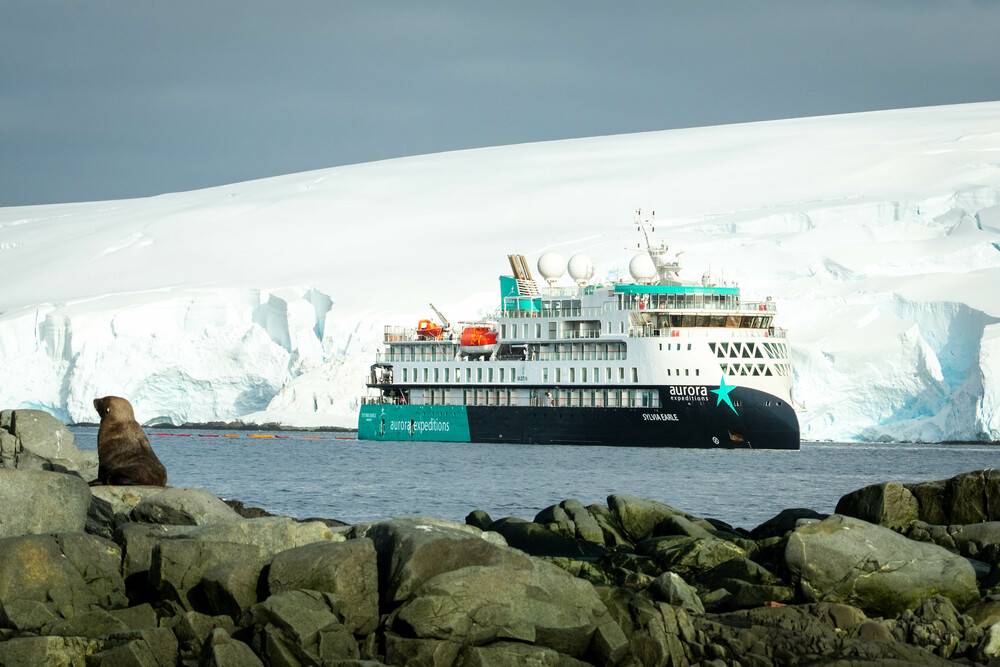
Sylvia Earle

- 130Guests
- 71Cabins
- 2022Launched
- 104.4 mLength
All ship facts
- Crew
- 74
- Decks
- 8
- Gross tonnage
- 7400
- Speed
- 12 kts
- Width
- 18.2 m
- Wheelchair cabins
- 2
- Currency on board
- USD
- Language
- en