

Wild Greenland: An Active Arctic Expedition
CRUISE ID # AURORAAWG001S
Reykjavík TO Reykjavík
Suites & Fares
Itinerary
- Day 1August 22, 2028
Pre-Cruise Night
- Day 2August 23, 2028
Reykjavík, Iceland
Sprawling Reykjavík, the nation's nerve center and government seat, is home to half the island's population. On a bay overlooked by proud Mt. Esja (pronounced eh-shyuh), with its ever-changing hues, Reykjavík presents a colorful sight, its concrete houses painted in light colors and topped by vibrant red, blue, and green roofs. In contrast to the almost treeless countryside, Reykjavík has many tall, native birches, rowans, and willows, as well as imported aspen, pines, and spruces.Reykjavík's name comes from the Icelandic words for smoke, reykur, and bay, vík. In AD 874, Norseman Ingólfur Arnarson saw Iceland rising out of the misty sea and came ashore at a bay eerily shrouded with plumes of steam from nearby hot springs. Today most of the houses in Reykjavík are heated by near-boiling water from the hot springs. Natural heating avoids air pollution; there's no smoke around. You may notice, however, that the hot water brings a slight sulfur smell to the bathroom.Prices are easily on a par with other major European cities. A practical option is to purchase a Reykjavík City Card at the Tourist Information Center or at the Reykjavík Youth Hostel. This card permits unlimited bus usage and admission to any of the city's seven pools, the Family Park and Zoo, and city museums. The cards are valid for one (ISK 3,300), two (ISK 4,400), or three days (ISK 4,900), and they pay for themselves after three or four uses a day. Even lacking the City Card, paying admission (ISK 500, or ISK 250 for seniors and people with disabilities) to one of the city art museums (Hafnarhús, Kjarvalsstaðir, or Ásmundarsafn) gets you free same-day admission to the other two.
- Day 3August 24, 2028
Kangerlussuaq Havn, Greenland
The name Kangerlussuaq means "Big Fjord" in the local Kalaallisut language. The settlement of about 500 people is located in western Greenland on flat land at the head of a fjord with the same name. Kangerlussuaq is the site of Greenland's largest commercial airport and most of the economy here is dependent on the air transportation hub and tourism. The rugged lands around the settlement support terrestrial Arctic fauna including muskoxen, caribou, and Gyrfalcons.
- Day 4August 25, 2028
Kangerlussuaq Havn, Greenland
The name Kangerlussuaq means "Big Fjord" in the local Kalaallisut language. The settlement of about 500 people is located in western Greenland on flat land at the head of a fjord with the same name. Kangerlussuaq is the site of Greenland's largest commercial airport and most of the economy here is dependent on the air transportation hub and tourism. The rugged lands around the settlement support terrestrial Arctic fauna including muskoxen, caribou, and Gyrfalcons.
- Day 5August 26, 2028
Sisimiut (Holsteinsborg), Greenland
Located just north of the Arctic Circle, Sisimiut is the northernmost town in Greenland where the port remains free of ice in the winter. Yet it is also the southernmost town where there is enough snow and ice to drive a dogsled in winter and spring. In Sisimiut, travelling by sled has been the primary means of winter transportation for centuries. In fact, the area has been inhabited for approximately 4,500 years. Modern Sisimiut is the largest business center in the north of Greenland, and is one of the fastest growing Greenlandic cities. Commercial fishing is the lead economy in the town‘s thriving industrial base.
- Day 6August 27, 2028
Ilulissat (Jakobshavn), Greenland
Known as the birthplace of icebergs, the Ilulissat Icefjord produces nearly 20 million tons of ice each day. In fact, the word Ilulissat means “icebergs” in the Kalaallisut language. The town of Ilulissat is known for its long periods of calm and settled weather, but the climate tends to be cold due to its proximity to the fjord. Approximately 4,500 people live in Ilulissat, the third-largest town in Greenland after Nuuk and Sisimiut. Some people here estimate that there are nearly as many sled dogs as human beings living in the town that also boasts a local history museum located in the former home of Greenlandic folk hero and famed polar explorer Knud Rasmussen.
- Day 7August 28, 2028
Disko Bay, Greenland
Over the next three days, we leave the timetable behind. Ice, weather and opportunity will shape our exploration of Disko Bay and its surrounding fjords. We may Zodiac cruise among sculpted icebergs, scout a remote shore for an unplanned hike or visit a rarely reached community. The kayaking group may seek out a longer paddle in sheltered water, while everyone can keep watch for humpback and minke whales, seals and seabirds as the adventure unfolds.
Volcanic Disko Island rises dramatically from the bay, its black-sand beaches, broad valleys and dark mountains contrasting with the granite landscapes found elsewhere in Greenland. We plan to use Qeqertarsuaq as a launch point for some of the voyage’s biggest adventures, while retaining the freedom to adapt to local conditions.
The headline challenge is the hike towards Lyngmark Glacier. Beginning near sea level, the route climbs steadily through tundra and mountain terrain, gaining around 800 metres (2,625 feet) towards the ice above Qeqertarsuaq. It is a demanding day requiring strong fitness, sure footing and stamina, but the reward is an immense panorama across Disko Bay, scattered islands and drifting icebergs. Snow, trail and glacier conditions will determine how far the group can safely progress.
For a more moderate challenge, the Kuannit trail follows the coast through tundra and volcanic terrain to basalt columns, freshwater springs and open views across the bay, with continued opportunities to watch for whales and seabirds.
Beyond these planned highlights, conditions may open the door to additional hikes, Zodiac cruises, kayaking or a community visit. Routes, landings and activities remain subject to weather, ice, permits and the Expedition Team’s assessment—but with three days in the region, we have time to pursue the strongest opportunities across Disko Island and its surrounds.
Throughout our time in the region, kayakers will aim to explore Disko Island’s volcanic coastline and sheltered, iceberg-filled bays whenever conditions allow.
- Day 8August 29, 2028
Disko Bay, Greenland
- Day 9August 30, 2028
Disko Bay, Greenland
- Day 10August 31, 2028
Reykjavík, Iceland
Sprawling Reykjavík, the nation's nerve center and government seat, is home to half the island's population. On a bay overlooked by proud Mt. Esja (pronounced eh-shyuh), with its ever-changing hues, Reykjavík presents a colorful sight, its concrete houses painted in light colors and topped by vibrant red, blue, and green roofs. In contrast to the almost treeless countryside, Reykjavík has many tall, native birches, rowans, and willows, as well as imported aspen, pines, and spruces.Reykjavík's name comes from the Icelandic words for smoke, reykur, and bay, vík. In AD 874, Norseman Ingólfur Arnarson saw Iceland rising out of the misty sea and came ashore at a bay eerily shrouded with plumes of steam from nearby hot springs. Today most of the houses in Reykjavík are heated by near-boiling water from the hot springs. Natural heating avoids air pollution; there's no smoke around. You may notice, however, that the hot water brings a slight sulfur smell to the bathroom.Prices are easily on a par with other major European cities. A practical option is to purchase a Reykjavík City Card at the Tourist Information Center or at the Reykjavík Youth Hostel. This card permits unlimited bus usage and admission to any of the city's seven pools, the Family Park and Zoo, and city museums. The cards are valid for one (ISK 3,300), two (ISK 4,400), or three days (ISK 4,900), and they pay for themselves after three or four uses a day. Even lacking the City Card, paying admission (ISK 500, or ISK 250 for seniors and people with disabilities) to one of the city art museums (Hafnarhús, Kjarvalsstaðir, or Ásmundarsafn) gets you free same-day admission to the other two.
About the Ship
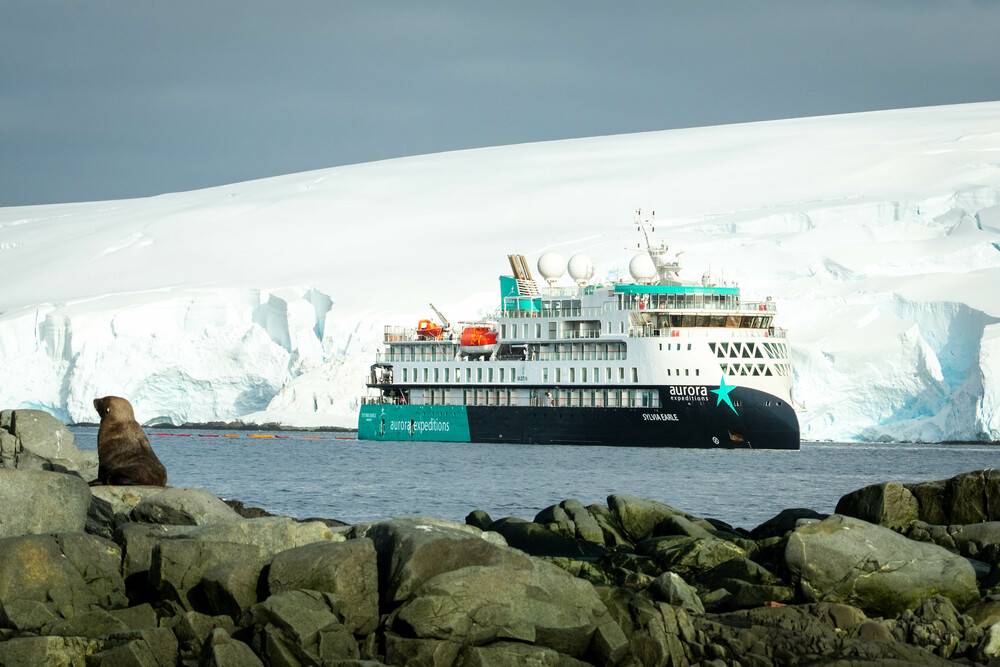
Sylvia Earle

- 130Guests
- 71Cabins
- 2022Launched
- 104.4 mLength
All ship facts
- Crew
- 74
- Decks
- 8
- Gross tonnage
- 7400
- Speed
- 12 kts
- Width
- 18.2 m
- Wheelchair cabins
- 2
- Currency on board
- USD
- Language
- en