

Southern Antarctic Realms: Circle & Weddell Sea
CRUISE ID # AURORAACW002D
Ushuaia TO Ushuaia
Suites & Fares
Itinerary
- Day 1February 24, 2028
Ushuaia, Argentina
At 55 degrees latitude south, Ushuaia (pronounced oo-swy-ah) is closer to the South Pole than to Argentina's northern border with Bolivia. It is the capital and tourism base for Tierra del Fuego, the island at the southernmost tip of Argentina.Although its stark physical beauty is striking, Tierra del Fuego's historical allure is based more on its mythical past than on rugged reality. The island was inhabited for 6,000 years by Yámana, Haush, Selk'nam, and Alakaluf Indians. But in 1902 Argentina, eager to populate Patagonia to bolster its territorial claims, moved to initiate an Ushuaian penal colony, establishing the permanent settlement of its most southern territories and, by implication, everything in between.When the prison closed in 1947, Ushuaia had a population of about 3,000, made up mainly of former inmates and prison staff. Today the Indians of Darwin's "missing link" theory are long gone—wiped out by diseases brought by settlers and by indifference to their plight—and the 60,000 residents of Ushuaia are hitching their star to tourism.The city rightly (if perhaps too loudly) promotes itself as the southernmost city in the world (Puerto Williams, a few miles south on the Chilean side of the Beagle Channel, is a small town). You can make your way to the tourism office to get your clichéd, but oh-so-necessary, "Southernmost City in the World" passport stamp. Ushuaia feels like a frontier boomtown, at heart still a rugged, weather-beaten fishing village, but exhibiting the frayed edges of a city that quadrupled in size in the '70s and '80s and just keeps growing. Unpaved portions of Ruta 3, the last stretch of the Pan-American Highway, which connects Alaska to Tierra del Fuego, are finally being paved. The summer months (December through March) draw more than 120,000 visitors, and dozens of cruise ships. The city is trying to extend those visits with events like March's Marathon at the End of the World and by increasing the gamut of winter activities buoyed by the excellent snow conditions.A terrific trail winds through the town up to the Martial Glacier, where a ski lift can help cut down a steep kilometer of your journey. The chaotic and contradictory urban landscape includes a handful of luxury hotels amid the concrete of public housing projects. Scores of "sled houses" (wooden shacks) sit precariously on upright piers, ready for speedy displacement to a different site. But there are also many small, picturesque homes with tiny, carefully tended gardens. Many of the newer homes are built in a Swiss-chalet style, reinforcing the idea that this is a town into which tourism has breathed new life. At the same time, the weather-worn pastel colors that dominate the town's landscape remind you that Ushuaia was once just a tiny fishing village, snuggled at the end of the Earth.As you stand on the banks of the Canal Beagle (Beagle Channel) near Ushuaia, the spirit of the farthest corner of the world takes hold. What stands out is the light: at sundown the landscape is cast in a subdued, sensual tone; everything feels closer, softer, and more human in dimension despite the vastness of the setting. The snowcapped mountains reflect the setting sun back onto a stream rolling into the channel, as nearby peaks echo their image—on a windless day—in the still waters.Above the city rise the last mountains of the Andean Cordillera, and just south and west of Ushuaia they finally vanish into the often-stormy sea. Snow whitens the peaks well into summer. Nature is the principal attraction here, with trekking, fishing, horseback riding, wildlife spotting, and sailing among the most rewarding activities, especially in the Parque Nacional Tierra del Fuego (Tierra del Fuego National Park).
- Day 2February 25, 2028
Ushuaia, Argentina
At 55 degrees latitude south, Ushuaia (pronounced oo-swy-ah) is closer to the South Pole than to Argentina's northern border with Bolivia. It is the capital and tourism base for Tierra del Fuego, the island at the southernmost tip of Argentina.Although its stark physical beauty is striking, Tierra del Fuego's historical allure is based more on its mythical past than on rugged reality. The island was inhabited for 6,000 years by Yámana, Haush, Selk'nam, and Alakaluf Indians. But in 1902 Argentina, eager to populate Patagonia to bolster its territorial claims, moved to initiate an Ushuaian penal colony, establishing the permanent settlement of its most southern territories and, by implication, everything in between.When the prison closed in 1947, Ushuaia had a population of about 3,000, made up mainly of former inmates and prison staff. Today the Indians of Darwin's "missing link" theory are long gone—wiped out by diseases brought by settlers and by indifference to their plight—and the 60,000 residents of Ushuaia are hitching their star to tourism.The city rightly (if perhaps too loudly) promotes itself as the southernmost city in the world (Puerto Williams, a few miles south on the Chilean side of the Beagle Channel, is a small town). You can make your way to the tourism office to get your clichéd, but oh-so-necessary, "Southernmost City in the World" passport stamp. Ushuaia feels like a frontier boomtown, at heart still a rugged, weather-beaten fishing village, but exhibiting the frayed edges of a city that quadrupled in size in the '70s and '80s and just keeps growing. Unpaved portions of Ruta 3, the last stretch of the Pan-American Highway, which connects Alaska to Tierra del Fuego, are finally being paved. The summer months (December through March) draw more than 120,000 visitors, and dozens of cruise ships. The city is trying to extend those visits with events like March's Marathon at the End of the World and by increasing the gamut of winter activities buoyed by the excellent snow conditions.A terrific trail winds through the town up to the Martial Glacier, where a ski lift can help cut down a steep kilometer of your journey. The chaotic and contradictory urban landscape includes a handful of luxury hotels amid the concrete of public housing projects. Scores of "sled houses" (wooden shacks) sit precariously on upright piers, ready for speedy displacement to a different site. But there are also many small, picturesque homes with tiny, carefully tended gardens. Many of the newer homes are built in a Swiss-chalet style, reinforcing the idea that this is a town into which tourism has breathed new life. At the same time, the weather-worn pastel colors that dominate the town's landscape remind you that Ushuaia was once just a tiny fishing village, snuggled at the end of the Earth.As you stand on the banks of the Canal Beagle (Beagle Channel) near Ushuaia, the spirit of the farthest corner of the world takes hold. What stands out is the light: at sundown the landscape is cast in a subdued, sensual tone; everything feels closer, softer, and more human in dimension despite the vastness of the setting. The snowcapped mountains reflect the setting sun back onto a stream rolling into the channel, as nearby peaks echo their image—on a windless day—in the still waters.Above the city rise the last mountains of the Andean Cordillera, and just south and west of Ushuaia they finally vanish into the often-stormy sea. Snow whitens the peaks well into summer. Nature is the principal attraction here, with trekking, fishing, horseback riding, wildlife spotting, and sailing among the most rewarding activities, especially in the Parque Nacional Tierra del Fuego (Tierra del Fuego National Park).
- Day 3February 26, 2028
Drake Passage Seas
As we commence the Drake Passage crossing, we make the most of our time getting comfortable with the motions of the sea. Our expedition team prepare you for our first landing with important wildlife guidelines and biosecurity procedures and start our lecture program to help you learn more about Antarctica’s history, wildlife and environment.
Our wildlife experiences begin as we enjoy watching and photographing the many seabirds, including majestic albatrosses and giant petrels following our vessel. On sea days, you can enjoy the facilities on board the vessel including the gym, sauna and jacuzzis or relax in one of the observation lounges.
Nearing the South Shetland Islands and the tip of the Antarctic Peninsula on the afternoon of day four, the excitement is palpable with everyone converging on one of the observation decks watching for our first iceberg. The ocean takes on a whole new perspective once we are below the Antarctic Convergence and are surrounded by the surreal presence of floating ice sculptures. The memory of your first big iceberg sighting is likely to remain with you for a lifetime. Time and weather permitting, we may attempt our first landing in Antarctica by late afternoon.
- Day 4February 27, 2028
Drake Passage Seas
- Day 5February 28, 2028
Crossing the Antarctic Circle
It’s almost impossible to describe the feeling of arriving in Antarctica. Spotting your first iceberg and taking a deep breath of some of the most fresh, crisp air on earth is an experience that will stay with you forever.
Your experienced expedition team, who have made countless journeys to this area, will use their expertise to design your voyage from day to day, choosing the best options based on the prevailing weather, ice conditions and wildlife opportunities.
The waters at this time of year are rich with krill and we hope to see plenty of whales - particularly humpbacks and minkes and enjoy the spectacle of penguins feeding their ravenous chicks.
To be part of a voyage that attempts to explore the remotest and wildest parts of a region that in and of itself is already arguably one of the remotest regions on Earth gives you more than basic bragging rights. As we approach and attempt to cross the Antarctic Circle, an imaginary line at latitude of 66° 33’ south, you will notice subtle changes in the landscape, and also in the distribution of wildlife.
Venturing below the Antarctic Circle is a chance to enter a different world that is rarely seen, it feels more isolated and colder than further north, with great swathes of pack ice and dream-like icebergs. Thread through pack ice and narrow channels where scenes of ice-clad mountains, whales fattening up on krill, leopard seals patrolling the waters for vulnerable penguins and snow petrels soar above. Raise a glass to toast venturing below the Antarctic, joining an exclusive group of adventurers in doing so.
After our explorations below the Antarctic Circle and along the western side of the peninsula, we sail north to make our way to the Weddell Sea on the eastern side of the peninsula. Along the way, we plan to visit some of our favourite places around the Antarctic Peninsula, exploring coastlines by Zodiac, landing on beaches where fur seals frolic, and where fledging penguins are taking to the waters for the first time. As we approach Antarctic Sound, we hope for favourable weather and ice conditions to grant our good ship entry to its frozen realm. A considerable aspect of a voyage to the Weddell Sea is the thrill of not knowing if the ice will allow us to enter its frozen realm. The Weddell Gyre pushes enormous amounts of ice from the Filchner-Ronne Ice Shelf up towards the area near Antarctic Sound, blocking the entrance to the Weddell Sea, but a visit to the region has numerous rewards.
Central to the story of where Sir Ernest Shackleton’s ship, the Endurance became trapped in formidable sea ice, the Weddell Sea certainly is high on the list for many polar adventurers. A small set of islands standing off to the east of the Antarctic Peninsula collectively form Antarctic Sound – the gateway to the Weddell Sea. With a well-deserved reputation as being an iceberg alley, many large tabular bergs escape the Weddell Sea through the Antarctic Sound, often making navigation difficult.
Gigantic icebergs, the size of skyscrapers, dwarf our Zodiacs as we attempt to push through seemingly impenetrable sea ice to land on remote beaches where ancient fossils can be found. The wildlife we may encounter in the Weddell Sea region makes the attempt worthwhile. The abundant ice attracts ice seals such as crabeater, leopard and Weddell seals, which all breed and birth on sea ice. The Weddell Sea boasts a large Adélie penguin colony just outside of Antarctic Sound, some of which breed on the rocky slopes of a small volcanic island, where a large colony of Antarctic blue-eyed shags jostle for space with nest-building Wilson’s storm petrels.
We generally make landings or Zodiac excursions twice a day. You’ll want to rug up before joining Zodiac cruises along spectacular ice cliffs or among grounded icebergs, keeping watch for whales, seals and porpoising penguins. Zodiacs will also transport you from the ship to land, where you can visit penguin rookeries, discover historic huts and explore some of our favourite spots along the peninsula and in the Weddell Sea region.
On thrilling Zodiac cruises or slicing a path through the maze of sea ice in your kayak, keep watch for chinstrap and gentoo penguins in and out of the water, as well as humpback, minke and orca whales. In the Weddell region, fossils are a reminder of a more temperate era – gastropods, large clams, and spiral-shaped ammonites, all turned to stone. Your camera is sure to get a solid workout during your time in the Weddell Sea.
While ashore we aim to stretch our legs, wandering along pebbly beaches or perhaps up snow-covered ridgelines to vantage points with mountains towering overhead and ice-speckled oceans below. If you have chosen an optional activity, you’ll have the option to do that whenever conditions allow, and of course keen polar plungers will have the chance to fully immerse themselves in polar waters - conditions permitting!
- Day 6February 29, 2028
Crossing the Antarctic Circle
- Day 7March 01, 2028
Crossing the Antarctic Circle
- Day 8March 02, 2028
Antarctic Peninsula, Antarctica
Remote and otherworldly, Antarctic is irresistible for its spectacular iceberg sculptures and calving glaciers, and for the possibility of up-close encounters with marine mammals and the iconic penguins. The Antarctic Peninsula – the main peninsula closest to South America – has a human history of almost 200 years, with explorers, sealers, whalers, and scientists who have come to work, and eventually intrepid visitors coming to enjoy this pristine and remote wilderness. It is a region of protected bays, unscaled snow-capped mountains, vast glaciers and a few places where whalers or scientists have worked. Just as irresistible are the many Gentoo and Chinstrap Penguin colonies, the seals basking on ice floes, the whales and orcas.
- Day 9March 03, 2028
Antarctic Peninsula, Antarctica
Remote and otherworldly, Antarctic is irresistible for its spectacular iceberg sculptures and calving glaciers, and for the possibility of up-close encounters with marine mammals and the iconic penguins. The Antarctic Peninsula – the main peninsula closest to South America – has a human history of almost 200 years, with explorers, sealers, whalers, and scientists who have come to work, and eventually intrepid visitors coming to enjoy this pristine and remote wilderness. It is a region of protected bays, unscaled snow-capped mountains, vast glaciers and a few places where whalers or scientists have worked. Just as irresistible are the many Gentoo and Chinstrap Penguin colonies, the seals basking on ice floes, the whales and orcas.
- Day 10March 04, 2028
Antarctic Peninsula, Antarctica
Remote and otherworldly, Antarctic is irresistible for its spectacular iceberg sculptures and calving glaciers, and for the possibility of up-close encounters with marine mammals and the iconic penguins. The Antarctic Peninsula – the main peninsula closest to South America – has a human history of almost 200 years, with explorers, sealers, whalers, and scientists who have come to work, and eventually intrepid visitors coming to enjoy this pristine and remote wilderness. It is a region of protected bays, unscaled snow-capped mountains, vast glaciers and a few places where whalers or scientists have worked. Just as irresistible are the many Gentoo and Chinstrap Penguin colonies, the seals basking on ice floes, the whales and orcas.
- Day 11March 05, 2028
Antarctic Peninsula, Antarctica
Remote and otherworldly, Antarctic is irresistible for its spectacular iceberg sculptures and calving glaciers, and for the possibility of up-close encounters with marine mammals and the iconic penguins. The Antarctic Peninsula – the main peninsula closest to South America – has a human history of almost 200 years, with explorers, sealers, whalers, and scientists who have come to work, and eventually intrepid visitors coming to enjoy this pristine and remote wilderness. It is a region of protected bays, unscaled snow-capped mountains, vast glaciers and a few places where whalers or scientists have worked. Just as irresistible are the many Gentoo and Chinstrap Penguin colonies, the seals basking on ice floes, the whales and orcas.
- Day 12March 06, 2028
Sailing on the Weddell Sea
- Day 13March 07, 2028
Sailing on the Weddell Sea
- Day 14March 08, 2028
Sailing on the Weddell Sea
- Day 15March 09, 2028
Drake Passage Seas
Enjoy a final morning landing in the South Shetland Islands before we re-enter the Drake Passage for our return journey to South America.
With lectures and film presentations to complete our Antarctic experience, there is still plenty of time to enjoy the magic of the Southern Ocean and the life that calls it home. There is time for reflection and discussion about what we have seen and experienced. We hope you become ambassadors for Antarctica telling your family, friends and colleagues about your journey to this magical place, advocating for its conservation and preservation so that they might one day visit the region to experience what you have been lucky to see and do here.
As we approach the tip of South America, our Captain may sail close to legendary Cape Horn, weather and time permitting.
- Day 16March 10, 2028
Drake Passage Seas
- Day 17March 11, 2028
Ushuaia, Argentina
At 55 degrees latitude south, Ushuaia (pronounced oo-swy-ah) is closer to the South Pole than to Argentina's northern border with Bolivia. It is the capital and tourism base for Tierra del Fuego, the island at the southernmost tip of Argentina.Although its stark physical beauty is striking, Tierra del Fuego's historical allure is based more on its mythical past than on rugged reality. The island was inhabited for 6,000 years by Yámana, Haush, Selk'nam, and Alakaluf Indians. But in 1902 Argentina, eager to populate Patagonia to bolster its territorial claims, moved to initiate an Ushuaian penal colony, establishing the permanent settlement of its most southern territories and, by implication, everything in between.When the prison closed in 1947, Ushuaia had a population of about 3,000, made up mainly of former inmates and prison staff. Today the Indians of Darwin's "missing link" theory are long gone—wiped out by diseases brought by settlers and by indifference to their plight—and the 60,000 residents of Ushuaia are hitching their star to tourism.The city rightly (if perhaps too loudly) promotes itself as the southernmost city in the world (Puerto Williams, a few miles south on the Chilean side of the Beagle Channel, is a small town). You can make your way to the tourism office to get your clichéd, but oh-so-necessary, "Southernmost City in the World" passport stamp. Ushuaia feels like a frontier boomtown, at heart still a rugged, weather-beaten fishing village, but exhibiting the frayed edges of a city that quadrupled in size in the '70s and '80s and just keeps growing. Unpaved portions of Ruta 3, the last stretch of the Pan-American Highway, which connects Alaska to Tierra del Fuego, are finally being paved. The summer months (December through March) draw more than 120,000 visitors, and dozens of cruise ships. The city is trying to extend those visits with events like March's Marathon at the End of the World and by increasing the gamut of winter activities buoyed by the excellent snow conditions.A terrific trail winds through the town up to the Martial Glacier, where a ski lift can help cut down a steep kilometer of your journey. The chaotic and contradictory urban landscape includes a handful of luxury hotels amid the concrete of public housing projects. Scores of "sled houses" (wooden shacks) sit precariously on upright piers, ready for speedy displacement to a different site. But there are also many small, picturesque homes with tiny, carefully tended gardens. Many of the newer homes are built in a Swiss-chalet style, reinforcing the idea that this is a town into which tourism has breathed new life. At the same time, the weather-worn pastel colors that dominate the town's landscape remind you that Ushuaia was once just a tiny fishing village, snuggled at the end of the Earth.As you stand on the banks of the Canal Beagle (Beagle Channel) near Ushuaia, the spirit of the farthest corner of the world takes hold. What stands out is the light: at sundown the landscape is cast in a subdued, sensual tone; everything feels closer, softer, and more human in dimension despite the vastness of the setting. The snowcapped mountains reflect the setting sun back onto a stream rolling into the channel, as nearby peaks echo their image—on a windless day—in the still waters.Above the city rise the last mountains of the Andean Cordillera, and just south and west of Ushuaia they finally vanish into the often-stormy sea. Snow whitens the peaks well into summer. Nature is the principal attraction here, with trekking, fishing, horseback riding, wildlife spotting, and sailing among the most rewarding activities, especially in the Parque Nacional Tierra del Fuego (Tierra del Fuego National Park).
About the Ship
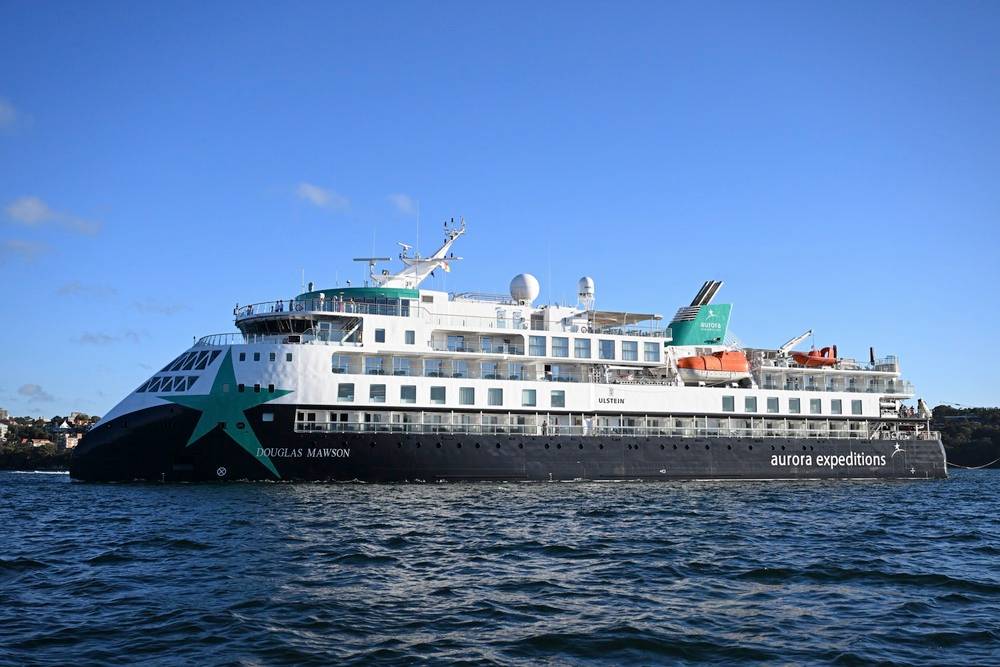
Douglas Mawson

- 154Guests
- 86Cabins
- 2025Launched
- 104 mLength
All ship facts
- Crew
- 24
- Decks
- 8
- Gross tonnage
- 8500
- Speed
- 12 kts
- Width
- 18 m
- Wheelchair cabins
- 2
- Currency on board
- USD
- Language
- en