

Northwest Passage
CRUISE ID # AURORANWP009S
Toronto, Ontario TO Calgary, Alberta
Suites & Fares
Itinerary
- Day 1August 30, 2027
Toronto, Ontario, Canada
Having made your way to Toronto, take the complimentary hotel shuttle and check in at our group hotel at Toronto Airport. Please visit the Aurora Expeditions hospitality desk to collect your luggage cabin tags and to speak with our ground operations team, who may have information to share with you about pre-embarkation procedures and the charter flight to Nuuk tomorrow. You will receive Aurora Expeditions cabin tags for your luggage. Please clearly label the tags with your name and ship cabin number.
The remainder of your time is at leisure. All meals today are at your own expense.
Accommodation: Westin Toronto Airport Hotel
- Day 2August 31, 2027
Nuuk (Godthaab), Greenland
Nuuk, meaning “the cape”, was Greenland’s first town (1728). Started as a fort and later mission and trading post some 240 kilometers south of the Arctic Circle, it is the current capital. Almost 30% of Greenland’s population lives in the town. Not only does Nuuk have great natural beauty in its vicinity, but there are Inuit ruins, Hans Egede’s home, the parliament, and the Church of our Saviour as well. The Greenlandic National Museum has an outstanding collection of Greenlandic traditional dresses, as well as the famous Qilakitsoq mummies. The Katuaq Cultural Center’s building was inspired by the undulating Northern Lights and can house 10% of Nuuk’s inhabitants.
- Day 3September 01, 2027
Sisimiut (Holsteinsborg), Greenland
Located just north of the Arctic Circle, Sisimiut is the northernmost town in Greenland where the port remains free of ice in the winter. Yet it is also the southernmost town where there is enough snow and ice to drive a dogsled in winter and spring. In Sisimiut, travelling by sled has been the primary means of winter transportation for centuries. In fact, the area has been inhabited for approximately 4,500 years. Modern Sisimiut is the largest business center in the north of Greenland, and is one of the fastest growing Greenlandic cities. Commercial fishing is the lead economy in the town‘s thriving industrial base.
- Day 4September 02, 2027
Ilulissat (Jakobshavn), Greenland
Known as the birthplace of icebergs, the Ilulissat Icefjord produces nearly 20 million tons of ice each day. In fact, the word Ilulissat means “icebergs” in the Kalaallisut language. The town of Ilulissat is known for its long periods of calm and settled weather, but the climate tends to be cold due to its proximity to the fjord. Approximately 4,500 people live in Ilulissat, the third-largest town in Greenland after Nuuk and Sisimiut. Some people here estimate that there are nearly as many sled dogs as human beings living in the town that also boasts a local history museum located in the former home of Greenlandic folk hero and famed polar explorer Knud Rasmussen.
- Day 5September 03, 2027
Northwest Greenland
Explore the remote northern reaches of West Greenland, where traditional Inuit settlements cling to the rugged coastline and towering icebergs drift through the deep, clear waters. Every day presents new possibilities, guided by your expedition team, who will hunt for the perfect location to explore the stunning fjord systems by Zodiac. Vast fjord systems such as Uummannaq Fjord, offers endless opportunities for adventure, every corner revealing jaw-dropping views, monumental icebergs, and vibrant rock formations that beg to be explored. Whether you’re cruising silently through the ice-choked waters, hiking across the colourful tundra, or visiting one of the remote communities that dot the coast, the options for discovery are limitless. Kayakers can paddle among the floating icebergs while keeping an eye out for humpback and minke whales. With the spirit of true expedition cruising, this region invites you to immerse yourself in the untamed beauty of Greenland’s northern frontier.
- Day 6September 04, 2027
Northwest Greenland
- Day 7September 05, 2027
Day at Sea
- Day 8September 06, 2027
Pond Inlet, Nunavut, Canada
Located in northern Baffin Island, Pond Inlet is a small, predo¬minantly Inuit community, with a population of roughly 1,500 inhabitants. In 1818, the British explorer John Ross named a bay in the vicinity after the English astronomer John Pond. Today Pond Inlet is considered one of Canada's "jewels of the North" thanks to several picturesque glaciers and mountain ranges nearby. Many archaeological sites of ancient Dorset and Thule peoples can be found near Pond Inlet. The Inuit hunted caribou, ringed and harp seals, fish, polar bears, walrus, narwhals, geese, ptarmigans and Arctic hares, long before European and American whalers came here to harvest bowhead whales. Pond Inlet is also known as a major center of Inuit art, especially the printmaking and stone carving that are featured in the town’s art galleries.
- Day 9September 07, 2027
Exploring the Northwest Passage
In genuine expeditionary style, our itinerary for the following days is heavily dependent on weather conditions and unpredictable sea ice. The following places are some that we hope to visit.
Devon Island (Tallurutit)
At a latitude of almost 75° degrees north, we are now truly in the High Arctic. Here, nutrient-rich waters support an abundance of wildlife, giving the area the moniker ‘wildlife superhighway’ of the Arctic. Devon Island (Tallurutit) is the largest uninhabited island on Earth and features stunning geology, with flat-topped mountains and glacial valleys giving Devon Island its unique character. We hope to visit Dundas Harbour to enjoy offers walks on undulating tundra, and perhaps some birdwatching. A dilapidated Royal Canadian Mounted Police outpost and remnants of a Hudson’s Bay Company trading post can be found here. In the bay, walruses are often present. Other possible places that we might visit include Croker Bay and Maxwell Bay.
Maxwell Bay (Tasiujaq)
Maxwell Bay is a broad, sheltered inlet that offers outstanding opportunities for exploration both on land and by sea. The surrounding tundra landscapes provide excellent hiking, with sweeping views of the rugged coastline and inland valleys. Wildlife is abundant in this remote area: muskoxen and caribou roam the open terrain, while polar bears are occasionally seen along the shoreline or on ice floes. The sheltered waters of Maxwell Bay are a haven for marine mammals, including harp seals, ringed seals, and bearded seals. Walruses are sometimes spotted hauled out on the ice or rocky beaches, adding to the rich wildlife experience. Birdlife is also notable, with seabirds such as glaucous gulls and northern fulmars often seen soaring overhead. The bay’s numerous coves and inlets create a sense of discovery at every turn, making it a rewarding destination for Zodiac cruises and shore landings.
Beechey Island (Iluvilik)
At the western end of Devon Island lies Beechey Island (Iluvilik), where we plan to land. Named after Frederick William Beechey, the island is a designated Canadian National Historic Site. During the Franklin expedition of 1845–46, Franklin attempted to sail through the Northwest Passage with HMS Erebus and HMS Terror, with perilous results – three of his men are buried here. Roald Amundsen landed at Beechey Island in 1903, during the first successful voyage by ship to fully transit the Northwest Passage from the Atlantic Ocean to the Pacific Ocean.
Radstock Bay
Just a short distance away, Radstock Bay offers a captivating contrast to the open sea. Here, we’ll disembark via Zodiac onto a beach strewn with remnants of the past. Explore the ruins of a Thule village nestled beneath the imposing Caswell Tower, where well preserved stone dwellings coexist with artifacts from later explorers. Witness the stark beauty of this remote bay, characterised by its dramatic cliffs, gravelly beaches, and the scattered remains of whale skeletons that have shaped the landscape and the lives of those who called it home.
Prince Leopold Island (Appait)
On the southern side of Lancaster Sound from Beechey Island lie the towering bird cliffs of Prince Leopold Island (Appait), a historic site where in 1848, English explorer James Clark Ross overwintered during the search for the missing Franklin expedition. Prince Leopold Island is the most important bird sanctuary in the Canadian Arctic, with approximately 500,000 birds nesting here in summer. Ringed seals are often spotted on the sea ice around the island and polar bears often lurk nearby.
Port Leopold
Port Leopold, a barren, windswept bay on the northeastern corner of Somerset Island (Inuktitut Kuuganajuk), is steeped in history. Here, the crews of HMS Enterprise and Investigator were forced to endure a harsh winter while searching for the lost Franklin expedition. Their presence is indelibly marked on a rock engraved with "1849" and the ships' initials. The desolate landscape is punctuated by a lone Hudson Bay Company hut, a failed trading post from the 1920s.
We hope to hike and explore the coastline, discovering the historic Hudson Bay Company house and intriguing Inuit archaeological sites. Be amazed by the otherworldly formations shaped by the region’s freezing and thawing cycles, which our expedition team will detail during recap. Nearby, a cairn marks the spot where Ross's rescue expedition left vital supplies.
Elwin Bay (Ikpiarjuk)
Situated on the southeastern coast of Somerset Island, Elwin Bay is a breathtaking, wide inlet famous for its wildlife, particularly polar bears. This area was historically used by hunters and today remains an important habitat for bears who hunt along the ice edge and swim between the scattered ice floes. During summer, beluga whales are sometimes seen offshore, and the rocky beaches may reveal evidence of Arctic foxes and seabird colonies. The surrounding landscapes offer stunning contrasts, from rolling tundra to rugged limestone cliffs. Elwin Bay’s rich natural history and raw beauty make it a highlight for wildlife photography.
Batty Bay, Somerset Island
Nestled along the northeastern coast of Somerset Island, Batty Bay is a narrow, sheltered fjord steeped in Arctic exploration history. In the 1850s, it served as a winter refuge for expeditions searching for Sir John Franklin’s lost ships. Here we will hike the surrounding tundra slopes and trace the paths of early explorers. The calm waters of the bay are perfect for Zodiac cruising, with opportunities to spot ringed seals on ice floes and polar bears along the rocky shoreline. The cliffs and rugged terrain also attract a variety of nesting seabirds.
Bellot Strait
Bellot Strait is one of the most legendary waterways of the Arctic; a narrow, fast-flowing channel that separates the northern tip of the Boothia Peninsula from Somerset Island. Just two kilometres wide at its narrowest point, this passage is known for its strong tidal currents, shifting ice, and dramatic scenery. Bellot Strait marks the northernmost point of mainland North America and was first navigated by explorers seeking the elusive Northwest Passage. Today, it remains a thrilling and challenging route for expedition vessels. Wildlife is often seen along the shores and in the water, including polar bears, seals, and occasionally beluga whales riding the tides. Steep cliffs and rugged hills frame the strait, offering a dramatic backdrop for cruising.
- Day 10September 08, 2027
Exploring the Northwest Passage
- Day 11September 09, 2027
Exploring the Northwest Passage
- Day 12September 10, 2027
Exploring the Northwest Passage
- Day 13September 11, 2027
Exploring the Northwest Passage
- Day 14September 12, 2027
Exploring the Northwest Passage
- Day 15September 13, 2027
Resolute Bay, Nunavut, Canada
In Resolute, farewell the crew, expedition team and fellow travellers before a Zodiac shuttle whisks you ashore. Transfer to the airport for a charter flight to Calgary, where you will transfer to your group hotel and stay overnight.
Accommodation: Residence Inn by Marriott Calgary Downtown / Beltline District
- Day 15September 13, 2027
Calgary, Alberta, Canada
- Day 16September 14, 2027
Calgary, Alberta, Canada
After breakfast, check-out of your room and you will be transferred to the airport to continue your journey.
About the Ship
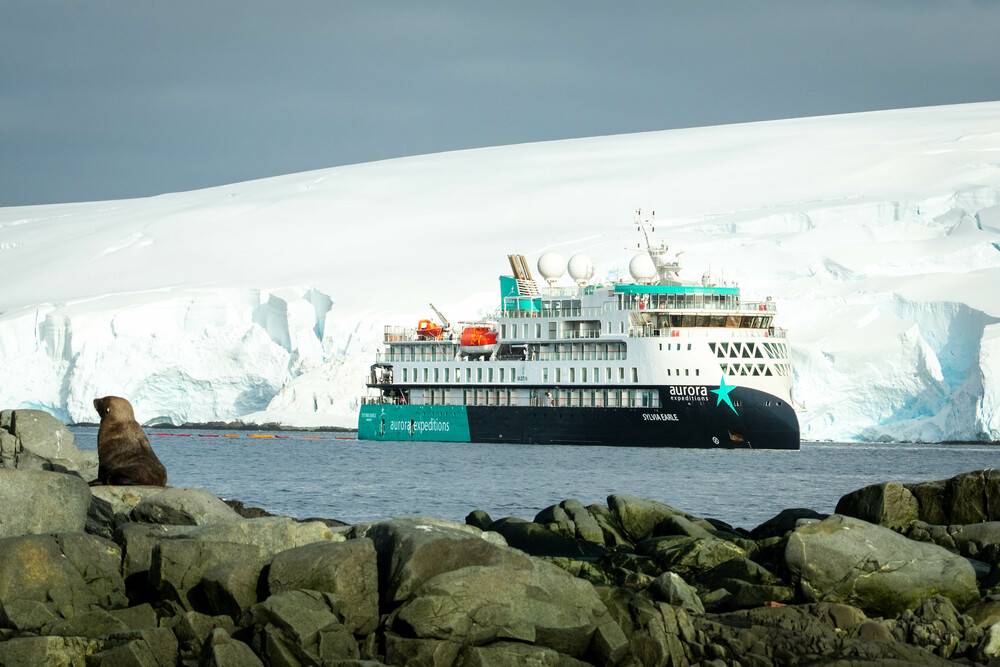
Sylvia Earle

- 130Guests
- 71Cabins
- 2022Launched
- 104.4 mLength
All ship facts
- Crew
- 74
- Decks
- 8
- Gross tonnage
- 7400
- Speed
- 12 kts
- Width
- 18.2 m
- Wheelchair cabins
- 2
- Currency on board
- USD
- Language
- en