

Ireland: The Luck of the Irish
CRUISE ID # AURORAIRN003D
Dublin TO Dublin
Suites & Fares
Itinerary
- Day 1June 16, 2027
Dublin, Ireland
Dublin is making a comeback. The decade-long "Celtic Tiger" boom era was quickly followed by the Great Recession, but The Recovery has finally taken a precarious hold. For visitors, this newer and wiser Dublin has become one of western Europe's most popular and delightful urban destinations. Whether or not you're out to enjoy the old or new Dublin, you'll find it a colossally entertaining city, all the more astonishing considering its intimate size.It is ironic and telling that James Joyce chose Dublin as the setting for his famous Ulysses, Dubliners, and A Portrait of the Artist as a Young Man because it was a "center of paralysis" where nothing much ever changed. Which only proves that even the greats get it wrong sometimes. Indeed, if Joyce were to return to his once-genteel hometown today—disappointed with the city's provincial outlook, he left it in 1902 at the age of 20—and take a quasi-Homeric odyssey through the city (as he so famously does in Ulysses), would he even recognize Dublin as his "Dear Dirty Dumpling, foostherfather of fingalls and dotthergills"?For instance, what would he make of Temple Bar—the city's erstwhile down-at-the-heels neighborhood, now crammed with cafés and trendy hotels and suffused with a nonstop, international-party atmosphere? Or the simple sophistication of the open-air restaurants of the tiny Italian Quarter (named Quartier Bloom after his own creation), complete with sultry tango lessons? Or of the hot–cool Irishness, where every aspect of Celtic culture results in sold-out theaters, from Once, the cult indie movie and Broadway hit, to Riverdance, the old Irish mass-jig recast as a Las Vegas extravaganza? Plus, the resurrected Joyce might be stirred by the songs of Hozier, fired up by the sultry acting of Michael Fassbender, and moved by the award-winning novels of Colum McCann. As for Ireland's capital, it's packed with elegant shops and hotels, theaters, galleries, coffeehouses, and a stunning variety of new, creative little restaurants can be found on almost every street in Dublin, transforming the provincial city that suffocated Joyce into a place almost as cosmopolitan as the Paris to which he fled. And the locals are a hell of a lot more fun! Now that the economy has finally turned a corner, Dublin citizens can cast a cool eye over the last 20 crazy years. Some argue that the boomtown transformation of their heretofore-tranquil city has permanently affected its spirit and character. These skeptics (skepticism long being a favorite pastime in the capital city) await the outcome of "Dublin: The Sequel," and their greatest fear is the possibility that the tattered old lady on the Liffey has become a little less unique, a little more like everywhere else.Oh ye of little faith: the rare ole gem that is Dublin is far from buried. The fundamentals—the Georgian elegance of Merrion Square, the Norman drama of Christ Church Cathedral, the foamy pint at an atmospheric pub—are still on hand to gratify. Most of all, there are the locals themselves: the nod and grin when you catch their eye on the street, the eagerness to hear half your life story before they tell you all of theirs, and their paradoxically dark but warm sense of humor. It's expected that 2016 will be an extra-special year in the capital, as centenary celebrations of the fateful 1916 Easter Rising will dominate much of the cultural calendar.
- Day 2June 17, 2027
Dublin, Ireland
Dublin is making a comeback. The decade-long "Celtic Tiger" boom era was quickly followed by the Great Recession, but The Recovery has finally taken a precarious hold. For visitors, this newer and wiser Dublin has become one of western Europe's most popular and delightful urban destinations. Whether or not you're out to enjoy the old or new Dublin, you'll find it a colossally entertaining city, all the more astonishing considering its intimate size.It is ironic and telling that James Joyce chose Dublin as the setting for his famous Ulysses, Dubliners, and A Portrait of the Artist as a Young Man because it was a "center of paralysis" where nothing much ever changed. Which only proves that even the greats get it wrong sometimes. Indeed, if Joyce were to return to his once-genteel hometown today—disappointed with the city's provincial outlook, he left it in 1902 at the age of 20—and take a quasi-Homeric odyssey through the city (as he so famously does in Ulysses), would he even recognize Dublin as his "Dear Dirty Dumpling, foostherfather of fingalls and dotthergills"?For instance, what would he make of Temple Bar—the city's erstwhile down-at-the-heels neighborhood, now crammed with cafés and trendy hotels and suffused with a nonstop, international-party atmosphere? Or the simple sophistication of the open-air restaurants of the tiny Italian Quarter (named Quartier Bloom after his own creation), complete with sultry tango lessons? Or of the hot–cool Irishness, where every aspect of Celtic culture results in sold-out theaters, from Once, the cult indie movie and Broadway hit, to Riverdance, the old Irish mass-jig recast as a Las Vegas extravaganza? Plus, the resurrected Joyce might be stirred by the songs of Hozier, fired up by the sultry acting of Michael Fassbender, and moved by the award-winning novels of Colum McCann. As for Ireland's capital, it's packed with elegant shops and hotels, theaters, galleries, coffeehouses, and a stunning variety of new, creative little restaurants can be found on almost every street in Dublin, transforming the provincial city that suffocated Joyce into a place almost as cosmopolitan as the Paris to which he fled. And the locals are a hell of a lot more fun! Now that the economy has finally turned a corner, Dublin citizens can cast a cool eye over the last 20 crazy years. Some argue that the boomtown transformation of their heretofore-tranquil city has permanently affected its spirit and character. These skeptics (skepticism long being a favorite pastime in the capital city) await the outcome of "Dublin: The Sequel," and their greatest fear is the possibility that the tattered old lady on the Liffey has become a little less unique, a little more like everywhere else.Oh ye of little faith: the rare ole gem that is Dublin is far from buried. The fundamentals—the Georgian elegance of Merrion Square, the Norman drama of Christ Church Cathedral, the foamy pint at an atmospheric pub—are still on hand to gratify. Most of all, there are the locals themselves: the nod and grin when you catch their eye on the street, the eagerness to hear half your life story before they tell you all of theirs, and their paradoxically dark but warm sense of humor. It's expected that 2016 will be an extra-special year in the capital, as centenary celebrations of the fateful 1916 Easter Rising will dominate much of the cultural calendar.
- Day 3June 18, 2027
Waterford, Ireland
The largest town in the Southeast and Ireland's oldest city, Waterford was founded by the Vikings in the 9th century and was taken over by Strongbow, the Norman invader, with much bloodshed in 1170. The city resisted Cromwell's 1649 attacks, but fell the following year. It did not prosper again until 1783, when George and William Penrose set out to create "plain and cut flint glass, useful and ornamental," and thereby set in motion a glass-manufacturing industry long without equal. The famed glassworks closed after the 2008 financial crisis, but Waterford Crystal has triumphantly risen again from the flames in a smaller, leaner version, opened in 2010 and now relocated to the Mall.
- Day 4June 19, 2027
Cork, Ireland
Cork City received its first charter in 1185 from Prince John of Norman England, and it takes its name from the Irish word corcaigh, meaning "marshy place." The original 6th-century settlement was spread over 13 small islands in the River Lee. Major development occurred during the 17th and 18th centuries with the expansion of the butter trade, and many attractive Georgian-design buildings with wide bowfront windows were constructed during this time. As late as 1770 Cork's present-day main streets—Grand Parade, Patrick Street, and the South Mall—were submerged under the Lee. Around 1800, when the Lee was partially dammed, the river divided into two streams that now flow through the city, leaving the main business and commercial center on an island, not unlike Paris's Île de la Cité. As a result, the city has a number of bridges and quays, which, although initially confusing, add greatly to the port's unique character. Cork can be very "Irish" (hurling, Gaelic football, televised plowing contests, music pubs, and peat smoke). But depending on what part of town you're in, Cork can also be distinctly un-Irish—the sort of place where hippies, gays, and farmers drink at the same pub.
- Day 5June 20, 2027
Bantry, Ireland
It is time to join our breakfast club this morning as we sail at sunrise towards the Skellig Islands. Off the coast of County Kerry, two rocky pinnacles rise from the Atlantic Ocean. The Skellig Islands are world-renowned for their ornithological and archaeological significance. Skellig Michael is the site of a well-preserved monastic outpost of the Early Christian period and is now designated a UNESCO World Heritage Site. Little Skellig is equally renowned in matters of ornithology. As the home of 27,000 pairs of gannets, it is the second largest colony of such seabirds in the world. Some 1,400 years ago a congregation of monks were searching for a place to practice their religion in complete solitude and isolation. Determined to build a monastery on these remote islands, generation after generation of monk's hand-carved 600 stone steps with the simplest tools to build a hilltop monastery approximately 183 metres (600 feet) above the pounding waves. The survival of the terraces, oratories and six corbel stone beehive huts are to this day a testament to their skill and dedication. The archaeological remains show the dramatically spartan conditions in which the monks lived; however, after enduring several Viking raids, the monks eventually left the island in the 13th century. The site has subsequently become a place of Christian pilgrimage. Note: The Office of Public Works (OPW) manages the Skelligs, and they no longer allow cruise ship passengers to land on Skellig Michael. Visitor numbers to Skellig Michael in recent years have reached the maximum permitted by UNESCO and any violation of UNESCO criteria will affect the future UNESCO status of the island. From the elevated height of our vessel, we will enjoy a cruise of the islands before reaching Dingle Bay and tendering ashore. Once described by National Geographic Traveller as ‘the most beautiful place on earth’, Dingle is away from the general ‘tourist route’, affording us exclusive access to the wild west coast. Traditionally a fishing port, Dingle Harbour is where we anchor and tender into town. Known for its rugged scenery, dramatic cliffs and sandy beaches, the surrounding promontory is the coastal heart of County Kerry, while Dingle itself has a bohemian flair and is famous for its hardware pubs where you can enjoy a brew and buy wares. We enjoy lunch onboard before tendering ashore to experience a slice of Ireland’s rural lifestyle, while viewing the wild side of the country and the Irish who call County Kerry home. Personalise your exploration with our included ‘Your Choice’ experiences. Option 1 – Afternoon experience: Dingle Peninsula As the Atlantic carves the coast, we watch its waves from our clifftop drive to Slea Head. Our route weaves and twists as we follow the peninsula, with stops to take in its dramatic scenery as the road narrows, and we literally drive to the edge of the ocean. An unforgiving land, this peninsula attracted medieval monks, who lived in beehive-shaped, stone clocháns, which we visit at the Fahan Beehive. On the horizon we see the deserted Blasket Islands; an unenviable place to live. The islands were evacuated in 1953 due to a dwindling, ageing population, but the islanders’ stories live on, thanks to the Blasket Centre. This interactive museum tells tales of the islanders who survived in often unliveable conditions. We hear their stories, learn some ‘real Irish’ and marvel at their tenacity. Option 2 – Afternoon experience: Life on the Land – Past and Present We hear tales of ‘life on the land’ this afternoon as we visit ‘famine cottages’ and meet the shepherds and the sheep dogs of the Dingle Peninsula. Our scenic drive follows a route along the dramatic cliffs of the promontory, before heading inland to the farmlands of Dingle. This land is sheep country. Generations of farmers have survived here through wild weather, outbreaks of disease and, of course, famine. The Kavanagh family is one of them. In the 19th century, the densely populated, western counties of Ireland were poverty stricken. The people in these areas were hugely dependent on the potato crop, and when the potato blight arrived in the 1840s, West Kerry experienced severe hardship. Neglected by the ruling classes, people endured horrific conditions, forcing many to emigrate, while those who remained, starved. We hear tales of extreme poverty and struggles for survival as we visit the family’s 19th-century cottages, which remain as they were during the great famine. The story of this land continues in a lighter vein as we enjoy a sheepdog demonstration. The shepherds’ ‘best friends’ take instructions in native Irish as they show off their skills and win our hearts with their cunning ability to herd even the most determined of sheep. - Day 6June 21, 2027
Dingle, Ireland
It is time to join our breakfast club this morning as we sail at sunrise towards the Skellig Islands. Off the coast of County Kerry, two rocky pinnacles rise from the Atlantic Ocean. The Skellig Islands are world-renowned for their ornithological and archaeological significance. Skellig Michael is the site of a well-preserved monastic outpost of the Early Christian period and is now designated a UNESCO World Heritage Site. Little Skellig is equally renowned in matters of ornithology. As the home of 27,000 pairs of gannets, it is the second largest colony of such seabirds in the world. Some 1,400 years ago a congregation of monks were searching for a place to practice their religion in complete solitude and isolation. Determined to build a monastery on these remote islands, generation after generation of monks hand-carved 600 stone steps with the simplest tools to build a hilltop monastery 180 metres above the pounding waves. The survival of the terraces, oratories and six corbel stone beehive huts are to this day a testament to their skill and dedication. The archaeological remains show the dramatically spartan conditions in which the monks lived; however, after enduring several Viking raids, the monks eventually left the island in the 13th century. The site has subsequently become a place of Christian pilgrimage. Note: The Office of Public Works (OPW) manages the Skelligs, and they no longer allow cruise ship passengers to land on Skellig Michael. Visitor numbers to Skellig Michael in recent years have reached the maximum permitted by UNESCO and any violation of UNESCO criteria will affect the future UNESCO status of the island. From the elevated height of our vessel, we will enjoy a cruise of the islands before reaching Dingle Bay and tendering ashore. Once described by National Geographic Traveller as ‘the most beautiful place on earth’, Dingle is away from the general ‘tourist route’, affording us exclusive access to the wild west coast. Traditionally a fishing port, Dingle Harbour is where we anchor and tender into town. Known for its rugged scenery, dramatic cliffs and sandy beaches, the surrounding promontory is the coastal heart of County Kerry, while Dingle itself has a bohemian flair and is famous for its hardware pubs where you can enjoy a brew and buy wares. We enjoy lunch onboard before tendering ashore to experience a slice of Ireland’s rural lifestyle, while viewing the wild side of the country and the Irish who call County Kerry home. Personalise your exploration with our included ‘Your Choice’ experiences. Option 1 – Afternoon experience: Dingle Peninsula and Tralee As the Atlantic carves the coast, we watch its waves from our clifftop drive to Slea Head. Our route weaves and twists as we follow the peninsula, with stops to take in its dramatic scenery as the road narrows, and we literally drive to the edge of the ocean. An unforgiving land, this peninsula attracted medieval monks, who lived in beehive-shaped, stone clocháns, which we visit at the Fahan Beehive. On the horizon we see the deserted Blasket Islands; an unenviable place to live. The islands were evacuated in 1953 due to a dwindling, ageing population, but the islanders’ stories live on, thanks to the Blasket Centre. This interactive museum tells tales of the islanders who survived in often unliveable conditions. We hear their stories, learn some ‘real Irish’ and marvel at their tenacity, before heading onto the famed town of Tralee for a stroll of its quaint streets. Option 2 – Afternoon experience: Life on the Land – Past and Present We hear tales of ‘life on the land’ this afternoon as we visit ‘famine cottages’ and meet the shepherds and the sheep dogs of the Dingle Peninsula. Our scenic drive follows a route along the dramatic cliffs of the promontory, before heading inland to the farmlands of Dingle. This land is sheep country. Generations of farmers have survived here through wild weather, outbreaks of disease and, of course, famine. The Kavanagh family is one of them. In the 19th century, the densely populated, western counties of Ireland were poverty stricken. The people in these areas were hugely dependent on the potato crop, and when the potato blight arrived in the 1840s, West Kerry experienced severe hardship. Neglected by the ruling classes, people endured horrific conditions, forcing many to emigrate, while those who remained, starved. We hear tales of extreme poverty and struggles for survival as we visit the family’s 19th-century cottages, which remain as they were during the great famine. The story of this land continues in a lighter vein as we enjoy a sheepdog demonstration. The shepherds’ ‘best friends’ take instructions in native Irish as they show off their skills and win our hearts with their cunning ability to herd even the most determined of sheep. Off the coast we see the deserted Blasket Islands: an unenviable place to live. The islands were evacuated in 1953 due to a dwindling, ageing population, but the islanders’ stories live on, thanks to the Blasket Centre. This interactive museum tells tales of the islanders who survived in often unliveable conditions. We hear their stories, learn some ‘real Irish’ and marvel at their tenacity, before returning to the ship. Option 3 – Afternoon experience: Dingle Bay Kayaking The waters of Dingle Bay are popular with kayakers of all abilities. We invite all intrepid kayakers to join a local guide this afternoon to explore the coastline, sea caves and harbour of Dingle Bay. It is not unusual to encounter dolphins during this experience, but it is the geographical scenery that makes an afternoon on the bay special. You will be introduced to kayaking, before spending around 2.5 hours kayaking on the bay. We ask that you accurately assess your kayaking fitness before choosing this option, as you will not be able to leave the excursion and return to the port by yourself once the excursion has commenced. (This kayaking option requires a minimum number of participants to operate and is subject to local weather conditions. Should it be cancelled, we will try our best to provide you with another experience.) - Day 7June 22, 2027
Galway, Ireland
Galway is a city in the West of Ireland in the province of Connacht. It lies on the River Corrib between Lough Corrib and Galway Bay and is surrounded by County Galway. It is the fourth most populous urban area in the Republic of Ireland and the sixth most populous city in the island of Ireland. It is both a picturesque and lively city with a wonderful avant-garde culture and a fascinating mixture of locally owned speciality shops, often featuring locally made crafts. Indeed local handcrafts are a feature of the entire region including hand knits, pottery, glass, jewellery and woodwork. The city’s hub is 18th-century Eyre Square, a popular meeting spot surrounded by shops, and traditional pubs that often offer live Irish folk music. Nearby, stone-clad cafes, boutiques and art galleries line the winding lanes of the Latin Quarter, which retains portions of the medieval city walls. The city bears the nickname "The City of the Tribes" because "fourteen tribes" of merchant families led the city in its Hiberno-Norman period. The merchants would have seen themselves as Irish gentry and loyal to the King. They later adopted the term as a badge of honour and pride in defiance of the town's Cromwellian occupier.
- Day 8June 23, 2027
Killybegs, Ireland
Killybegs The days start early in Killybegs, as this quiet fishing town rumbles to life, and ships with red and blue paint peeling from their hulls quietly depart, ready for a morning's hard work at sea. Located in a scenic part of County Donegal, Killybegs is Ireland's fishing capital, and the salty breeze and pretty streets serve as a revitalising medicine for visitors. The town is also your gateway to some of the country's most majestic coastal scenery, which is dotted with flashing white lighthouses, keeping watch over invigorating seascapes. Killybegs enjoys a privileged position on the coast of north west of Ireland, close to the spectacular Slieve League - a titanic mountain, which explodes upwards from frothing ocean. Walk as close as you dare to the coastline’s sheer drops, or admire the folding cliffs from the best vantage point, down on the water.
- Day 9June 24, 2027
Londonderry, Northern Ireland
Nestled behind lofty city walls, Londonderry is a destination of culture, which boasts an increasingly envied reputation. This Northern Irish city is still riding on the momentum of a fantastic 2013, when it was named as UK City of Culture, and singled out as one of Lonely Planet's top 5 destinations to visit. The wonderfully preserved city walls are perhaps Londonderry's most treasured charm, and they encircle 1,450 years of history, and are over 400 years old. The walls came to the fore of the city's history during the Siege of Derry, back in 1688 - when King James's forces attacked, causing mass starvation and suffering over 105 days of stalemate. It takes approximately an hour to wander the entire circuit of the walls, and see their seven gates, and you’ll absorb a feast of information along the way. View the mighty cannons that boomed during the siege, or stop into one of the plentiful cafes, should you need a little refreshment before continuing your journey. St. Columb’s Cathedral, which dates back to 1633, towers over the walled city, and is one of the city's most significant historic sites. Its dreamy spire contains a set of bells that have peeled out melodies here since 1638, making them Ireland's oldest.
- Day 10June 25, 2027
Belfast, Northern Ireland
Before English and Scottish settlers arrived in the 1600s, Belfast was a tiny village called Béal Feirste ("sandbank ford") belonging to Ulster's ancient O'Neill clan. With the advent of the Plantation period (when settlers arrived in the 1600s), Sir Arthur Chichester, from Devon in southwestern England, received the city from the English Crown, and his son was made Earl of Donegall. Huguenots fleeing persecution from France settled near here, bringing their valuable linen-work skills. In the 18th century, Belfast underwent a phenomenal expansion—its population doubled every 10 years, despite an ever-present sectarian divide. Although the Anglican gentry despised the Presbyterian artisans—who, in turn, distrusted the native Catholics—Belfast's growth continued at a dizzying speed. The city was a great Victorian success story, an industrial boomtown whose prosperity was built on trade, especially linen and shipbuilding. Famously (or infamously), the Titanic was built here, giving Belfast, for a time, the nickname "Titanic Town." Having laid the foundation stone of the city's university in 1845, Queen Victoria returned to Belfast in 1849 (she is recalled in the names of buildings, streets, bars, monuments, and other places around the city), and in the same year, the university opened under the name Queen's College. Nearly 40 years later, in 1888, Victoria granted Belfast its city charter. Today its population is nearly 300,000, tourist numbers have increased, and this dramatically transformed city is enjoying an unparalleled renaissance.This is all a welcome change from the period when news about Belfast meant reports about "the Troubles." Since the 1994 ceasefire, Northern Ireland's capital city has benefited from major hotel investment, gentrified quaysides (or strands), a sophisticated new performing arts center, and major initiatives to boost tourism. Although the 1996 bombing of offices at Canary Wharf in London disrupted the 1994 peace agreement, the ceasefire was officially reestablished on July 20, 1997, and this embattled city began its quest for a newfound identity.Since 2008, the city has restored all its major public buildings such as museums, churches, theaters, City Hall, Ulster Hall—and even the glorious Crown Bar—spending millions of pounds on its built heritage. A gaol that at the height of the Troubles held some of the most notorious murderers involved in paramilitary violence is now a major visitor attraction.Belfast's city center is made up of three roughly contiguous areas that are easy to navigate on foot. From the south end to the north, it's about an hour's leisurely walk.
- Day 11June 26, 2027
Dublin, Ireland
Dublin is making a comeback. The decade-long "Celtic Tiger" boom era was quickly followed by the Great Recession, but The Recovery has finally taken a precarious hold. For visitors, this newer and wiser Dublin has become one of western Europe's most popular and delightful urban destinations. Whether or not you're out to enjoy the old or new Dublin, you'll find it a colossally entertaining city, all the more astonishing considering its intimate size.It is ironic and telling that James Joyce chose Dublin as the setting for his famous Ulysses, Dubliners, and A Portrait of the Artist as a Young Man because it was a "center of paralysis" where nothing much ever changed. Which only proves that even the greats get it wrong sometimes. Indeed, if Joyce were to return to his once-genteel hometown today—disappointed with the city's provincial outlook, he left it in 1902 at the age of 20—and take a quasi-Homeric odyssey through the city (as he so famously does in Ulysses), would he even recognize Dublin as his "Dear Dirty Dumpling, foostherfather of fingalls and dotthergills"?For instance, what would he make of Temple Bar—the city's erstwhile down-at-the-heels neighborhood, now crammed with cafés and trendy hotels and suffused with a nonstop, international-party atmosphere? Or the simple sophistication of the open-air restaurants of the tiny Italian Quarter (named Quartier Bloom after his own creation), complete with sultry tango lessons? Or of the hot–cool Irishness, where every aspect of Celtic culture results in sold-out theaters, from Once, the cult indie movie and Broadway hit, to Riverdance, the old Irish mass-jig recast as a Las Vegas extravaganza? Plus, the resurrected Joyce might be stirred by the songs of Hozier, fired up by the sultry acting of Michael Fassbender, and moved by the award-winning novels of Colum McCann. As for Ireland's capital, it's packed with elegant shops and hotels, theaters, galleries, coffeehouses, and a stunning variety of new, creative little restaurants can be found on almost every street in Dublin, transforming the provincial city that suffocated Joyce into a place almost as cosmopolitan as the Paris to which he fled. And the locals are a hell of a lot more fun! Now that the economy has finally turned a corner, Dublin citizens can cast a cool eye over the last 20 crazy years. Some argue that the boomtown transformation of their heretofore-tranquil city has permanently affected its spirit and character. These skeptics (skepticism long being a favorite pastime in the capital city) await the outcome of "Dublin: The Sequel," and their greatest fear is the possibility that the tattered old lady on the Liffey has become a little less unique, a little more like everywhere else.Oh ye of little faith: the rare ole gem that is Dublin is far from buried. The fundamentals—the Georgian elegance of Merrion Square, the Norman drama of Christ Church Cathedral, the foamy pint at an atmospheric pub—are still on hand to gratify. Most of all, there are the locals themselves: the nod and grin when you catch their eye on the street, the eagerness to hear half your life story before they tell you all of theirs, and their paradoxically dark but warm sense of humor. It's expected that 2016 will be an extra-special year in the capital, as centenary celebrations of the fateful 1916 Easter Rising will dominate much of the cultural calendar.
- Day 12June 27, 2027
Day at Sea
About the Ship
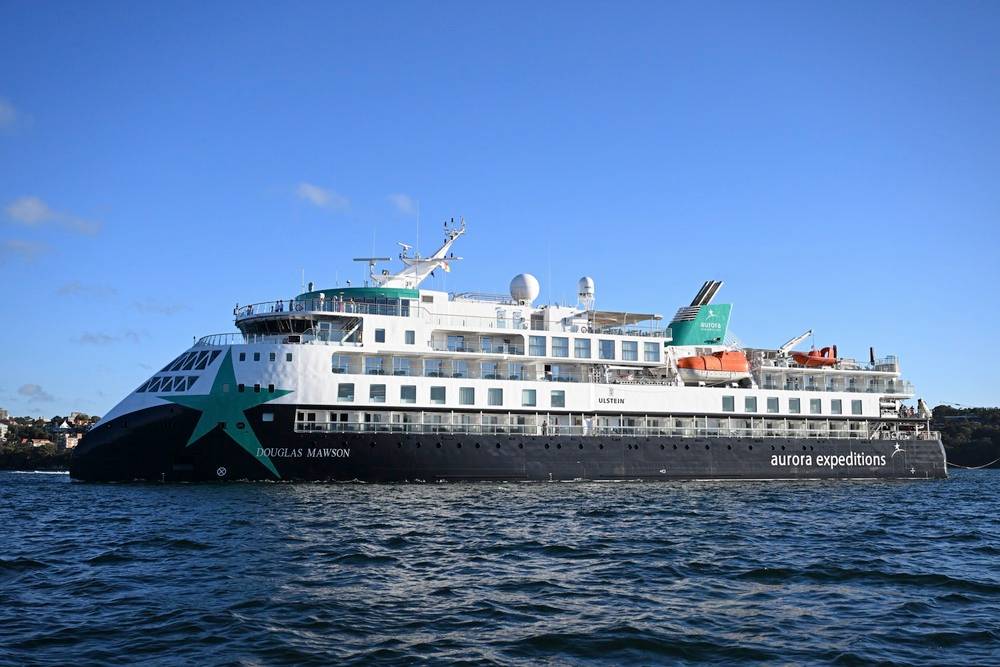
Douglas Mawson

- 154Guests
- 86Cabins
- 2025Launched
- 104 mLength
All ship facts
- Crew
- 24
- Decks
- 8
- Gross tonnage
- 8500
- Speed
- 12 kts
- Width
- 18 m
- Wheelchair cabins
- 2
- Currency on board
- USD
- Language
- en