

A United Kingdom: The Crown and the Clans
CRUISE ID # AURORASCE002D
London (Greenwich) TO Edinburgh
Suites & Fares
Itinerary
- Day 1June 06, 2027
London (Greenwich), England
About 8 miles downstream—which means seaward, to the east—from central London, Greenwich is a small borough that looms large across the world. Once the seat of British naval power, it is not only home to the Old Royal Observatory, which measures time for our entire planet, but also the Greenwich Meridian, which divides the world into two—you can stand astride it with one foot in either hemisphere. Bear in mind that the journey to Greenwich is an event in itself. In a rush, you can take the driverless DLR train—but many opt for arriving by boat along the Thames. This way, you glide past famous sights on the London skyline (there’s a guaranteed spine chill on passing the Tower) and ever-changing docklands, and there’s usually a chirpy Cock-er-ney navigator enlivening the journey with his fun commentary. A visit to Greenwich feels like a trip to a rather elegant seaside town—albeit one with more than its fair share of historic sites. The grandiose Old Royal Naval Hospital, designed by Christopher Wren, was originally a home for veteran sailors. Today it’s a popular visitor attraction, with a more glamorous second life as one of the most widely used movie locations in Britain. Greenwich was originally home to one of England's finest Tudor palaces, and the birthplace of Henry VIII, Elizabeth I, and Mary I. Inigo Jones built what is considered the first "classical" building in England in 1616—the Queen's House, which now houses a collection of fine art. Britain was the world’s preeminent naval power for over 500 years, and the excellent National Maritime Museum> details that history in an engaging way. Its prize exhibits include the coat worn by Admiral Lord Nelson (1758–1805) in his final battle—bullet hole and all. The 19th-century tea clipper Cutty Sark was nearly destroyed by fire in 2007, but reopened in 2012 after a painstaking restoration. Now it’s more pristine than ever, complete with an impressive new visitor center. Greenwich Park, London's oldest royal park, is still home to fallow red deer, just as it has been since they were first introduced here for hunting by Henry VIII. The Ranger's House now houses a private art collection, next door to a beautifully manicured rose garden. Above it all is the Royal Observatory, where you can be in two hemispheres at once by standing along the Greenwich Meridian Line, before seeing a high-tech planetarium show. Toward north Greenwich, the hopelessly ambitious Millennium Dome has been successfully reborn as the O2 and now hosts major concerts and stand-up comedy gigs. More adventurous visitors can also go Up the O2 on a climbing expedition across the massive domed surface. Meanwhile, those who prefer excursions of a gentler kind may prefer to journey a couple of miles south of the borough, farther out into London’s southern suburbs, to the shamefully underappreciated Eltham Palace. Once a favorite of Henry VIII, parts of the mansion were transformed into an art deco masterpiece during the 1930s.
- Day 2June 07, 2027
London Tower Bridge, England
London is an ancient city whose history greets you at every turn. If the city contained only its famous landmarks—the Tower of London or Big Ben—it would still rank as one of the world's top cities. But London is so much more. The foundations of London's character and tradition endure. The British bobby is alive and well. The tall, red, double-decker buses (in an updated model) still lumber from stop to stop. Then there's that greatest living link with the past—the Royal Family with all its attendant pageantry. To ice the cake, swinging-again London is today one of the coolest cities on the planet. The city's art, style, and fashion make headlines around the world, and London's chefs have become superstars.
- Day 3June 08, 2027
Portsmouth, England
Portsmouth is one of the most densely populated cities in Southern England, and is unusual as most of its built-up area occupies Portsea Island, linked to the mainland by road and rail bridges. Although there is a Roman fort at nearby Portchester, occupied later by the Saxons and Normans, there was no settlement on the site of Portsmouth at the time of the 1086 Domesday Book. The town developed in medieval times and received its first charter in 1194 from King Richard I; soon afterwards it became a major naval base. It has the world’s oldest dry dock, and is home to several famous ships, including HMS Victory, HMS Warrior and the Mary Rose, raised from the Solent in 1982. Portsmouth remains an important naval base and is home to a large proportion of the British service fleet. The waterfront area is now dominated by the Spinnaker Tower, 560 feet high, the United Kingdom’s tallest building outside London. Other things to see in the city include the house where Charles Dickens was born, and the City Museum, which contains a permanent exhibition devoted to another famous writer, Sir Arthur Conan Doyle, who lived in the town.
- Day 4June 09, 2027
Guernsey, Guernsey
A mere 30 miles off the Normandy coast, the self-governing British Crown Dependency the Bailiwick of Guernsey, is one of the eight permanently inhabited strongholds of the Channel Islands. Despite being closer to France, Guernsey holds to its distinctive British character. When William the Conqueror, Duke of Normandy, became King of England in 1066, the Channel Islands, including Guernsey, became possessions of the English Crown. They have remained British Crown Dependencies ever since. Our morning ‘Your Choice’ experiences return to the ship for lunch, affording you an afternoon to wander the streets of St. Peters Port, with the ship berthed at the town’s centrally located port. Perhaps browse the shops, cake shops and quaint pubs, tour Castle Cornet or visit Victori Hugo’s 19th century home, before we set sail in the early evening. - Day 5June 10, 2027
Plymouth, England
Best known as the port from which Sir Francis Drake and the port which the Pilgrim Fathers set sail from, Plymouth is awash with history. Walk down its cobbled streets, step back in time and discover the historical landmarks and sites.
- Day 6June 11, 2027
Falmouth, England
The bustle of this resort town's fishing harbor, yachting center, and commercial port only adds to its charm. In the 18th century Falmouth was the main mail-boat port for North America, and in Flushing, a village across the inlet, you can see the slate-covered houses built by prosperous mail-boat captains. A ferry service now links the two towns. On Custom House Quay, off Arwenack Street, is the King's Pipe, an oven in which seized contraband was burned.
- Day 7June 12, 2027
Day at Sea
- Day 8June 13, 2027
Holyhead, Wales
Once a northern defense post against Irish raiders, Holyhead later became best known as a ferry port for Ireland. The dockside bustle is not matched by the town, however, which maintains just a small population. Nonetheless, thousands of years of settlement have given Holyhead rich historical ruins to explore, with more in the surrounding hiking friendly landscape.
- Day 9June 14, 2027
Heysham, England
The village of Heysham, located on the northwest coast of England, serves as our gateway to the historical town of Lancaster and the ever-popular Lake District today. Situated near Morecambe Bay in Lancashire, Heysham has been a vital port for fishing and maritime trade since the Viking era. Its working harbour and historical lighthouses reflect its rich seafaring heritage. Heysham’s proximity to the Lake District National Park adds to its allure, offering visitors easy access to the stunning landscapes and outdoor adventures of one of England’s most beloved natural reserves. We follow in the footsteps of many a royal holidaymaker today, by spending time in that ‘quintessentially British icon’, the Lake District. Dotted with 16 lakes, meres and waterways, the region of Derwentwater, collectively known as the Lake District, is beloved for its green rolling hills, slate valleys and quaint towns, with Windermere standing as its crown jewel. Stretching over 10 miles in length, Windermere has attracted tourists for centuries and inspired generations of poets and authors, including William Wordsworth, Samuel Taylor Coleridge, and Beatrix Potter. This region holds a special place in the Victorian history of England. Queen Victoria’s visits to the Lake District, particularly to Windermere, were significant in popularising the area as a holiday destination. Her first visit in 1835 marked the beginning of the Lake District’s reputation as a scenic retreat for the British aristocracy and later, for tourists from around the world. The Cockermouth–Keswick–Penrith Railway, which opened for passenger traffic in 1865, brought even more visitors to the Lake District. A flurry of hotels and B&Bs were built, and steamers began to sail the waterways, showcasing a Victorian ambience that remains today. Queen Victoria returned to the Lake District several times throughout her reign, staying at various estates. Subsequent visits by monarchs such as King George V and Queen Elizabeth II have maintained its allure. Today, we follow in their wake with a boat cruise on the waters of Windermere, a drive through its rolling hills and valleys, and time to explore a village on its shores at your own pace, before returning to Heysham. - Day 10June 15, 2027
Belfast, Northern Ireland
Before English and Scottish settlers arrived in the 1600s, Belfast was a tiny village called Béal Feirste ("sandbank ford") belonging to Ulster's ancient O'Neill clan. With the advent of the Plantation period (when settlers arrived in the 1600s), Sir Arthur Chichester, from Devon in southwestern England, received the city from the English Crown, and his son was made Earl of Donegall. Huguenots fleeing persecution from France settled near here, bringing their valuable linen-work skills. In the 18th century, Belfast underwent a phenomenal expansion—its population doubled every 10 years, despite an ever-present sectarian divide. Although the Anglican gentry despised the Presbyterian artisans—who, in turn, distrusted the native Catholics—Belfast's growth continued at a dizzying speed. The city was a great Victorian success story, an industrial boomtown whose prosperity was built on trade, especially linen and shipbuilding. Famously (or infamously), the Titanic was built here, giving Belfast, for a time, the nickname "Titanic Town." Having laid the foundation stone of the city's university in 1845, Queen Victoria returned to Belfast in 1849 (she is recalled in the names of buildings, streets, bars, monuments, and other places around the city), and in the same year, the university opened under the name Queen's College. Nearly 40 years later, in 1888, Victoria granted Belfast its city charter. Today its population is nearly 300,000, tourist numbers have increased, and this dramatically transformed city is enjoying an unparalleled renaissance.This is all a welcome change from the period when news about Belfast meant reports about "the Troubles." Since the 1994 ceasefire, Northern Ireland's capital city has benefited from major hotel investment, gentrified quaysides (or strands), a sophisticated new performing arts center, and major initiatives to boost tourism. Although the 1996 bombing of offices at Canary Wharf in London disrupted the 1994 peace agreement, the ceasefire was officially reestablished on July 20, 1997, and this embattled city began its quest for a newfound identity.Since 2008, the city has restored all its major public buildings such as museums, churches, theaters, City Hall, Ulster Hall—and even the glorious Crown Bar—spending millions of pounds on its built heritage. A gaol that at the height of the Troubles held some of the most notorious murderers involved in paramilitary violence is now a major visitor attraction.Belfast's city center is made up of three roughly contiguous areas that are easy to navigate on foot. From the south end to the north, it's about an hour's leisurely walk.
- Day 11June 16, 2027
Londonderry, Northern Ireland
Nestled behind lofty city walls, Londonderry is a destination of culture, which boasts an increasingly envied reputation. This Northern Irish city is still riding on the momentum of a fantastic 2013, when it was named as UK City of Culture, and singled out as one of Lonely Planet's top 5 destinations to visit. The wonderfully preserved city walls are perhaps Londonderry's most treasured charm, and they encircle 1,450 years of history, and are over 400 years old. The walls came to the fore of the city's history during the Siege of Derry, back in 1688 - when King James's forces attacked, causing mass starvation and suffering over 105 days of stalemate. It takes approximately an hour to wander the entire circuit of the walls, and see their seven gates, and you’ll absorb a feast of information along the way. View the mighty cannons that boomed during the siege, or stop into one of the plentiful cafes, should you need a little refreshment before continuing your journey. St. Columb’s Cathedral, which dates back to 1633, towers over the walled city, and is one of the city's most significant historic sites. Its dreamy spire contains a set of bells that have peeled out melodies here since 1638, making them Ireland's oldest.
- Day 12June 17, 2027
Troon, Scotland
Troon is a town and sea port in South Ayrshire, situated on the west coast of Ayrshire in Scotland, about eight miles north of Ayr and three miles northwest of Glasgow Prestwick Airport. Troon has a port with ferry and freight services, and a yacht marina - Day 13June 18, 2027
Inverness, Scotland
Lingering in the Highlands this morning, we gain an insight into the clash between the clans and their British rulers, brought vividly to life by our local guides on the battlefield of Culloden. Scottish clans played a major role in the country’s history and politics, their relationship with the British crown marked by both alliances and fierce conflict. Many clans supported rival factions during the Jacobite uprisings of the 17th and 18th centuries, backing the Stuart claim to the throne. The decisive defeat of the Jacobites at Culloden in 1746 marked the end of clan power. Afterward, British policies dismantled the clan system, banning tartan, Gaelic, bagpipes, and communal living. These measures aimed to integrate Scotland fully into Britain and diminish clan influence. Today, the clans’ legacy thrives in Scottish culture, celebrated worldwide through gatherings and tartans. Our guided visit to Culloden Battlefield offers a poignant reminder of this bitter feud. Here, Jacobite forces under Bonnie Prince Charlie suffered a crushing defeat, with heavy casualties and harsh reprisals. Standing on this ground reveals the brutal reality of 18th-century warfare and its lasting impact. We continue south to arrive in the capital city of Edinburgh late afternoon and check in to our hotel. Enjoy your evening at leisure. Accommodation: Edinburgh Hotel (or similar) - Day 14June 19, 2027
Edinburgh, Scotland
Edinburgh is to London as poetry is to prose, as Charlotte Brontë once wrote. One of the world's stateliest cities and proudest capitals, it's built—like Rome—on seven hills, making it a striking backdrop for the ancient pageant of history. In a skyline of sheer drama, Edinburgh Castle watches over the capital city, frowning down on Princes Street’s glamour and glitz. But despite its rich past, the city’s famous festivals, excellent museums and galleries, as well as the modern Scottish Parliament, are reminders that Edinburgh has its feet firmly in the 21st century.Nearly everywhere in Edinburgh (the burgh is always pronounced burra in Scotland) there are spectacular buildings, whose Doric, Ionic, and Corinthian pillars add touches of neoclassical grandeur to the largely Presbyterian backdrop. Large gardens are a strong feature of central Edinburgh, where the city council is one of the most stridently conservationist in Europe. Arthur's Seat, a mountain of bright green and yellow furze, rears up behind the spires of the Old Town. This child-size mountain jutting 822 feet above its surroundings has steep slopes and little crags, like a miniature Highlands set down in the middle of the busy city. Appropriately, these theatrical elements match Edinburgh's character—after all, the city has been a stage that has seen its fair share of romance, violence, tragedy, and triumph.Modern Edinburgh has become a cultural capital, staging the Edinburgh International Festival and the Fringe Festival in every possible venue each August. The stunning Museum of Scotland complements the city’s wealth of galleries and artsy hangouts. Add Edinburgh’s growing reputation for food and nightlife and you have one of the world’s most beguiling cities.Today the city is the second most important financial center in the United Kingdom, and the fifth most important in Europe. The city regularly is ranked near the top in quality-of-life surveys. Accordingly, New Town apartments on fashionable streets sell for considerable sums. In some senses the city is showy and materialistic, but Edinburgh still supports learned societies, some of which have their roots in the Scottish Enlightenment. The Royal Society of Edinburgh, for example, established in 1783 "for the advancement of learning and useful knowledge," remains an important forum for interdisciplinary activities.Even as Edinburgh moves through the 21st century, its tall guardian castle remains the focal point of the city and its venerable history. Take time to explore the streets—peopled by the spirits of Mary, Queen of Scots; Sir Walter Scott; and Robert Louis Stevenson—and pay your respects to the world's best-loved terrier, Greyfriars Bobby. In the evenings you can enjoy candlelit restaurants or a folk ceilidh (pronounced kay-lee, a traditional Scottish dance with music), though you should remember that you haven't earned your porridge until you've climbed Arthur's Seat. Should you wander around a corner, say, on George Street, you might see not an endless cityscape, but blue sea and a patchwork of fields. This is the county of Fife, beyond the inlet of the North Sea called the Firth of Forth—a reminder, like the mountains to the northwest that can be glimpsed from Edinburgh's highest points, that the rest of Scotland lies within easy reach.
- Day 15June 20, 2027
Edinburgh, Scotland
Edinburgh is to London as poetry is to prose, as Charlotte Brontë once wrote. One of the world's stateliest cities and proudest capitals, it's built—like Rome—on seven hills, making it a striking backdrop for the ancient pageant of history. In a skyline of sheer drama, Edinburgh Castle watches over the capital city, frowning down on Princes Street’s glamour and glitz. But despite its rich past, the city’s famous festivals, excellent museums and galleries, as well as the modern Scottish Parliament, are reminders that Edinburgh has its feet firmly in the 21st century.Nearly everywhere in Edinburgh (the burgh is always pronounced burra in Scotland) there are spectacular buildings, whose Doric, Ionic, and Corinthian pillars add touches of neoclassical grandeur to the largely Presbyterian backdrop. Large gardens are a strong feature of central Edinburgh, where the city council is one of the most stridently conservationist in Europe. Arthur's Seat, a mountain of bright green and yellow furze, rears up behind the spires of the Old Town. This child-size mountain jutting 822 feet above its surroundings has steep slopes and little crags, like a miniature Highlands set down in the middle of the busy city. Appropriately, these theatrical elements match Edinburgh's character—after all, the city has been a stage that has seen its fair share of romance, violence, tragedy, and triumph.Modern Edinburgh has become a cultural capital, staging the Edinburgh International Festival and the Fringe Festival in every possible venue each August. The stunning Museum of Scotland complements the city’s wealth of galleries and artsy hangouts. Add Edinburgh’s growing reputation for food and nightlife and you have one of the world’s most beguiling cities.Today the city is the second most important financial center in the United Kingdom, and the fifth most important in Europe. The city regularly is ranked near the top in quality-of-life surveys. Accordingly, New Town apartments on fashionable streets sell for considerable sums. In some senses the city is showy and materialistic, but Edinburgh still supports learned societies, some of which have their roots in the Scottish Enlightenment. The Royal Society of Edinburgh, for example, established in 1783 "for the advancement of learning and useful knowledge," remains an important forum for interdisciplinary activities.Even as Edinburgh moves through the 21st century, its tall guardian castle remains the focal point of the city and its venerable history. Take time to explore the streets—peopled by the spirits of Mary, Queen of Scots; Sir Walter Scott; and Robert Louis Stevenson—and pay your respects to the world's best-loved terrier, Greyfriars Bobby. In the evenings you can enjoy candlelit restaurants or a folk ceilidh (pronounced kay-lee, a traditional Scottish dance with music), though you should remember that you haven't earned your porridge until you've climbed Arthur's Seat. Should you wander around a corner, say, on George Street, you might see not an endless cityscape, but blue sea and a patchwork of fields. This is the county of Fife, beyond the inlet of the North Sea called the Firth of Forth—a reminder, like the mountains to the northwest that can be glimpsed from Edinburgh's highest points, that the rest of Scotland lies within easy reach.
About the Ship
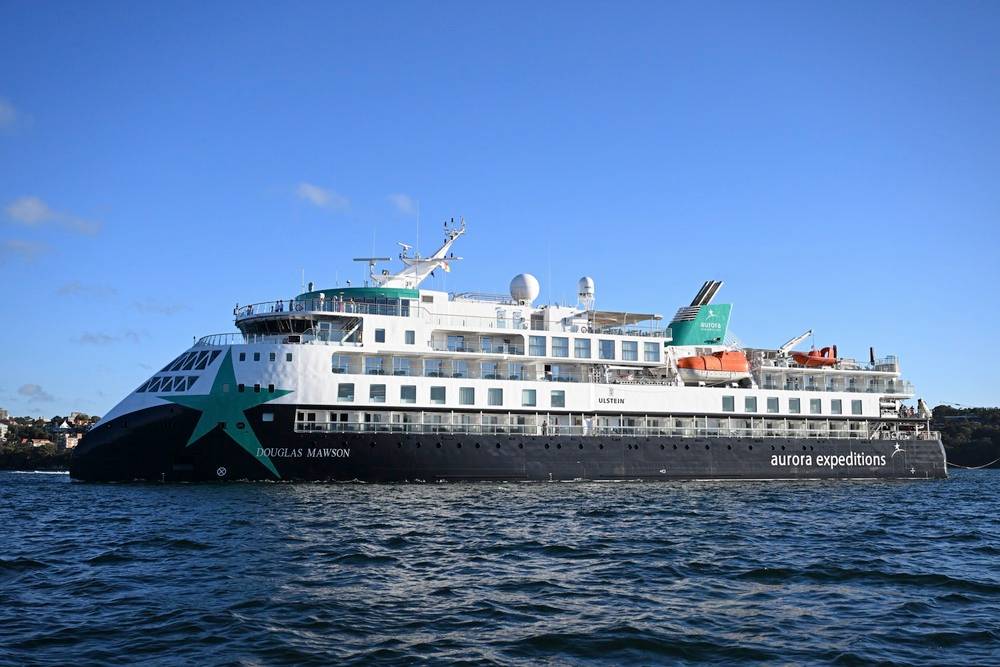
Douglas Mawson

- 154Guests
- 86Cabins
- 2025Launched
- 104 mLength
All ship facts
- Crew
- 24
- Decks
- 8
- Gross tonnage
- 8500
- Speed
- 12 kts
- Width
- 18 m
- Wheelchair cabins
- 2
- Currency on board
- USD
- Language
- en